
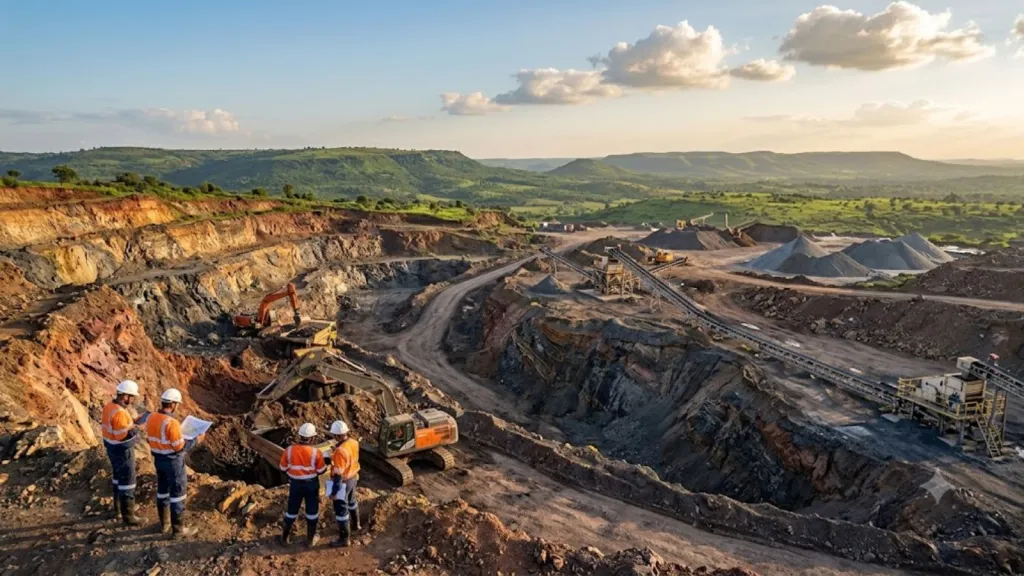
Bihar has uncovered valuable mineral deposits estimated at twenty-one thousand crore rupees. This remarkable discovery follows extensive surveys by the Geological Survey of India. According to The Indian Express, new reserves could transform the state’s economic future. Earlier, the state lost most of its rich mines during division. As a result, Bihar relied largely on sand and gravel quarrying revenues. However, converting these underground discoveries into functioning commercial mines remains challenging. Therefore, state officials are designing comprehensive plans to attract major private investors. Consequently, the coming years will decide whether industrial mining takes off successfully.
Rediscovering Underground Wealth Decades After State Division
The separation of mineral-rich Jharkhand in two thousand left Bihar severely impoverished. For decades, experts believed that fertile alluvial soil held few commercial minerals. However, focused exploratory drilling over the past five years yielded surprising results. Survey teams located substantial reserves beneath rocky southern districts like Rohtas and Jamui. As confirmed by the Press Information Bureau, authorities have begun auctioning selected blocks. In addition, officials estimate that full operations could yield massive annual revenues. State collections could easily surpass five thousand crore rupees every single year. Meanwhile, local communities hope these mining projects create thousands of good jobs.
Major Discoveries Spanning Fertilizers, Metals, and Gold
The most valuable find consists of massive potash-bearing glauconite stone formations. These fertilizer reserves could drastically reduce India’s costly dependence on overseas imports. Furthermore, geologists mapped large deposits of high-grade magnetite iron ore in hills. Limestone blocks in Rohtas provide essential raw materials for modern cement manufacturing. Similarly, the Sono area in Jamui district holds vast gold-bearing rock formations. Preliminary assessments show Jamui accounts for substantial national primary gold ore resources. Rare earth elements and lithium traces were also spotted across southern valleys. Consequently, industrial leaders see tremendous potential for setting up manufacturing processing units.
Hurdles in Acquiring Farm Lands and Developing New Technologies
Despite these promising natural resources, operational hurdles remain very complex. Most mineral blocks lie beneath fertile fields owned by thousands of farmers. Therefore, acquiring contiguous land parcels requires sensitive negotiations with local rural families. Fragmented landholdings often create serious legal delays for prospective industrial developers. In addition, domestic companies still lack advanced technology to extract fertilizer minerals. Refining complex iron ore into usable metals requires heavy private capital investment. Securing statutory environmental clearances and forest approvals will also take considerable time. Nevertheless, government agencies are providing financial support to lower initial exploration risks.
Special Security Forces and Clear Roadmaps for Exploration
Protecting rich mining sites from illegal syndicates presents another pressing administrative challenge. Earlier, illegal sand mining networks caused frequent law and order disruptions. Therefore, the state government decided to establish a dedicated mining police force. A thousand trained officers will guard designated extraction blocks against illegal excavation. Meanwhile, central guidelines set strict timelines for private leaseholders to begin work. Companies must complete detailed environmental assessments within eighteen months of allotment. Trial production at the Jamui gold site is planned for twenty-twenty-seven. Furthermore, full commercial extraction across major blocks is expected before twenty-thirty-one.
Transforming Geological Potential into Lasting Economic Growth
Turning deep underground wealth into working mines represents a historic test. State leaders must build supportive infrastructure, including sturdy roads and power connections. Industry associations stress that downstream manufacturing factories must accompany basic mining operations. Processing raw ores locally will maximize economic returns inside the home state. Similarly, transparent community consultations will help prevent bitter land ownership disputes. If managed wisely, mining could power a lasting industrial revival across Bihar. Consequently, policymakers are moving deliberately to turn geological promises into reality. The coming decade will determine whether subterranean riches fulfill popular economic hopes.

Curated news reports, in-depth analysis, and special features by India’s Opinion editorial team.