
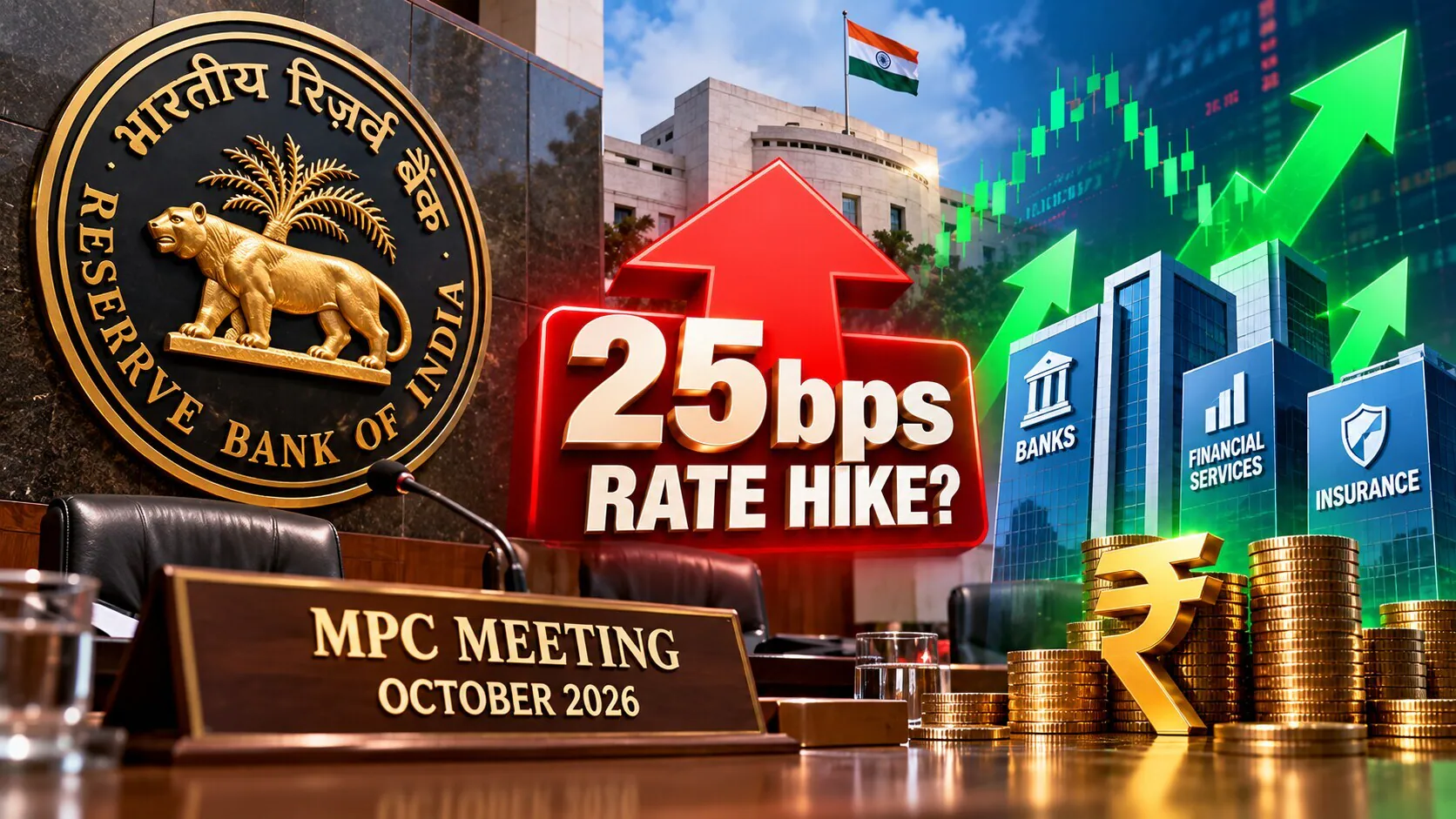
The Reserve Bank of India (RBI) has raised the benchmark policy repo rate by 25 basis points to 5.50 percent. The decision was announced on Wednesday at the conclusion of the Monetary Policy Committee (MPC) meeting. The rate revision comes after months of status quo. It signals a renewed determination by the central bank to keep inflation strictly aligned with its medium-term targets.
As reported by The Hindu, the policy decision was backed by a majority of committee members. Following the hike, the Standing Deposit Facility (SDF) rate stands adjusted to 5.25 percent. The Marginal Standing Facility (MSF) rate and the Bank Rate have moved up to 5.75 percent. The adjustment directly impacts borrowing benchmarks across commercial banks.
Why the RBI Decided to Hike Rates
The primary catalyst behind the rate adjustment is persistent price pressure. While headline retail inflation hovered near tolerance bands, core inflation showed signs of stubborn stickiness. Global commodity price swings and volatile food supply chains prompted the central bank to act proactively.
According to policy details reported by Livemint, domestic economic expansion gave the central bank adequate room to tighten policy without dampening output. The RBI revised India’s real GDP growth forecast upward to 7.1 percent for the current fiscal year. With economic activity remaining buoyant, policy makers chose to prioritize price stability over prolonged monetary accommodation.
Direct Impact on Home, Auto, and Personal Loan EMIs
Retail borrowers will feel the impact of this policy shift almost immediately. Most floating-rate retail loans in India are pegged to External Benchmark Lending Rates (EBLR). These benchmarks move in direct tandem with the RBI repo rate. Consequently, commercial lenders will pass on the 25 basis points hike to new and existing borrowers.
Coverage from The Indian Express highlights that existing home loan customers face a dual choice. Banks typically extend the loan repayment tenure to keep monthly deductions unchanged. However, borrowers nearing maximum tenure limits will see an outright increase in their monthly Equated Monthly Installments (EMIs). Prospective home buyers will also face marginally higher interest rate quotes on fresh borrowing.
Relief for Fixed Deposit Holders and Savers
While loan repayments become more expensive, bank depositors stand to gain from the policy tightening. Commercial banks will likely revise their term deposit card rates upward across multiple maturity buckets.
Senior citizens and retail savers will benefit the most from higher fixed deposit (FD) returns. Over recent quarters, bank credit growth had outpaced deposit mobilization. Lenders will use the higher repo rate environment to attract fresh term deposits by offering competitive yields.
Outlook for Borrowers and the Broader Economy
Financial planners advise borrowers with floating-rate debt to explore prepayment strategies. Even modest lump-sum prepayments can significantly reduce total interest accumulation over extended tenures.
The RBI emphasized that future policy steps will depend strictly on incoming macroeconomic data. The central bank remains vigilant against imported inflation and currency fluctuations. For now, the latest hike establishes a tighter credit regime aimed at safeguarding India’s long-term purchasing power.

Curated news reports, in-depth analysis, and special features by India’s Opinion editorial team.