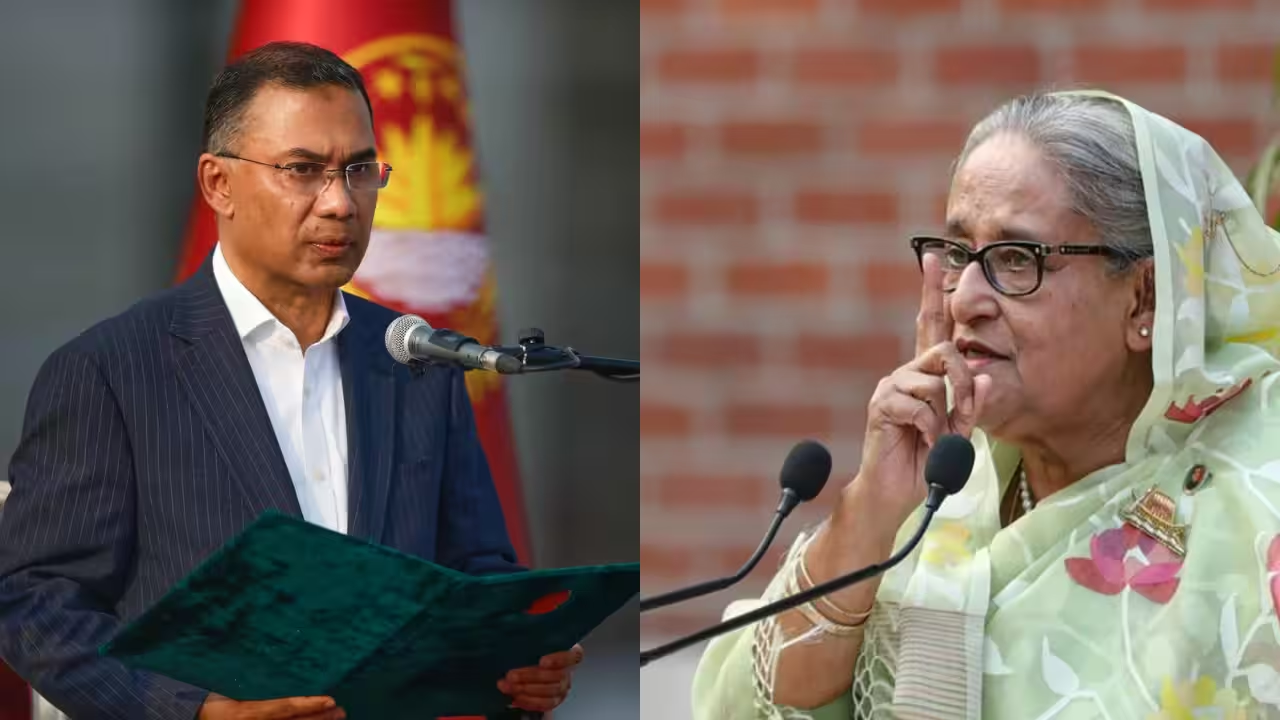
The Bangladesh government has signaled that Prime Minister Tarique Rahman’s proposed bilateral visit to India hinges on two major conditions, placing the expedited extradition of ousted former premier Sheikh Hasina at the top of the diplomatic agenda. Addressing media inquiries in Dhaka on Sunday, senior foreign ministry officials stated that a “conducive environment” must be created before the leadership level visit can proceed, cautioning against fixing dates for the August window under current conditions.
Extradition of Sheikh Hasina and Restraint on Public Statements
The primary rider put forward by Dhaka is a clear commitment and accelerated progress from New Delhi on the legal extradition of Sheikh Hasina and other political fugitives.
Tensions flared recently after Hasina delivered a media address from New Delhi, vowing to return to Bangladesh by December despite facing criminal charges and a death sentence back home.
Dhaka expressed strong outrage over the platform provided to her, making it clear to Indian diplomats that her continued public commentary from Indian soil sours the political atmosphere.
The foreign ministry emphasized that New Delhi must demonstrate tangible intent on her return to face due process under Bangladeshi law.
Establishing Reciprocal Security Guarantees and Diplomatic Reset
The second condition revolves around establishing firm, reciprocal security guarantees and stabilizing broader bilateral ties before high-level summits take place. Bangladeshi officials argued that just as India expects Dhaka to prevent anti-India activities on its territory.
New Delhi must reciprocate by curtailing political activities by exiled Awami League leaders on Indian soil.
While diplomatic channels between New Delhi and Dhaka remain open to manage border security, trade logistics, and visa protocols, officials maintained that executive travel will follow concrete steps rather than symbolic gestures.
Response From New Delhi and Future Outlook
In response to the developments, India’s Ministry of External Affairs clarified that it had no role in organizing Hasina’s recent media interactions and does not endorse statements made against the current Bangladeshi government.
However, Indian authorities have reiterated that extradition requests must undergo strict judicial evaluation under the 2013 bilateral treaty and the Extradition Act.
With both capitals evaluating the legal and diplomatic ramifications, negotiators are working to prevent the deadlock from derailing long-term strategic and economic partnerships across the region.

Curated news reports, in-depth analysis, and special features by India’s Opinion editorial team.