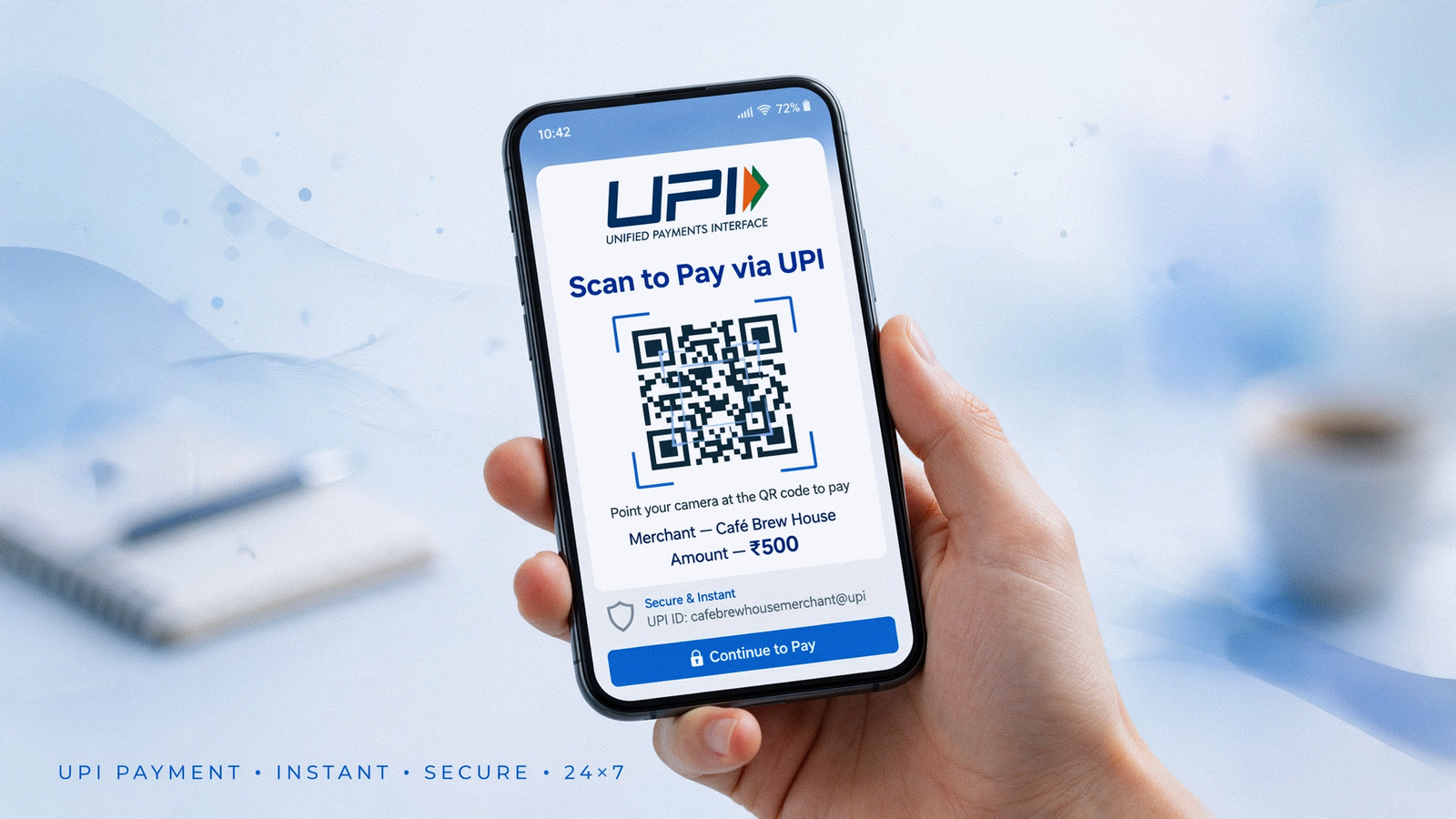
The National Payments Corporation of India (NPCI) postponed the rollout of select merchant charges on Unified Payments Interface (UPI) transactions on Tuesday. The payment authority deferred the implementation until after the Diwali festival in mid-November. The revised Merchant Discount Rate (MDR) framework was originally scheduled to take effect on October 15.
The NPCI’s steering committee announced the postponement following extensive discussions with banks and payment gateways. According to industry updates reported by The Economic Times, retail associations had voiced severe anxiety over payment friction during peak festive sales. Therefore, the payments regulator decided to push back the levy to maintain smooth digital transactions.
Trade Bodies Flagged Festive Shopping Disruptions
Multiple merchant federations and fintech firms had formally petitioned the NPCI to delay the new fee schedule. Shopkeepers warned that introducing fresh transaction levies right before Dhanteras and Diwali could hurt consumer spending sentiment.
Traders argued that retail markets already faced logistics delays and shifting shopping footfalls. Furthermore, business associations reported by The Indian Express noted that payment terminals required software updates to process the charges smoothly. Merchants feared that sudden transaction fees might cause checkout confusion or discourage customers from using QR codes. Consequently, the payment regulator provided crucial breathing space to traders across all commercial sectors.
Understanding the Revised Merchant Fee Structure
The planned fee framework introduces an MDR levy of up to 0.4 percent on select merchant payments. However, this levy applies only to high-value person-to-merchant (P2M) transactions exceeding Rs 2,000. Under this structure, an eligible payment of Rs 2,000 incurs a processing fee of Rs 8.
Similarly, a digital merchant bill of Rs 10,000 attracts a fee of Rs 40. Payment aggregators and merchant banks collect this fee to support digital network security and system upgrades. In addition, the framework targets specific commercial categories, such as online commerce and luxury retail. As a result, fintech platforms gain a predictable revenue model while supporting heavy transaction volumes.
Zero Charges for Consumers and Small Vendors
The NPCI reiterated that regular digital payments remain completely free for ordinary citizens. Peer-to-peer (P2P) money transfers between friends and family members will never attract any fees.
Moreover, neighbourhood grocery stores, vegetable vendors, and local tea stalls remain fully exempt from the charge. Every transaction under Rs 2,000 continues to enjoy zero merchant fees. On the other hand, commercial banks will use the post-Diwali transition period to educate commercial clients on the new billing rules. Nevertheless, the decision ensures uninterrupted digital checkouts for millions of shoppers throughout the peak festival season.

Curated news reports, in-depth analysis, and special features by India’s Opinion editorial team.