
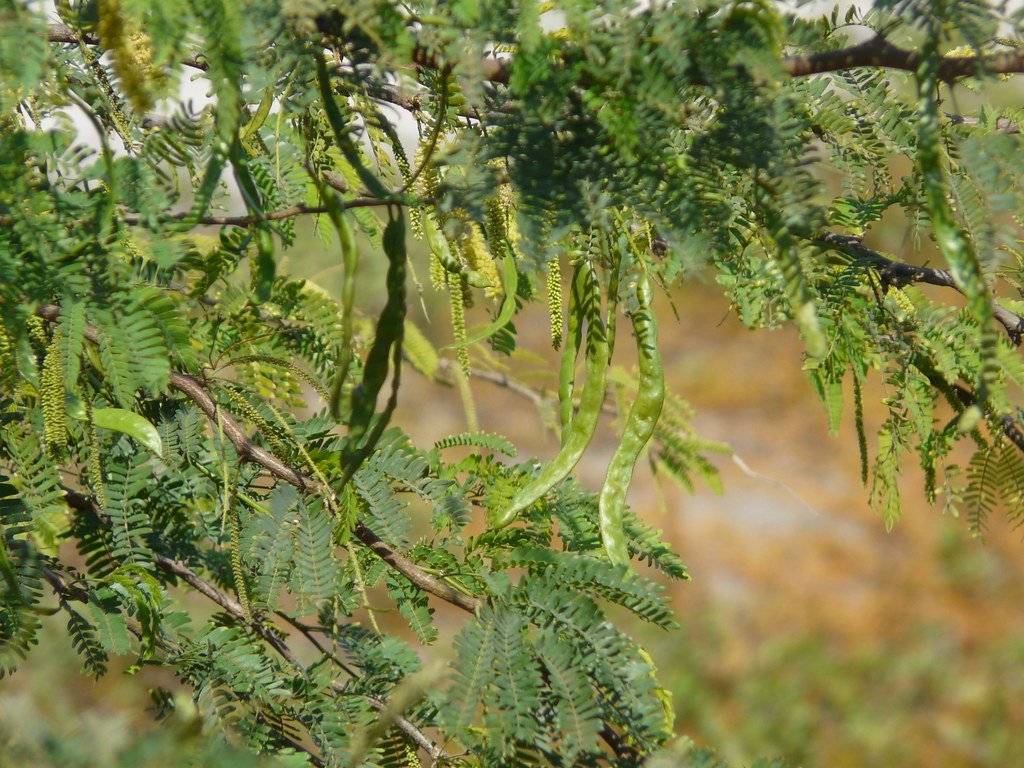
A tree once promoted as a solution to drought and desertification has become an ecological headache across parts of India’s arid landscape. Vilayati Babul, known scientifically as Prosopis juliflora, was introduced from Latin America. It later spread widely across dry regions, including the Thar.
The tree survives where many native species struggle. It tolerates drought, produces firewood and provides fodder. Yet its ability to spread aggressively has changed grasslands and affected native vegetation. As a result, this creates a difficult question for conservationists: how should India manage a species that has provided benefits to rural communities while also damaging fragile ecosystems?
Why Vilayati Babul came to India
The history of Vilayati Babul goes back to the colonial period. The Food and Agriculture Organization records that Prosopis juliflora was introduced into India from Latin America in 1857. The species adapted quickly to India’s arid and semi-arid regions.
The attraction was easy to understand. Arid regions faced severe shortages of fuelwood and vegetation, while authorities also worried about erosion and the movement of desert conditions. Prosopis species can tolerate harsh environments. They can survive dry and saline conditions, grow rapidly and produce wood suitable for fuel. Their seed pods can also provide food for livestock.
Later programmes expanded the use of Prosopis juliflora in dry parts of India. Research published on the Thar says the species was systematically planted across dry landscapes during the 1960s. This was done partly to control desertification and provide fodder and fuelwood.
How the tree became an ecological problem
The very characteristics that made Vilayati Babul attractive also helped it spread. The tree grows rapidly and can establish itself in difficult environments. Once established, dense stands can replace open grasslands and restrict the growth of native plants.
Research on the Thar has found that expanding mesquite woodland has converted substantial areas of semi-arid grassland into thorny vegetation. Scientists have also linked these changes to effects on wildlife habitats.
That creates a particular problem for the Thar. Its grasslands support a range of animals adapted to open, dry habitats. When dense woody vegetation replaces those spaces, animals can lose feeding and movement areas.
A recent study published in Biological Invasions examined how invasive woodland affects the structure of the Thar’s mammal communities. The researchers found that invasive vegetation can alter habitat conditions and influence species interactions.
Vilayati Babul still provides benefits
The debate over Vilayati Babul is not simply a story of a harmful plant invading India. For many rural communities, the tree has practical value. Its wood can provide fuel, while its pods and foliage can support livestock. Additionally, its ability to grow on degraded land also makes it useful where other vegetation struggles.
Research on the Thar has documented economic and livelihood benefits associated with the species. Some communities have generated income from its products.
That creates a challenge for policymakers. Removing the tree without providing alternative sources of fuelwood, fodder or income could hurt communities that depend on it. Therefore, the debate involves more than conservation. It also involves rural livelihoods and the cost of ecological restoration.
Can the invasive tree be controlled?
Controlling Vilayati Babul presents a difficult management problem because the species can regenerate and spread rapidly. Simply cutting mature trees may not permanently solve the problem. For this reason, long-term management requires removing regrowth and preventing the species from recolonising cleared areas.
Researchers have increasingly argued for landscape-level management rather than isolated tree removal. Restoring native grasses and other indigenous vegetation can help reclaim areas after invasive plants are cleared.
The choice of replacement vegetation also matters. Studies on degraded land in the Thar have identified native grasses and trees that can help reduce wind erosion and restore ecological functions.
Why the Thar needs a different approach
The controversy surrounding Vilayati Babul highlights a broader lesson about environmental policy. A solution that works in one decade can create new problems in another.
When India faced severe shortages of fuelwood and concerns about desert expansion, a fast-growing drought-resistant tree appeared useful. Decades later, its uncontrolled spread has created different ecological pressures. Therefore, the answer is unlikely to be as simple as removing every tree.
Conservation authorities need to identify areas where the species causes the greatest ecological damage. At the same time, they must consider communities that depend on it.
That means protecting native grasslands, restoring indigenous vegetation and controlling invasive growth in sensitive habitats.
The tree’s complicated legacy
The history of Vilayati Babul shows how environmental interventions can produce unintended consequences. The species survived because it was exceptionally well suited to difficult conditions.
Those same qualities now make it difficult to manage. Its story also challenges the assumption that more trees automatically mean a healthier ecosystem.
In fragile deserts and semi-arid regions, which trees grow, where they grow and how they interact with native vegetation can matter as much as the total amount of vegetation. Thus, the Thar’s future will depend on finding that balance.
Authorities must protect its native grasslands and biodiversity without ignoring the rural communities that have learned to use an introduced species over generations. The debate over Vilayati Babul is therefore no longer just about one tree. It is about how India manages the ecological legacy of decisions made more than a century ago.

Curated news reports, in-depth analysis, and special features by India’s Opinion editorial team.