China’s emergency agencies are fighting two crises at once. While rescue teams respond to floods and Typhoon Noul, officials are also racing to contain a surge of fabricated videos circulating online. The spread of China AI misinformation has become a growing concern as realistic, AI-generated clips mislead residents, disrupt emergency communication and test public confidence during one of the country’s busiest disaster seasons.
China AI misinformation complicates disaster response
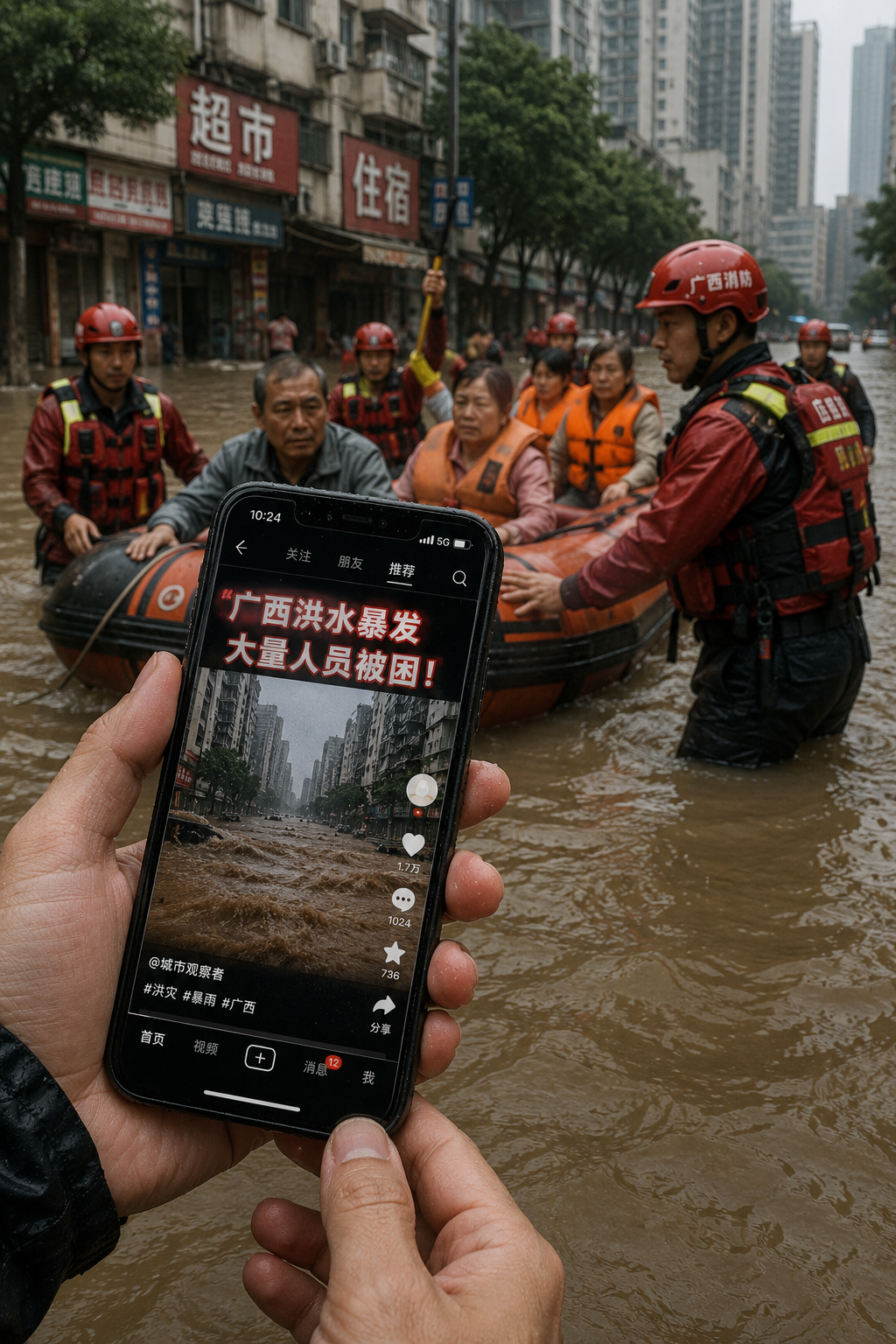
Heavy rainfall, flooding and typhoons have affected several provinces in recent months. Alongside official warnings, social media platforms have filled with manipulated videos showing events that never happened. Some clips falsely depict flooded neighbourhoods, while others recycle footage from unrelated disasters. Several posts also claim widespread power failures or exaggerated rescue operations.
Emergency officials say such content creates confusion at a time when people need accurate information. False reports can influence evacuation decisions and trigger unnecessary panic buying of food, water and emergency supplies. Authorities argue that every misleading post increases pressure on rescue teams already working in dangerous conditions.
Fake content follows real disasters
Many misleading posts build on genuine incidents. Flooding in Guangxi earlier this month caused snakes to escape from a breeding farm. Soon afterwards, fabricated images claiming crocodiles had been released into nearby rivers spread across social media. Officials dismissed the claims, but the rumours travelled widely before corrections reached the public.
Experts say this pattern makes China AI misinformation particularly difficult to tackle. False stories often begin with a real event, making fabricated content appear more believable.
Experts warn AI lowers the barrier to deception
Researchers studying digital misinformation say generative AI has changed how quickly false material can be created. Text prompts now allow users to produce convincing images, videos and audio within minutes. That speed makes verification harder during fast-moving emergencies.
Legal scholar Gao Fuping has argued that people spread such content for different reasons. Some seek online attention, others chase advertising revenue, while a smaller group intentionally attempts to create fear or social unrest. The motives vary, but the impact on disaster response remains serious.
China AI misinformation prompts stricter enforcement
Chinese authorities have responded with arrests, fines and criminal investigations against individuals accused of publishing fabricated disaster content. Police units dedicated to cyber investigations have expanded monitoring of social media, particularly short-video platforms where manipulated clips often gain millions of views.
On 23 July, the Cyberspace Administration of China announced a nationwide campaign against fake online content linked to floods and natural disasters. Regulators instructed local authorities and internet platforms to identify fabricated data, staged scenes, manipulated footage and accounts impersonating government officials.
Can technology solve the problem?
Technology companies continue to develop systems that detect AI-generated content. Researchers caution that detection tools still struggle to keep pace with increasingly sophisticated AI models. As synthetic media improves, identifying manipulated videos becomes more difficult.
Some experts support mandatory labels for AI-generated content. Others believe those labels can be removed or altered before videos spread online. That leaves fact-checking organisations and emergency agencies in a constant race against rapidly evolving technology.
Public trust remains central
Officials have repeatedly urged residents to rely on verified government alerts and recognised news organisations during emergencies. Building trust, however, remains a challenge. Previous controversies over disaster reporting have led some citizens to question official information, creating space for rumours to circulate more easily.
Analysts argue that stronger public communication, transparent disaster reporting and faster corrections are just as important as tougher enforcement. They say public education must develop alongside advances in artificial intelligence.
The debate over China AI misinformation extends beyond natural disasters. Governments worldwide face similar questions as AI-generated content becomes more realistic and easier to distribute. Elections, public health emergencies and extreme weather events increasingly expose the risks posed by fabricated digital media. China’s response may offer lessons for other countries, but experts agree that technology alone will not resolve the challenge. Public trust, effective regulation and responsible use of AI will shape how societies confront the next wave of digital misinformation.

Curated news reports, in-depth analysis, and special features by India’s Opinion editorial team.