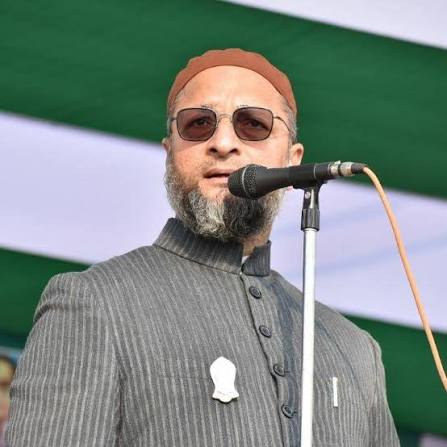
Asaduddin Owaisi has made a direct alliance offer to Akhilesh Yadav ahead of the 2027 Uttar Pradesh Assembly elections. The AIMIM chief says opposition parties should talk now, rather than regret a divided contest after the results.Owaisi made the remarks at a public meeting in Moradabad.
He said AIMIM does not want the BJP to return to power in Uttar Pradesh.“The Majlis does not want the BJP to form the government again in Uttar Pradesh.
I am ready to join hands. I am ready to form an alliance,” Owaisi said, according to reports.He then delivered a political warning aimed at the Samajwadi Party chief. “Today is the time to talk. Don’t cry later after the elections are over,” Owaisi said.
Owaisi alliance with Akhilesh puts opposition unity in focus
The offer comes at a time when parties are beginning to prepare for the next Uttar Pradesh election.
The state has 403 Assembly seats and remains central to national political calculations.The Samajwadi Party is the principal opposition force in Uttar Pradesh.
Akhilesh Yadav led the party to a stronger performance in the 2024 Lok Sabha election compared with its 2022 Assembly performance.That record gives the SP a central position in any discussion about an anti-BJP alliance. It also makes seat-sharing difficult. A larger party may not want to give significant space to a smaller ally.
For AIMIM, the political challenge is different. The party has tried to expand its presence in Uttar Pradesh. Its entry into contests can create fresh political competition in constituencies where opposition parties already compete for similar sections of voters.
Owaisi’s offer directly addresses that concern.
Why Owaisi says opposition parties should join hands
Owaisi argued that AIMIM and the SP should not fight each other if their larger objective is to prevent a BJP victory.“You say that Owaisi contesting would harm you.
I’m ready to fight with you,” he said, according to reports.The argument reflects a familiar feature of Uttar Pradesh elections.
Small differences in vote share can decide closely fought constituencies.A party may win a seat without securing a majority of all votes. The division of votes among several candidates can therefore affect the final result.
That is the political logic behind Owaisi’s proposal. Yet electoral alliances do not automatically transfer votes from one party to another.Voters may support a party because of its identity, leadership and local organisation.
They may not accept a seat-sharing arrangement in the same way party leaders do.
Akhilesh Yadav faces a difficult political calculation
For Akhilesh Yadav, the offer creates both an opportunity and a political risk.An alliance could help the SP avoid direct competition with AIMIM in selected constituencies.
It could also give Owaisi’s party a formal role in a broader opposition strategy.The cost could be equally serious.The SP has built its electoral strategy around a broad social coalition.
Its leadership would have to assess whether an alliance with AIMIM would strengthen that coalition or create political problems with other voters and allies.The party would also need to negotiate the most difficult question in any pre-poll alliance, seat distribution.
No formal alliance between the SP and AIMIM has been announced in response to Owaisi’s remarks. The offer remains a political proposal at this stage.
BJP attacks the proposed Owaisi alliance
The BJP has rejected the proposal and criticised it as vote-bank politics.
BJP spokesperson Shehzad Poonawalla mocked the offer and described it as a political collaboration between Owaisi and Akhilesh Yadav.
The BJP has repeatedly used this line of attack against opposition parties during electoral campaigns.The BJP’s response also shows why the proposed alliance could become a major campaign issue.
AIMIM’s political presence often triggers a sharp debate over representation, minority politics and electoral strategy.
The SP, meanwhile, has tried to present itself as the main opposition alternative in Uttar Pradesh.An alliance could therefore change the campaign narrative before a single vote is cast.
Owaisi stresses equality and representation
Owaisi also framed his offer around political representation.He said AIMIM’s fight was not against any religion.
He argued that his party wanted dignity, justice and equality in political negotiations.That message reflects the broader identity-based politics that has shaped Owaisi’s electoral strategy.
The question for voters, however, will not depend only on the language used by party leaders. It will depend on whether any alliance can create a credible organisation at the constituency level.
The history behind the alliance debate
Uttar Pradesh has a long history of opposition alliances.Parties have joined hands before elections to combine their social bases and challenge dominant political forces.
Such alliances can produce gains, but they can also suffer from weak coordination and conflicting expectations.
The 2019 Lok Sabha alliance between the SP and Bahujan Samaj Party remains an important example of the opportunities and limits of opposition unity.The two parties joined forces against the BJP.
Their alliance won seats, but the partnership ended soon after the election.That history matters as the 2027 contest approaches.
A pre-poll alliance needs more than a common opponent. It requires agreement on seats, leadership, campaign messaging and local cooperation.
What the Owaisi alliance offer means for UP politics
The immediate impact of Owaisi’s statement may be limited because no formal agreement exists.Its political value lies in the conversation it has started.
The offer puts pressure on the Samajwadi Party to clarify its position on AIMIM. It also allows Owaisi to present himself as willing to negotiate with a larger opposition party.
For the BJP, the proposal offers another opportunity to attack opposition parties over vote-bank politics.For the SP, the decision will involve electoral arithmetic and political messaging.
The party must decide whether an alliance with AIMIM can add votes or create a new set of challenges.The answer may vary from one constituency to another.
The 2027 Uttar Pradesh election remains some distance away, and alliance talks can change quickly. For now, Owaisi has made the offer. The next move belongs to Akhilesh Yadav and the Samajwadi Party.

Curated news reports, in-depth analysis, and special features by India’s Opinion editorial team.