The US military said early Thursday it had completed “a heavy wave of strikes” against Iran, in response to an Iranian attack on a US base in Jordan a day earlier. The strikes came after President Donald Trump vowed to hit Iran “very hard.” He told Fox News in a phone interview that the US would respond forcefully.
US Central Command said in a post on X that over roughly two hours, American forces struck dozens of targets belonging to Iran’s Revolutionary Guard Corps. These targets included military command centres, missile and drone facilities, coastal surveillance and defence sites, and maritime capabilities.
The strikes began around midnight Thursday and concluded about two hours later. CNN reported the operation wrapped up at 10 pm.
What triggered the latest round
The IRGC had claimed its Aerospace Force targeted Jordan’s Muwaffaq Salti Air Base, a key US installation. It also targeted what it described as CENTCOM’s headquarters in the country. Meanwhile, Trump’s response left little ambiguity about intent.
“We’re going to hit them very hard,” he told Fox News. He added that the US was prepared to respond forcefully despite requests from adversaries to hold back.
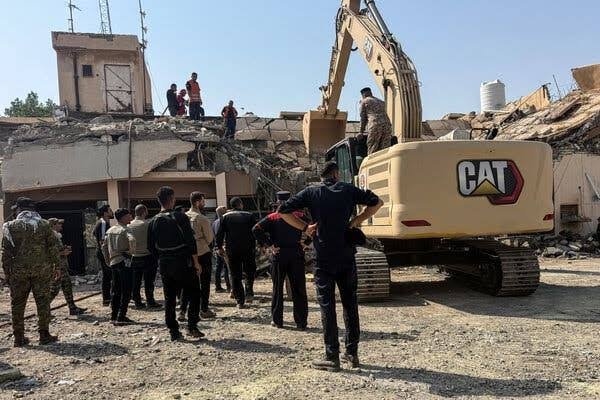
The Jordan attack wasn’t the only front. The US, working alongside Saudi Arabia, had already struck Iran-backed militias in neighbouring Iraq. At least 20 fighters and six Iranian advisers were killed, according to the Associated Press.
On Wednesday, the US said it had intercepted missiles fired by Iran before carrying out that coordinated strike with Saudi Arabia on targets in Iraq. Meanwhile, Saudi Arabia had separately accused Iraqi militias of firing drones at its oil facilities over the preceding two days.
A US-owned tanker hit in Egypt
As tensions flared again after a brief lull, a drone strike hit a US-owned floating LNG storage facility at Egypt’s Mediterranean port of Damietta. British maritime security firm Ambrey identified the vessel as the Energos Winter, flying the Marshall Islands flag. Ambrey said the resulting fire spread to a nearby LNG carrier, the GasLog Salem.
Egypt’s Ministry of Petroleum and Mineral Resources confirmed a fire broke out aboard two vessels during cargo operations at the terminal, disrupting port activity. However, it did not confirm a drone attack.
The ministry said emergency crews contained the fire aboard both a regasification vessel and a storage vessel, with no injuries or deaths reported. Authorities were assessing the situation further.
No group has claimed responsibility for the strike. Egypt has largely been spared direct military action through this conflict. A confirmed strike by Iran or its allies on Egyptian soil would mark a significant widening of hostilities.
Asked whether Iran was responsible, Trump told reporters, “It’s a little more of the same.” He added, “In the meantime, we’re going to be hitting them very hard because it’s our turn to hit them.”
Iran reports its own casualties
Iranian state media said two people were injured in attacks on Qeshm Island in the Strait of Hormuz. Further explosions were reported in Khuzestan province.
The flare-ups across multiple fronts, after several days of relative calm, have raised fresh concern about a slide back into all-out war. This underscores how difficult it has proven to wind down a conflict that began in late February and has already run five months.
With strikes now hitting Jordan, Iraq, Egypt and Iran itself within the space of two days, the conflict shows every sign of escalating rather than settling into the kind of pause that briefly held last week.
Whether Thursday’s CENTCOM operation prompts another Iranian response, or whether Wednesday’s rare tanker transit through Hormuz signals shipping is cautiously testing the waters again, will shape how the next 48 hours unfold. This will happen in a war that has already reshaped Gulf shipping and global oil markets for five months running.

Curated news reports, in-depth analysis, and special features by India’s Opinion editorial team.