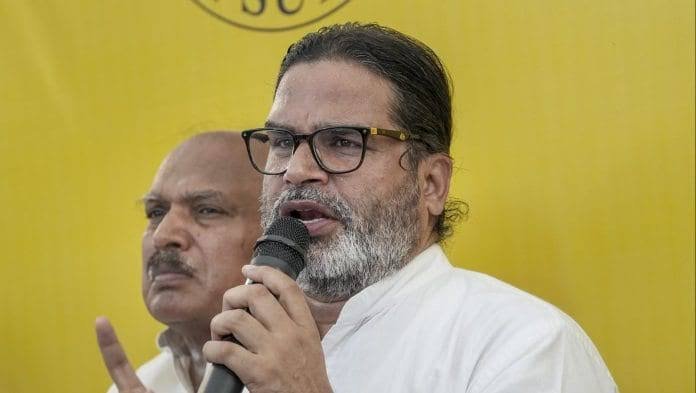
The Prashant Kishor Bankipur bypoll has emerged as one of the most closely watched political contests in Bihar this year. Voting began on Thursday with Jan Suraaj founder Prashant Kishor contesting his first election after spending more than a decade shaping campaigns for some of India’s biggest political parties. The bypoll is not just about one Assembly seat in Patna. It has become a referendum on whether Kishor’s promise of an alternative politics can survive its first real electoral test.
For years, Prashant Kishor remained behind the scenes, designing election strategies that helped parties across the political spectrum. His campaigns influenced victories for leaders including Narendra Modi, Nitish Kumar, Mamata Banerjee, M.K. Stalin and others. Now, for the first time, he is asking voters to judge him not as a strategist but as a politician. The outcome could shape the future of Jan Suraaj and redefine Bihar’s political landscape ahead of the next Assembly election.
Why the Prashant Kishor Bankipur bypoll matters
The Prashant Kishor Bankipur bypoll carries political weight far beyond the constituency. Bankipur is among the BJP’s safest urban seats in Bihar and has consistently backed the party over several elections. Winning here would give Kishor immediate credibility as a serious political challenger. Even reducing the BJP’s winning margin could allow Jan Suraaj to claim that it has become a relevant force in state politics.
Political observers also see the bypoll as an early indicator of voter sentiment before the Bihar Assembly election. Every major party has invested considerable organisational resources because the result will influence campaign narratives in the months ahead.
Unlike a general election, bypolls often witness lower voter turnout. That makes booth management, cadre mobilisation and local candidate appeal even more important. Every percentage point of turnout could alter the final result.
Can RJD’s Muslim-Yadav base shift?
The biggest question in the Prashant Kishor Bankipur bypoll revolves around voting patterns. Political observers argue that Kishor cannot rely only on urban middle-class voters. He also needs support from sections of the Rashtriya Janata Dal’s traditional Muslim-Yadav, or M-Y, vote bank.
Whether that transfer happens remains uncertain. The RJD has continued to campaign for its own candidate, while Jan Suraaj has attempted to attract voters by highlighting governance, education, and anti-corruption issues rather than traditional caste politics.
BJP banks on organisation and history
The BJP entered the contest with confidence, pointing to its organisational strength and long record in the constituency. Party leaders have argued that Bankipur’s urban electorate values governance, infrastructure and continuity. The BJP also benefits from a well-established booth-level network, which often plays a decisive role in by-elections where turnout can fluctuate.
The numbers behind the Bankipur battle
The Prashant Kishor Bankipur bypoll is unfolding in a constituency where electoral history strongly favours the BJP. Bankipur, located in the heart of Patna, has elected BJP legislators repeatedly over the past two decades and is widely regarded as one of the party’s safest urban seats. The bypoll was necessitated after BJP leader Nitin Nabin vacated the seat following his elevation as the party’s national president.
According to Election Commission data from previous Assembly elections, the BJP has consistently secured a comfortable lead in Bankipur, largely because of its strong support among upper-caste voters, urban middle-class families, traders and professionals. Unlike many rural constituencies in Bihar, where caste alliances dominate, Bankipur’s urban character means governance, civic infrastructure and party organisation often play a larger role in shaping voter behaviour.
Yet caste mathematics cannot be ignored. Political analysts estimate that Muslims account for roughly 18 to 20 percent of the constituency’s electorate, while Yadav voters make up another 10 to 12 percent. Together, these communities form nearly one-third of the electorate, making them a potentially decisive bloc if they vote cohesively. Upper-caste communities, including Bhumihars, Brahmins, Rajputs and Kayasthas, also constitute a substantial share of voters and have traditionally backed the BJP.
What happens after voting?
The Prashant Kishor Bankipur bypoll is likely to influence Bihar politics regardless of who wins. A BJP victory would reaffirm the party’s strength in urban constituencies and strengthen the NDA’s confidence before the Assembly election.
A surprise victory for Kishor would immediately transform Bihar’s political landscape and establish Jan Suraaj as a serious electoral force. Even a narrow defeat accompanied by a strong vote share could reshape campaign strategies for all major parties.Vote counting is scheduled for 3 August, and political observers across the country will closely watch the outcome.
More than the fate of one Assembly seat is at stake. The result will reveal whether Bihar’s voters are prepared to embrace a new political alternative or continue to rely on the state’s established electoral equations.

Curated news reports, in-depth analysis, and special features by India’s Opinion editorial team.