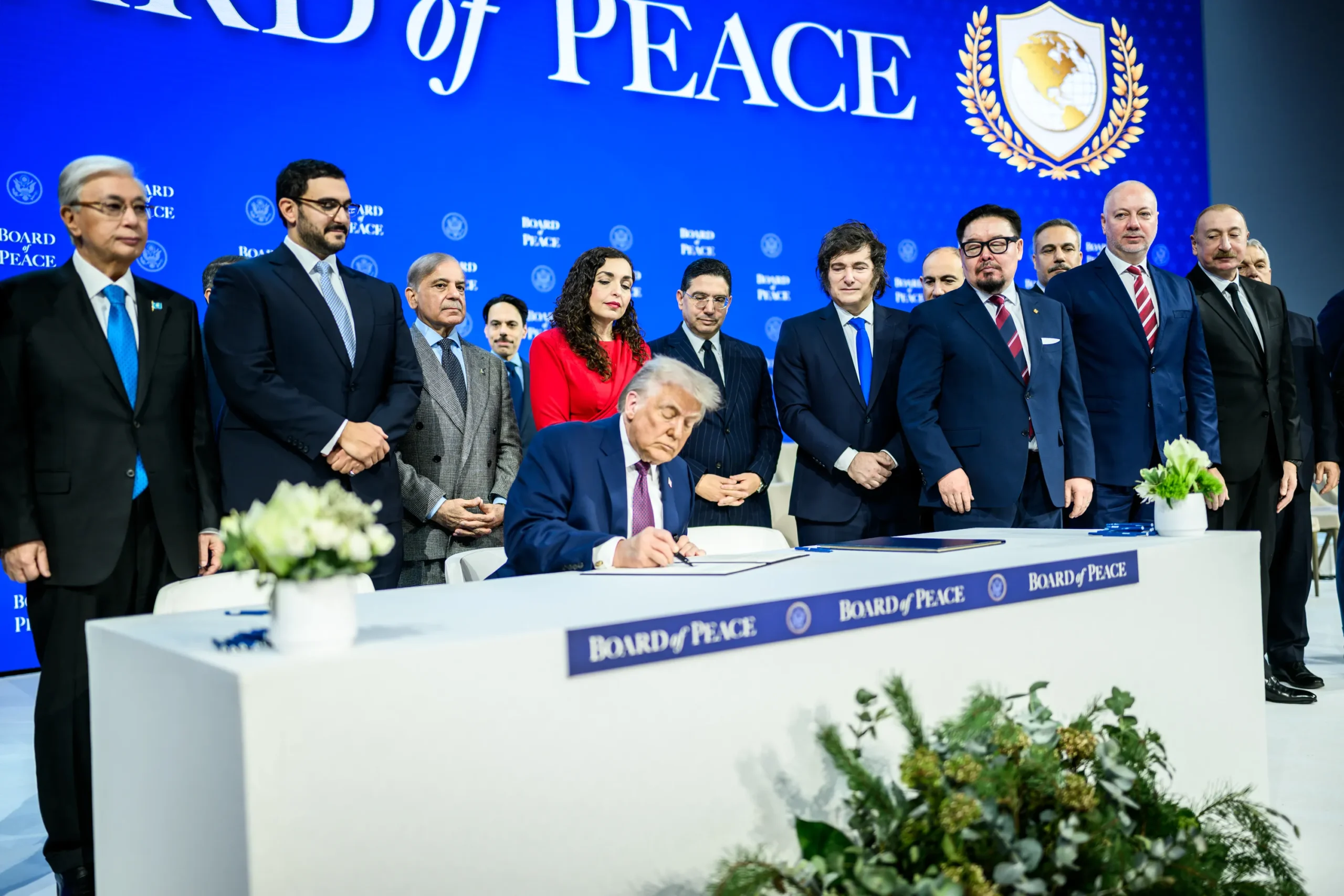
Senior Hamas officials have confirmed an agreement to end the ongoing conflict in Gaza. US President Donald Trump announced on Truth Social that his “Board of Peace” achieved a historic breakthrough regarding the total disarmament of Hamas and other armed factions. Trump framed this development as a key milestone in executing his broader 20-point roadmap. This roadmap is aimed at establishing lasting stability across the region. The deal envisions a new governance framework for Gaza. Additionally, there would be robust security measures to prevent future escalations.
What Is the Trump 20-Point Plan for Gaza?
The 20-Point Plan serves as a comprehensive strategy designed to bring a permanent end to hostilities in the Gaza Strip. Under this proposed framework, Gaza will eventually be governed by a newly formed local Palestinian administration. This administration will work directly with the Board of Peace.
The primary objective is to guarantee long-term security for Israel while ensuring that the territory can no longer be utilized as a staging ground for military operations. By building a stable governance structure, the plan aims to rebuild Gaza’s civil infrastructure. It also aims to offer residents a secure, peaceful environment.
How Did Hamas Agree to Disarm?
Disarmament was long considered the most difficult hurdle in diplomatic negotiations between the warring parties. According to reporting from Al Jazeera, Hamas engaged in direct discussions with key regional mediators. These mediators included Qatar, Turkey, and Egypt. This happened before agreeing to sign the accord.
Under the terms of the agreement, Hamas and affiliated armed groups will surrender their weaponry to an International Stabilisation Force. Specific regions within Gaza will be designated as demilitarised zones. The disarmament process will move forward in distinct phases only after formal verification by an independent monitoring body.
What Is the Proposed Timeline and Security Framework?
The implementation timeline for the peace plan relies on a structured, multi-phase approach. As verified disarmament milestones are met, Israeli military forces will gradually withdraw from designated areas within Gaza.
Simultaneously, the International Stabilisation Force will collaborate with a newly established Palestinian police force. This police force will oversee daily security for local residents and neighboring borders.
Trump emphasized that security protocols would remain strict to ensure that military threats originating from Gaza are never allowed to re-emerge.
Who Mediated the Breakthrough and What Are the Challenges?
Trump publicly credited diplomats from Egypt, Qatar, and Turkey for their mediating efforts, alongside his foreign policy negotiating team. Despite the diplomatic progress announced in Cairo, major challenges persist on the ground.
Israeli officials have expressed skepticism regarding whether Hamas will fully honor its commitment to disarm. Furthermore, US officials noted that the deal remains heavily condition-based. Discussions are leaning toward a local technocratic government as an alternative to both Hamas and the Palestinian Authority.

Curated news reports, in-depth analysis, and special features by India’s Opinion editorial team.