
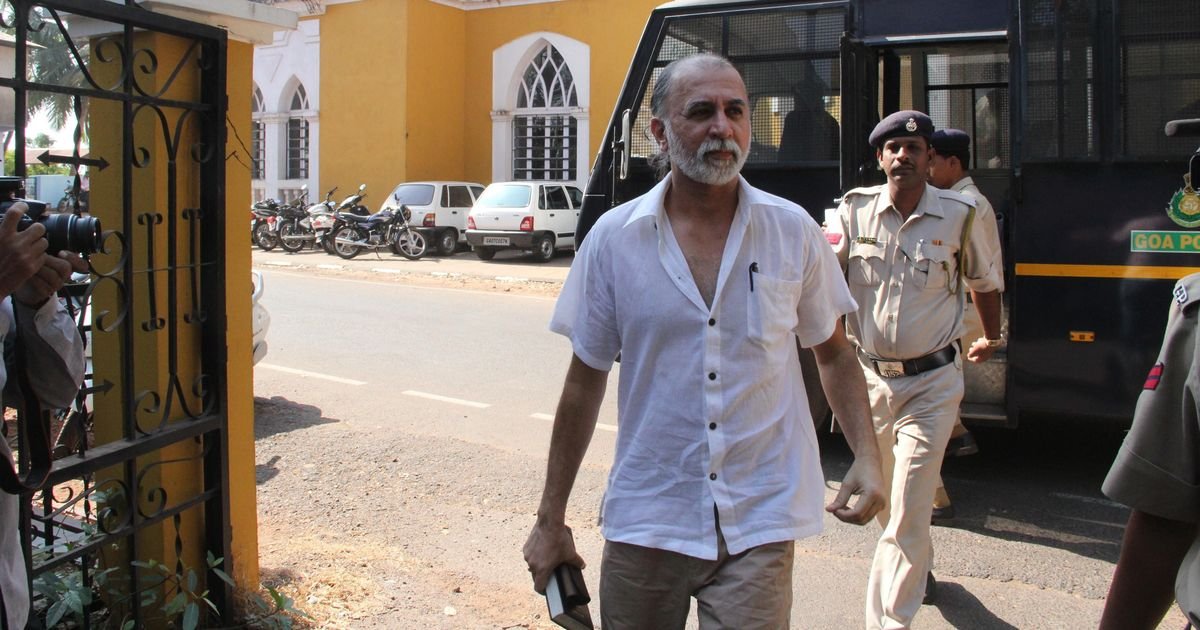
Former Tehelka editor-in-chief Tarun Tejpal was convicted on Thursday on charges of rape, sexual harassment, and the use of criminal force against a woman. The Goa bench of the Bombay High Court delivered the verdict, reversing the 2021 trial court ruling that had previously acquitted him of all charges.
The court scheduled the pronouncement on the quantum of sentence for 2:30 pm. Tejpal, who was present in the courtroom during the proceedings, requested leniency in sentencing while citing his age.
Under the specific statutory provisions invoked for the conviction, Tejpal faces a mandatory minimum sentence of 10 years. The court convicted him under legal categories covering offences committed by a person in a position of trust, authority, or dominance over a woman.
These provisions mandate a prison term of not less than 10 years, which may extend to life imprisonment.
Background of the Allegations and Trial Court Acquittal
The case stems from an incident in November 2013, when a junior woman colleague accused Tejpal of sexually assaulting her inside a hotel elevator in Goa. In 2021, a Goa sessions court acquitted Tejpal, observing that the complainant did not display the expected normative behavior of a sexual assault survivor.
The trial court had ruled that messages sent by the woman following the event indicated she was neither traumatized nor terrified. The lower court concluded that these interactions contradicted the prosecution’s timeline and evidence.
The Goa state government subsequently filed an appeal in the High Court challenging the acquittal.
State Arguments and Defence Submissions Before High Court
During the High Court appeal, Solicitor General of India Tushar Mehta, representing the state of Goa, criticized the trial court’s approach, characterizing its findings as perverse.
The state argued that the lower court had subjected the complainant to inappropriate cross-examination regarding her personal lifestyle choices and social habits.
The prosecution pointed to an email sent by Tejpal shortly after the incident, in which he apologized for a lapse of judgment and expressed shame. The state contended that this communication functioned as an admission that an encounter had occurred.
In opposition, defence counsel Senior Advocate Aabad Ponda argued that CCTV footage contradicted allegations that Tejpal forcibly dragged the woman into the elevator. The defence argued that her post-incident conduct, including attending social gatherings and visiting a guest’s hotel suite, was inconsistent with claims of trauma.
The defence further maintained that Tejpal’s apology emails referred only to a verbal conversation rather than any physical encounter.

Curated news reports, in-depth analysis, and special features by India’s Opinion editorial team.