The Strait of Hormuz reopening talks have gained urgency as Washington and Tehran discuss arrangements that could restore shipping through one of the world’s most important energy routes. US President Donald Trump said on August 5 that discussions with Iran were going well and that the waterway could reopen soon. Iranian state media, however, has pushed back against claims that an immediate agreement has been reached.
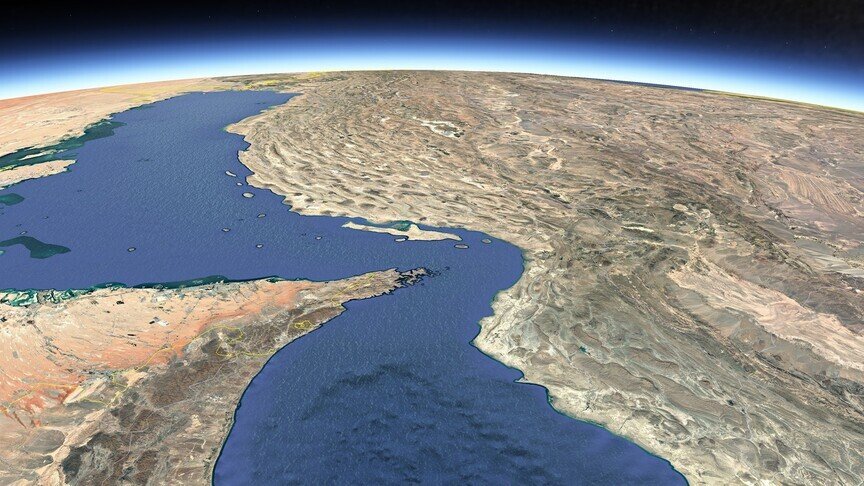
The uncertainty matters far beyond the Gulf. The Strait links the Persian Gulf with the Gulf of Oman and Arabian Sea. The US Energy Information Administration estimates that 20.9 million barrels of oil per day passed through it during the first half of 2025. That represented about one-fifth of global petroleum liquids consumption.
Why the Strait of Hormuz reopening talks matter
The latest Strait of Hormuz reopening talks centre on how commercial ships could safely enter and leave the Persian Gulf. Iran wants greater control over inbound traffic, while discussions with Oman have explored arrangements for routes and maritime management. Reuters reported that Iran has sought control over inbound shipping and oversight of outbound traffic under a possible arrangement.
The disagreement reflects a larger issue. Tehran wants any navigation system to respect its sovereignty and security concerns. Oman, meanwhile, has worked on proposals involving regional management and shipping services. Earlier discussions included voluntary fees for services connected with navigation and maritime safety.
The proposed arrangements remain under negotiation. That distinction matters because political statements about an imminent reopening do not necessarily mean that shipping companies have received the security guarantees needed to resume normal operations.
Iran, Oman and the search for a workable route
Oman has played a central diplomatic role because it borders the Strait alongside Iran. The two countries previously reaffirmed their commitment to keeping the waterway open to international navigation and agreed to continue discussions through a joint working group.
Recent reports suggest that a possible interim arrangement could divide responsibility for different shipping routes. According to regional officials cited by the Associated Press, ships could enter the Persian Gulf through an Iranian-controlled route and leave through an Omani-controlled route.
Such an arrangement could provide a temporary solution, but it would still leave difficult questions about enforcement, navigation rights, security guarantees and responsibility for incidents at sea.
What reopening could mean for oil prices
The Strait of Hormuz reopening talks have already affected financial markets because traders are watching the possibility of renewed energy flows. Reuters reported on August 5 that oil prices fell while global stock markets rose after Trump said discussions with Iran were progressing.
A sustained reopening could reduce the risk premium built into energy prices. It would also give refiners and traders greater confidence that tankers can move through the Gulf without facing prolonged delays or security threats.
The scale of the route explains the market sensitivity. EIA data show that oil shipments through Hormuz averaged 20.9 million barrels per day in the first half of 2025. Saudi Arabia and the United Arab Emirates have some alternative pipeline capacity, but those routes cannot fully replace the waterway.
Energy Information AdministrationThat leaves global markets exposed whenever shipping through Hormuz becomes uncertain.
LNG markets face another risk
Oil is not the only commodity affected by the disruption. The International Energy Agency has warned that the crisis has also disrupted global liquefied natural gas markets.
The IEA said disruptions to shipping through Hormuz removed almost 20% of global LNG supply from the market during the crisis. Asian and European gas prices experienced sharp volatility as buyers faced uncertainty over deliveries.
A stable reopening would therefore matter to electricity producers, industrial users and households in major LNG-importing markets. The effect would not necessarily appear immediately because shipping companies still need confidence that the route is safe.
What happens if talks fail?
The Strait of Hormuz reopening talks also carry risks if negotiations collapse.A prolonged disruption could keep pressure on oil and gas markets and force importers to rely more heavily on alternative supply routes. EIA data show that existing bypass pipelines can move only a portion of the volumes normally transported through Hormuz.
Energy Information AdministrationHigher energy costs could then spread through transportation, manufacturing and electricity markets. Countries that depend heavily on Gulf energy shipments would face particular exposure.For Iran, the stakes are also complicated.
Greater control over navigation could strengthen its bargaining position, but prolonged disruption risks damaging regional trade and increasing international pressure.For Oman, the challenge is to help restore shipping while maintaining its own sovereignty and credibility as a mediator.
The coming days will show whether the Strait of Hormuz reopening talks produce a temporary navigation arrangement or a broader settlement.
For energy markets, the key test will not be the announcement of an agreement alone. Traders and shipping companies will look for sustained safe passage, reliable rules and evidence that tankers can move without facing renewed disruption.

Curated news reports, in-depth analysis, and special features by India’s Opinion editorial team.