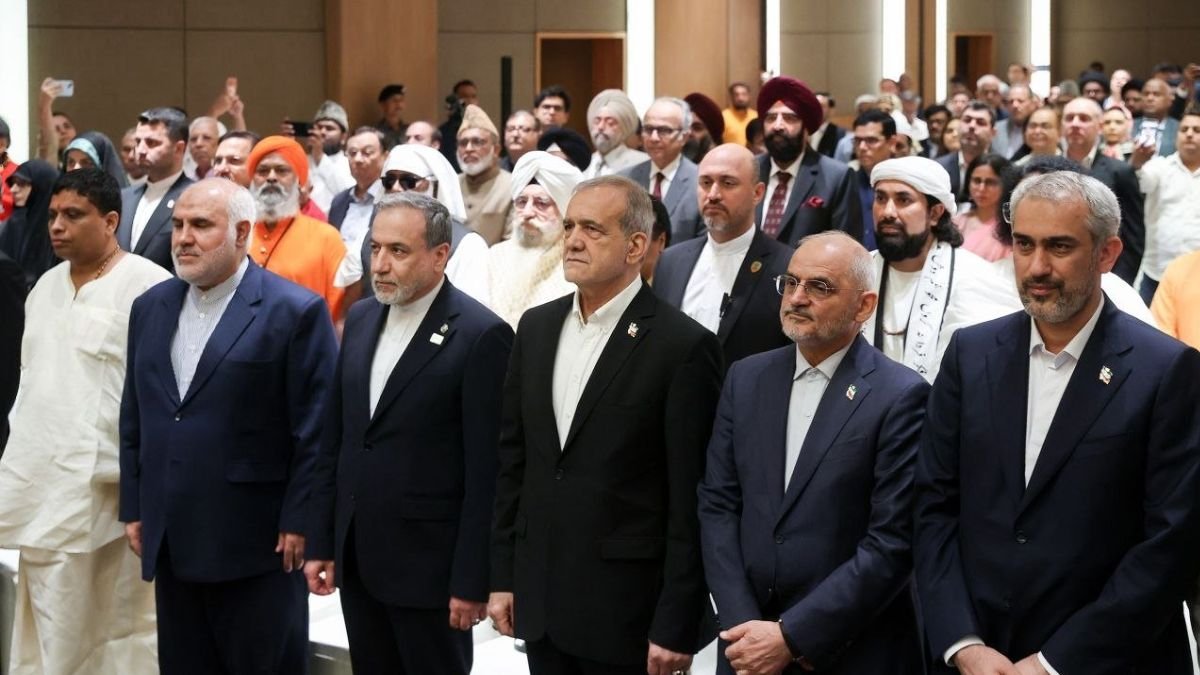
Hurriyat Conference chairman Mirwaiz Umar Farooq conducted significant diplomatic outreach in the national capital on Sunday. He met Iranian Foreign Minister Seyed Abbas Araghchi on the sidelines of the 18th BRICS Summit. During the meeting, he handed over a formal letter addressed to Iranian President Dr. Masoud Pezeshkian. The Kashmiri leader called for regional peace, sustained diplomatic engagement, and the resolution of long-standing disputes, according to The Indian Express.
The high-level interaction took place while international delegations concluded multilateral sessions at the summit. The Iranian delegation visited New Delhi to attend their first full summit as a formal member nation. Mirwaiz utilized the diplomatic gathering to present his perspective on South Asian peace. He also highlighted the pressing need for constructive dialogue among neighboring nations.
High-Level Interaction on the BRICS Sidelines
The meeting with Araghchi covered a wide spectrum of regional developments and international affairs. Both leaders discussed the changing geopolitical landscape across Asia and the Middle East. Mirwaiz welcomed Iran’s formal entry into the expanded BRICS economic alliance. He expressed hope that the multilateral platform would champion global equity and peaceful coexistence, as reported by Greater Kashmir.
During the conversation, Araghchi shared his perspectives on regional cooperation and mutual respect among nations. He emphasized that diplomatic channels remain the only viable method to resolve complex geopolitical tensions. Furthermore, the Iranian diplomat reaffirmed his country’s commitment to strengthening cultural bonds across Asian societies. The cordial exchange reflected centuries of shared heritage and intellectual exchange.
Urging Constructive Dialogue and Regional Stability
In his written communication to President Pezeshkian, Mirwaiz underscored the primacy of peaceful conflict resolution. He urged world leaders to abandon confrontation in favor of structured negotiations. Specifically, he stressed that lasting stability in South Asia requires genuine political will from all stakeholders. Therefore, he advocated for sustained bilateral engagement between India and Pakistan to address pending differences.
The Hurriyat leader maintained that local populations suffer the most when dialogue stalls between neighboring governments. He pointed out that peace initiatives unlock immense economic and developmental dividends for ordinary citizens. Furthermore, he noted that opening commercial corridors and encouraging travel promotes mutual trust. Consequently, he requested international partners to support initiatives that reduce regional friction.
Celebrating Historic Civilizational and Spiritual Ties
The formal letter warmly highlighted the centuries-old cultural relationship linking Kashmir and Iran. Kashmir historically earned the cultural moniker “Iran-e-Sagheer,” or Little Iran, through centuries of artistic immersion. Iranian scholars, spiritual saints, and master artisans introduced exquisite handicrafts, shawl weaving, and calligraphy to the valley. Mirwaiz emphasized that these cultural traditions remain vibrant parts of Kashmiri identity today.
Moreover, the religious leader called for stronger spiritual fraternity and sectarian harmony across Muslim societies. He emphasized that religious communities must reject divisiveness and work collaboratively for social progress. Therefore, he commended efforts that bridge sectarian divides and promote universal educational values. Both sides agreed that preserving cultural heritage strengthens mutual understanding among diverse communities.
Plea for Middle East De-escalation and Gaza Relief
The ongoing humanitarian devastation across the Gaza strip formed a crucial part of the letter. Mirwaiz conveyed deep collective anguish over the mounting loss of civilian lives and displacement. He appealed directly to President Pezeshkian to push for an immediate, permanent cessation of hostilities. Furthermore, he urged influential Islamic nations to coordinate urgent humanitarian corridors for medical aid and shelter.
He stressed that global institutions must enforce international humanitarian law without double standards. Continuing military conflict threatens to engulf the entire Middle East in wider regional turmoil. Therefore, diplomatic pressure must focus on protecting vulnerable children and rebuilding essential civic infrastructure. He reiterated that a just political settlement remains essential for sustainable peace in West Asia.
A Call for Coexistence and Multilateral Harmony
Mirwaiz concluded his representation by praising multilateral platforms like BRICS for challenging unilateral hegemony. He observed that emerging economies now possess the moral authority to reshape global governance frameworks. In addition, he expressed confidence that President Pezeshkian’s reformist administration would advocate for vulnerable populations worldwide.
The interaction concluded with warm mutual greetings and prayers for global harmony. Diplomatic observers noted that the engagement highlighted the enduring relevance of Kashmiri civil society voices. Meanwhile, the Iranian delegation completed its official bilateral meetings in the capital before departing for Tehran.

Curated news reports, in-depth analysis, and special features by India’s Opinion editorial team.