Iranian President Masoud Pezeshkian has acknowledged that direct communication with the country’s Supreme Leader, Mojtaba Khamenei, is currently very difficult. Speaking to news agency AFP, Pezeshkian emphasized that despite the communication challenges, the Supreme Leader’s leadership remains a major source of strength and resolve for the administration. This is especially true during the ongoing conflict.
The public admission comes as Mojtaba Khamenei has kept an exceptionally low profile since assuming power. He took over following the death of his father, Ali Khamenei, who was killed in a joint US-Israeli military strike.
The younger Khamenei was also injured in the same attack, sparking widespread speculation regarding his health and operational capacity. US President Donald Trump previously claimed that the new Iranian Supreme Leader was in bad shape.
Absence From Public Life Sparks Speculation Over Leadership Rift
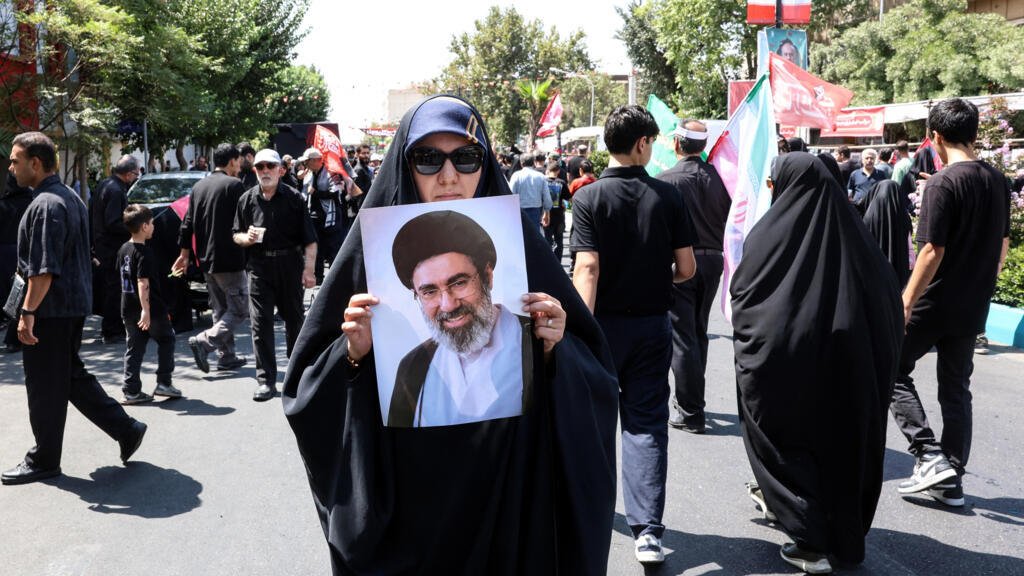
Mojtaba Khamenei has not appeared in public since taking office and notably missed his father’s funeral service last month. His communications have been strictly limited to written statements released through official channels.
This prolonged absence from public view has fueled persistent rumors of growing tension between the Supreme Leader’s office and civilian leadership in Tehran.
President Pezeshkian strongly defended Khamenei against these claims, stating that past meetings between them were constructive, logical, and marked by mutual understanding.
He criticized malicious actors for attempting to paint a distorted image of the Supreme Leader’s authority and presence during a national crisis.
Reports Highlight ‘Final Ultimatum’ and IRGC Power Shifts
Despite Pezeshkian’s defensive statements, emerging reports indicate significant internal friction within Iran’s political structure.
Israeli broadcaster Channel 14, citing sources familiar with the developments, reported that Supreme Leader Mojtaba Khamenei recently issued a final ultimatum to President Pezeshkian. In addition, he gave strong backing to Islamic Revolutionary Guard Corps (IRGC) Commander Ahmad Vahidi on major national security decisions.
The reports suggest that Pezeshkian formally offered his resignation in May. He argued that the elected government had been sidelined from key foreign policy and security negotiations involving Washington and Tehran.
By refusing to dissuade Pezeshkian from stepping down, the Supreme Leader has effectively stripped the president of primary political leverage. This signals a decisive shift toward IRGC dominance over state decisions.

Curated news reports, in-depth analysis, and special features by India’s Opinion editorial team.