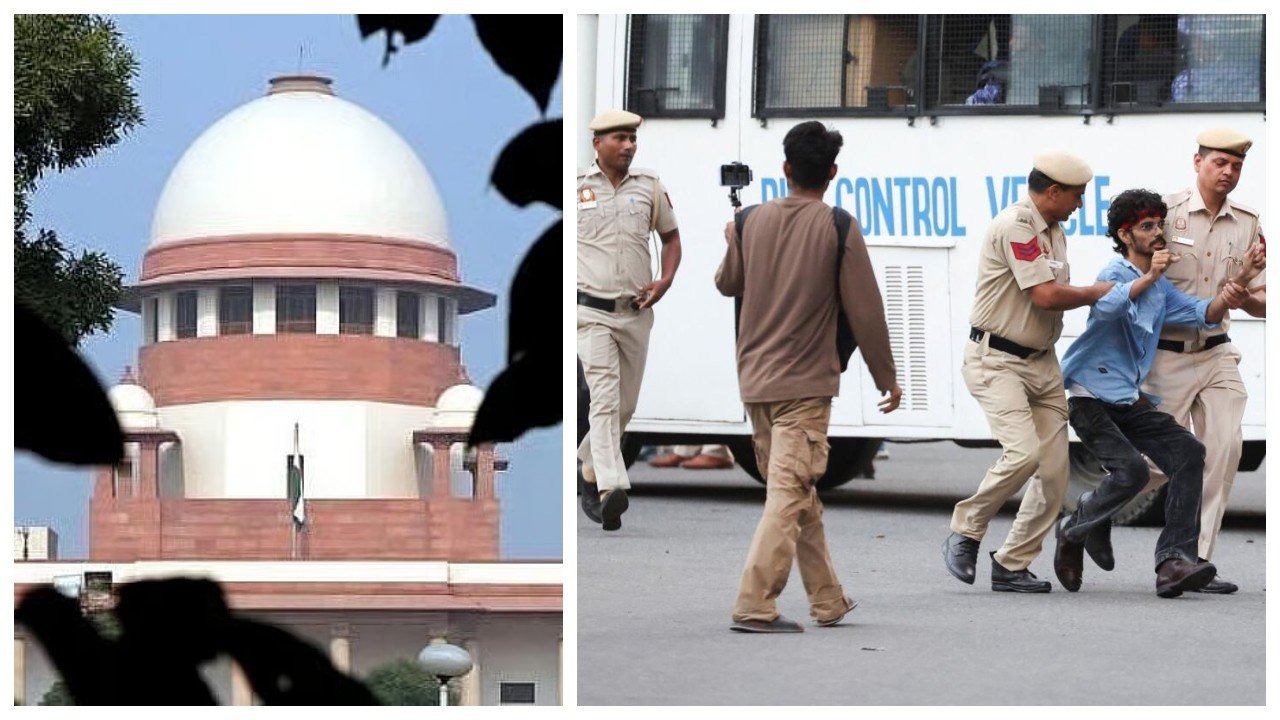
The Supreme Court on Friday delivered a stern rebuke to the Union Government and Delhi Police over sweeping transit shutdowns in the capital. The bench questioned the administration’s decision to close 57 metro stations and cancel train services ahead of planned demonstrations.
Hearing an urgent petition, the top court emphasized that law enforcement agencies cannot disrupt daily public life to manage peaceful political gatherings. Furthermore, the bench observed that authorities must practice proportionality when maintaining civic order, according to a legal report by The Indian Express.
‘You Cannot Use a Hammer to Kill a Fly’
During the hearing, the bench scrutinized the sweeping restrictions imposed ahead of Saturday’s demonstration called by the Cockroach Janta Party (CJP). The planned rally seeks the resignation of Chief Election Commissioner Gyanesh Kumar over voter list revisions.
The judges expressed shock at the scale of public transit disruption ordered across the National Capital Region. “You have to maintain law and order, but it does not mean that you will use a hammer to kill a fly,” the bench remarked in open court.
The court noted that shutting down dozens of arterial metro gates and halting trains forces ordinary office-goers, patients, and students into immense hardship, as detailed by Hindustan Times.
Bench Directs Authorities to Ease Blanket Closures
The petition challenged the widespread preventive measures enforced by the Delhi Metro Rail Corporation (DMRC) and Northern Railway on police advice. Earlier in the day, railways announced ten-hour train cancellations at New Delhi and Hazrat Nizamuddin stations.
However, the Supreme Court directed the Centre and Delhi Police to reassess the blanket bans immediately. The bench emphasized that the state must balance public security with the fundamental rights of citizens to travel freely.
Therefore, the judges instructed security agencies to adopt targeted crowd-management protocols rather than paralyzing the entire metropolitan transit grid, according to reporting by NDTV.
Right to Peaceful Protest Versus Public Order
The apex court observed that peaceful assembly remains a bedrock constitutional guarantee under Article 19. While police possess statutory powers to prevent violence, authorities cannot treat every large gathering as a security crisis.
The bench pointed out that shutting down public transportation actually increases confusion and road congestion on the streets. Meanwhile, lawyers representing civil society groups argued that blanket curbs aim to suppress democratic oversight of constitutional bodies.
Consequently, the court reaffirmed that administrative convenience cannot override basic democratic freedoms.
Balancing Capital Security With Citizen Mobility
The Supreme Court’s decisive intervention sends a firm signal to urban police forces across the country.
While managing demonstrations in high-security diplomatic zones requires vigilance, heavy-handed measures inflict disproportionate pain on everyday commuters. By ordering authorities to ease transit restrictions, the court protected both public convenience and constitutional balance.
Ultimately, Friday’s ruling reminds law enforcement that modern crowd control requires measured tactical policing rather than blunt administrative overreach.

Curated news reports, in-depth analysis, and special features by India’s Opinion editorial team.