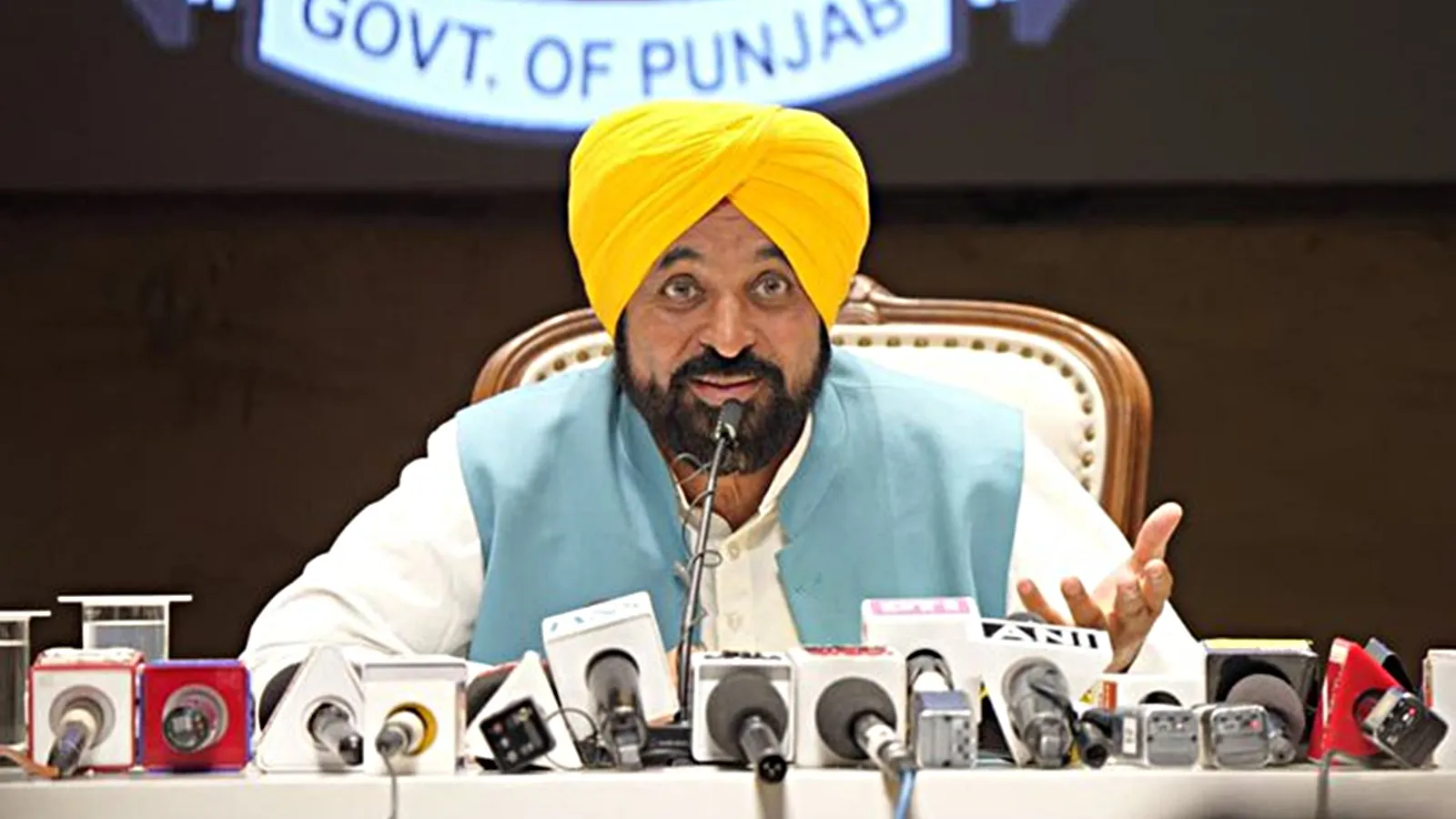
With just four months remaining before Punjab heads to the polls, the political discourse in the state has once again centered on one of its most emotive issues. Aam Aadmi Party leader Bhagwant Mann has taken an open, uncompromising stand on the proposed anti-sacrilege law.
Mann emphasized that justice in sacrilege cases cannot remain trapped in political rhetoric. He demanded stringent statutory provisions, including life imprisonment for those found guilty of desecrating holy scriptures. His remarks have injected fresh urgency into the debate as political parties sharpen their electoral strategies across the state.
A Clear Stance on a Sensitive Issue
Sacrilege of holy texts remains a deeply sensitive subject in Punjab. It has shaped public sentiment and election outcomes for nearly a decade.
Speaking on the subject, Mann stated that the state needs a transparent legal framework. The law must ensure swift investigation and maximum punishment. He noted that previous administrations failed to provide closure to the people of Punjab. Repeated delays and prolonged committee probes have eroded public faith in the system.
Mann argued that symbolic political gestures are no longer enough. The community expects concrete legislative action that serves as a permanent deterrent.
Key Pillars of the Proposed Legal Framework
Mann outlined several core principles that must guide the legislation:
- Maximum Penalties: Mandatory life imprisonment for convicted offenders without leniency.
- Equal Respect for All Faiths: Strict legal safeguards covering Sri Guru Granth Sahib, the Srimad Bhagavad Gita, the Holy Quran, and the Holy Bible.
- Fast-Track Courts: Time-bound judicial proceedings to prevent trials from dragging on for years.
- Institutional Accountability: Stringent penalties for administrative negligence or deliberate procedural lapses during investigations.
Mann highlighted that deterrence is effective only when the process moves quickly. A tough law requires prompt investigation and firm enforcement.
Navigating Political and Religious Stakeholders
The push for a stronger anti-sacrilege law involves balancing complex constitutional standards and community expectations.
Religious institutions and bodies like the Akal Takht and the Shiromani Gurdwara Parbandhak Committee (SGPC) have often raised concerns about statutory definitions and jurisdictional scope. Addressing these complexities, Mann expressed openness to comprehensive consultations with legal scholars, community representatives, and religious organizations.
He insisted, however, that consultations must strengthen the statute rather than water down its primary provisions. The core purpose of the law must remain intact to protect communal harmony and safeguard religious sanctity across Punjab.
Why the Timing Matters for the Upcoming Polls
The timing of Mann’s statement carries significant political weight. With the assembly elections just four months away, voters are closely scrutinizing party records on delivering justice in historic sacrilege and police firing incidents.
Opposition parties have frequently traded blame over unresolved cases and delayed legislation. By presenting an open and decisive posture on the anti-sacrilege bill, Mann seeks to establish clear accountability. His stance directly challenges rival parties to clarify their own commitments on the floor of the legislature and before the public.
As campaigning picks up momentum across the state, the demand for legislative action on sacrilege is set to remain at the forefront of Punjab’s political agenda.

Curated news reports, in-depth analysis, and special features by India’s Opinion editorial team.