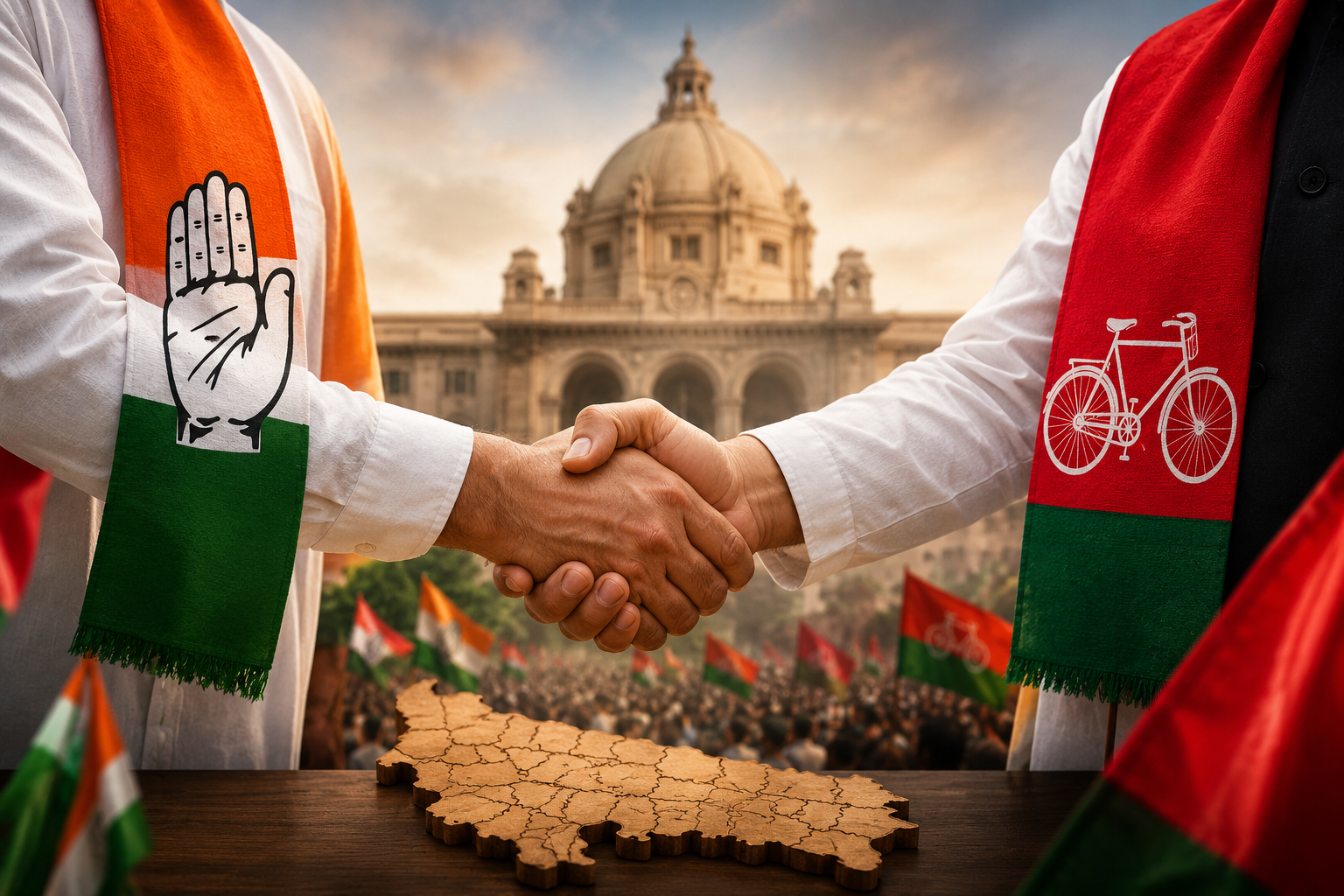
The debate over the Congress Samajwadi Party Alliance 2027 has intensified after senior Congress leaders demanded an “equal partnership” with the Samajwadi Party ahead of the Uttar Pradesh Assembly elections. The demand reflects Congress’ renewed political confidence following the 2024 Lok Sabha elections and could significantly influence opposition politics in India’s largest state.
While the Congress and the Samajwadi Party remain allies within the broader opposition bloc, their respective ambitions for the 2027 Uttar Pradesh Assembly elections appear to be creating fresh tensions. The question is no longer whether the two parties will contest together, but under what terms.
Congress Samajwadi Party Alliance 2027: Why Congress Wants Equal Status
For nearly three decades, Congress has struggled to regain political relevance in Uttar Pradesh. However, the party believes that the political landscape has shifted following its improved performance in the 2024 Lok Sabha elections.
Senior Congress leaders have increasingly argued that the party should no longer be treated as a junior partner in Uttar Pradesh. The party’s leadership believes that its national presence, improved organizational efforts and recent electoral momentum justify a larger role in any future alliance arrangement.
Congress has reportedly begun identifying Assembly constituencies where it believes it can mount competitive campaigns. By publicly demanding an “equal partnership”, the party is signalling that it intends to negotiate from a position of greater confidence than in previous elections.
How the Congress-Samajwadi Party Alliance Could Affect UP Politics
For the Samajwadi Party, Congress’ demand presents a strategic challenge. The SP remains the principal opposition party in Uttar Pradesh and views itself as the natural leader of any anti-BJP coalition in the state.
The success of opposition cooperation during the 2024 Lok Sabha elections demonstrated the electoral benefits of alliance politics. However, Assembly elections operate under different political dynamics. Local leadership, caste equations, booth-level organization and constituency-specific factors play a much larger role.
From the Samajwadi Party’s perspective, conceding a large number of seats to Congress may weaken its own organizational advantages. As a result, negotiations over seat-sharing are likely to become increasingly complex as the election approaches.
Is Congress Using the Alliance Debate as a Negotiation Strategy?
Political observers believe that Congress’ demand for equal partnership may also represent a calculated negotiating strategy. Publicly articulating ambitious demands before formal talks begin is a common tactic in coalition politics.
By projecting organizational strength and political confidence, Congress may be attempting to improve its bargaining position before seat-sharing discussions formally commence. Even if the party ultimately settles for fewer seats, establishing a higher initial demand could yield more favourable terms.
This strategy also serves another purpose: it energizes party workers and reinforces the perception that Congress is attempting to rebuild itself independently in Uttar Pradesh rather than merely surviving through alliances.
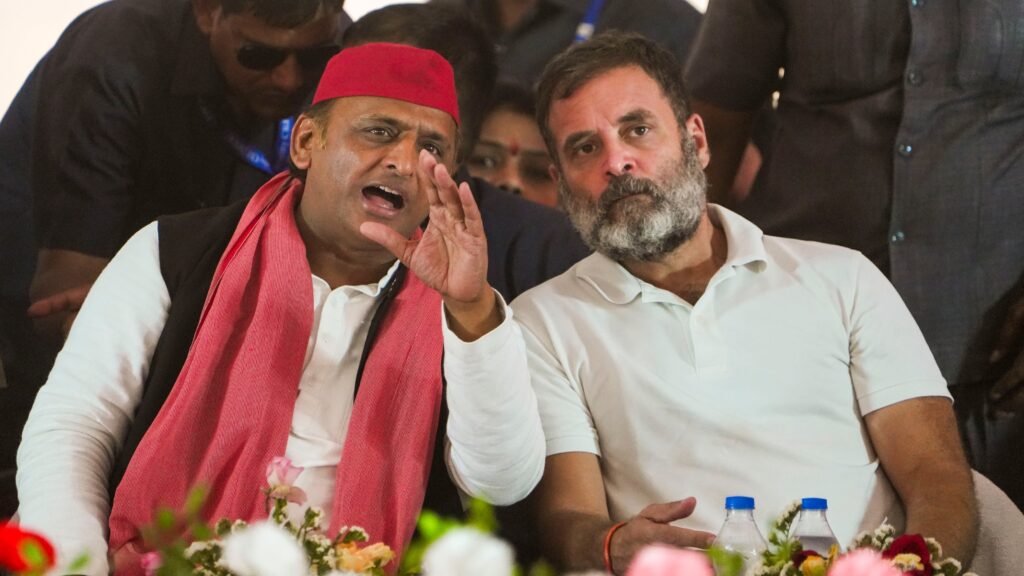
What the Congress-Samajwadi Party Alliance Means for BJP’s Electoral Strategy
The evolving relationship between Congress and the Samajwadi Party will also be closely watched by the BJP. Historically, divisions within opposition alliances have often benefited the ruling party in Uttar Pradesh.
A fragmented opposition could strengthen the BJP’s electoral prospects. Conversely, a cohesive alliance with effective seat-sharing and coordinated campaigning could present a more serious challenge.
Both Congress and the Samajwadi Party understand this reality. Despite their current public posturing, political compulsions may eventually push both parties towards compromise.
Can the Congress-SP Alliance Stay United Until 2027?
At present, neither party appears willing to publicly retreat from its position. Congress seeks to project itself as a resurgent political force with ambitions beyond symbolic participation, while the Samajwadi Party remains determined to preserve its leadership role within the opposition space in Uttar Pradesh.
Whether Congress’ demand for equal partnership represents a genuine political objective or a tactical negotiating position, one thing is increasingly clear: the road to the 2027 Uttar Pradesh Assembly elections will involve intense bargaining, strategic positioning and complex political calculations.
The future of the Congress-Samajwadi Party alliance may ultimately depend on a simple question: can shared political interests outweigh competing political ambitions?

Curated news reports, in-depth analysis, and special features by India’s Opinion editorial team.