
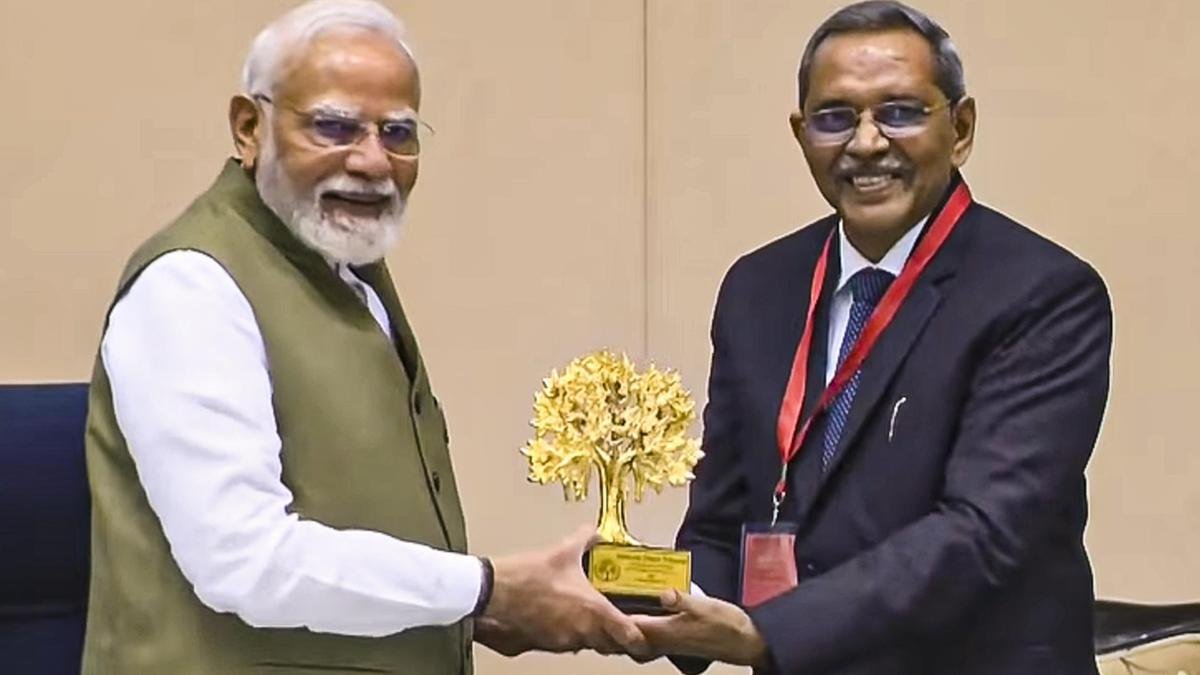
Prime Minister Narendra Modi strongly defended developing economies against disproportionate international climate censure on Saturday. Speaking in New Delhi, Modi stated that global platforms unfairly blame developing countries for rising carbon emissions. Furthermore, the Prime Minister highlighted massive historical imbalances between industrialized powers and emerging economies. He addressed domestic and international jurists at Vigyan Bhawan, according to LiveLaw.
The National Green Tribunal organized the two-day international conference titled The Future of Environment and Climate Dynamics. However, developed countries frequently evade historical responsibilities while demanding aggressive transition targets from Global South partners. Consequently, Modi called for equitable environmental jurisprudence that balances developmental aspirations with ecological stewardship. Judicial delegates from seventeen participating nations attended the high-level legal summit.
Modi Highlights Per-Capita Emissions Disparity
Modi underscored stark empirical data illustrating deep global inequalities in contemporary energy consumption. He noted that India’s per-capita greenhouse gas output remains less than half of the global average. In addition, developed nations generate per-capita carbon emissions approximately six times higher than developing countries. The Prime Minister stressed that climate policy cannot ignore historical consumption patterns, reports SCC Online.
Developing societies require substantial carbon space to lift millions out of poverty and construct basic infrastructure. Therefore, imposing identical mitigation obligations across fundamentally unequal societies violates fundamental principles of natural justice. Furthermore, Modi emphasized that global institutions must guarantee adequate climate finance and green technology transfers. Wealthier countries must fulfill past promises instead of shifting moral responsibility onto poorer populations.
India’s Proactive Strides in Clean Energy Transition
Despite bearing minimal historical responsibility, India continues spearheading proactive climate solutions across the globe. Modi asserted that India achieved its Paris Climate Agreement capacity targets years ahead of initial projections. Moreover, ambitious domestic initiatives like the International Solar Alliance showcase India’s transformative clean energy leadership. The nation steadily expands massive solar, wind, and green hydrogen projects to decarbonize economic growth.
The Prime Minister underscored the philosophical roots guiding India’s environmental conservation ethos. He referenced ancient civilizational traditions advocating sustainable living in complete harmony with natural ecosystems. In addition, Modi urged international societies to embrace Mission LiFE to curtail consumerist lifestyles. Consequently, individual mindful consumption remains vital in addressing planetary climate instability.
Judicial Leadership and Launch of NGT Mobile App
During the inaugural ceremony, Prime Minister Modi officially launched the brand-new NGT Mobile Application. The digital platform enhances citizen access to specialized environmental justice across various regional tribunals. Furthermore, the technological tool streamlines petition tracking and enables transparent public participation in ecological governance. Specialized environmental courts play a crucial role in safeguarding community natural resources, notes LawBeat.
Chief Justice of India Surya Kant praised India’s pioneering environmental jurisprudence during his keynote address. He poetically described the Supreme Court as a majestic banyan tree providing shelter across successive generations. In addition, Justice Kant commended the National Green Tribunal for pioneering rapid dispute resolution mechanisms. Senior judicial dignitaries reiterated the imperative of harmonizing industrial development with constitutional fundamental rights.
Global Cooperation and Climate Justice Ahead
The two-day conference features intensive technical deliberations on biodiversity conservation and ecological damage assessments. International jurists and legal scholars plan to draft actionable frameworks for judicial climate cooperation. Meanwhile, Union Environment Minister Bhupender Yadav highlighted India’s progressive environmental legislative reforms during panel sessions. Experts emphasized that environmental jurisprudence must remain agile amid accelerating global climate disruptions.
The inaugural deliberations underscored that genuine climate action requires mutual trust between nations. Global leaders cannot achieve net-zero targets by penalizing emerging economies striving for basic socioeconomic dignity. Furthermore, developing nations will continue asserting their rightful voice during upcoming multilateral environmental negotiations. Modi’s strong remarks set an assertive tone for international discussions on shared climate responsibility.

Curated news reports, in-depth analysis, and special features by India’s Opinion editorial team.