
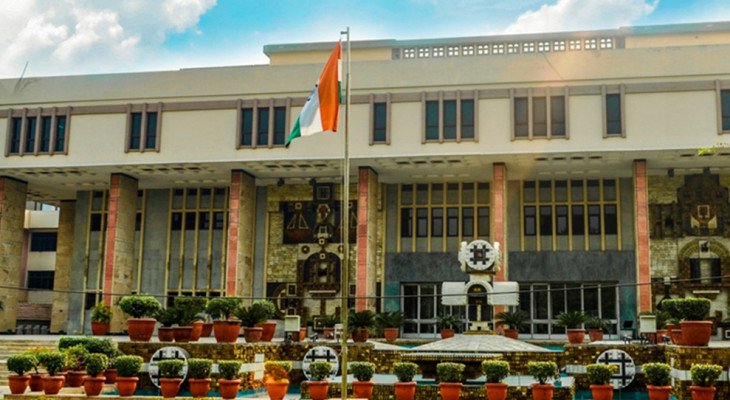
The Delhi High Court has ruled that Indian students who completed their medical degrees across multiple overseas institutions cannot appear for the Foreign Medical Graduate Examination (FMGE).
A division bench comprising Chief Justice Devendra Kumar Upadhyaya and Justice Tejas Karia delivered the judgment in Brij Sharadbhai Bhatt and Others v. National Medical Commission and Others. The court held that permitting candidates with fragmented medical education to sit for the licensure test harms public interest. The judges noted that such practices compromise healthcare standards in India, according to legal reporting by The Indian Express.
Additionally, the bench upheld statutory requirements demanding strict embassy attestation or apostille authentication for all foreign degrees before candidates can take the screening test, as detailed by LiveLaw.
Fragmented Medical Education Threatens Public Health
The petitioners were Indian citizens who pursued undergraduate medical programs abroad across two to three different colleges. They approached the High Court after exam authorities barred them from appearing for the FMGE. Without clearing this mandatory screening test, foreign medical graduates cannot register with state medical councils or practice medicine in India.
The petitioners argued that their final institutions had recognized transfer credits from earlier universities. Consequently, they claimed their primary medical qualifications remained legitimate.
However, the bench rejected this argument outright. The judges emphasized that medical training demands continuity, supervised clinical exposure, and rigorous institutional oversight.
Chief Justice Devendra Kumar Upadhyaya observed that any qualification built on fragmented study across multiple institutions cannot qualify as an eligible primary medical qualification. The bench stated that treating split degrees as valid credentials would dilute professional healthcare quality across the country.
High Court Upholds Strict Degree Authentication Rules
Beyond the transfer ban, the petitioners challenged two specific regulatory requirements:
- Regulation 4(1) of the Screening Test Regulations, 2002: Requires foreign medical qualifications to be verified by the concerned Indian Embassy as eligible for medical practice in the host nation.
- Clause 2.14 of the FMGE Information Bulletin: Mandates that degrees must be attested by the Indian Embassy or apostilled under the Hague Convention of October 5, 1961.
The candidates argued these rules imposed unnecessary administrative hurdles.
The court dismissed this contention. The bench stated that verification protects the healthcare system from fraudulent certificates. Furthermore, the judges ruled that formal authentication does not prejudice genuine candidates.
The division bench held that examination bodies must have the legal authority to verify certificates. This mechanism ensures that individuals relying on fake or substandard qualifications cannot enter the medical profession.
Expert Bodies Possess Regulatory Authority
The High Court reaffirmed the authority of specialized regulators like the National Medical Commission (NMC) and the National Board of Examinations in Medical Sciences (NBEMS).
The bench explained that statutory rules governing medical education reflect expert evaluation and accumulated field experience. Therefore, constitutional courts exercising judicial review under Article 226 cannot interfere with such policies unless they prove arbitrary or discriminatory.
The court noted that setting academic eligibility criteria falls squarely within the domain of statutory regulators. Because the NMC regulations protect patient safety, the bench found no valid legal ground to strike them down.
Implications for Foreign Medical Students
This verdict establishes a firm precedent for Indian students seeking medical qualifications abroad. It sends a clear signal to aspirants who transfer between universities during political turmoil, conflicts, or regulatory crackdowns.
Key takeaways for medical candidates include:
- Single-Institution Requirement: Medical education must be completed continuously within one recognized institution.
- Document Authentication: Degrees must carry official embassy attestation or Hague apostille certification.
- Strict Screening Compliance: FMGE registration portals will continue to reject transfer transcripts and unverified credentials.
Graduates with multi-college degrees can no longer bypass NMC eligibility criteria through court petitions. Aspirants must ensure that their foreign medical programs adhere strictly to Indian regulatory guidelines from admission through graduation.

Curated news reports, in-depth analysis, and special features by India’s Opinion editorial team.