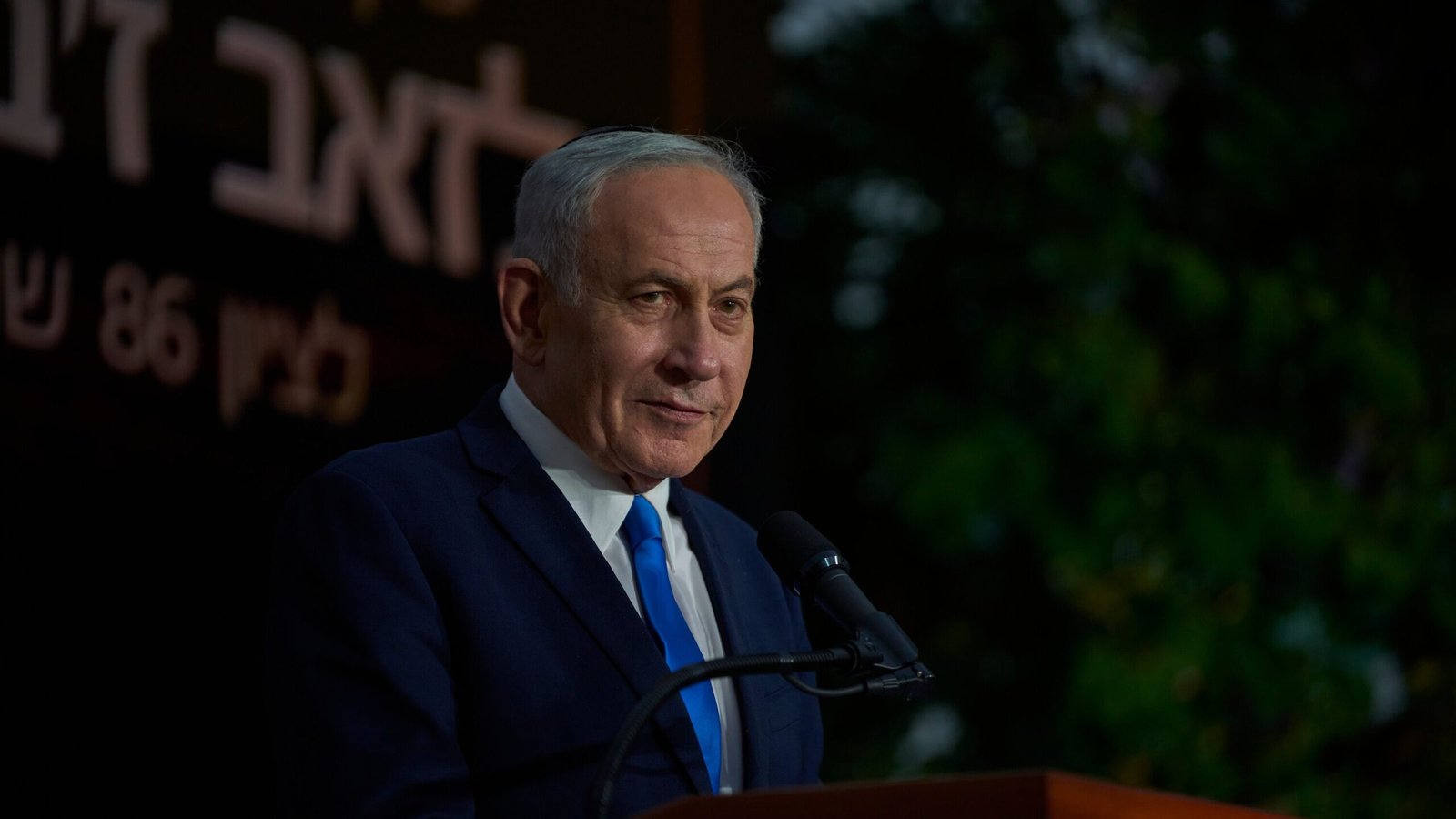
In an explicit rejection of Washington’s diplomatic roadmap, Israeli Prime Minister Benjamin Netanyahu announced on Sunday that Israel officially rejects the 15-point Gaza peace plan put forward by US President Donald Trump’s Board of Peace. Speaking during a Sunday cabinet meeting, Netanyahu declared that the Israeli Defense Forces (IDF) will not carry out any military pullout from the enclave until Hamas undergoes total and genuine disarmament.
The announcement marks Israel’s first direct rejection of the proposal that President Trump hailed late last month as a historic breakthrough toward ending the conflict and disarming militant factions in Gaza.
Netanyahu made it clear that while discussions with Washington continue, Israel will firmly reject clauses that compromise its primary security imperatives.
Disarmament of All Weapons
Addressing ministers at the cabinet session, Netanyahu emphasized that Israeli forces—which currently maintain operational control over approximately 70 percent of Gaza—will continue active operations to neutralize security threats.
He stressed that Israel will not accept a partial or ceremonial surrender of arms by militant groups as a trigger for troop redeployment.
“When I say disarming Hamas, I mean heavy weapons, lighter weapons—all weapons. We are talking about genuine disarmament, not a fictitious one,” Netanyahu stated.
Under the U.S.-backed framework drafted by Board of Peace High Representative Nickolay Mladenov, Israeli forces were expected to pull back in phases alongside the deployment of an International Stabilization Force and a newly formed Palestinian police unit.
Hamas Conditions and Statehood Refusal
The deadlock highlights a fundamental disagreement over the timeline and conditions for peace. While President Trump announced that Hamas had agreed to lay down its arms.
The Palestinian group countered that weapons surrendered to a new governance body would only happen after a complete Israeli military withdrawal, a total halt to hostilities, and progress on Gaza’s reconstruction.
Netanyahu firmly rejected that sequence, insisting that total disarmament must precede any Israeli troop movement. Furthermore, with political pressure mounting from coalition partners ahead of upcoming domestic elections, Netanyahu reiterated his absolute opposition to Palestinian sovereignty.
He reaffirmed that as long as he serves as Prime Minister, no independent Palestinian state will be established in either Gaza or the West Bank.
Ongoing US-Israel Negotiations and Broader Regional Strains
Despite the public rejection, Netanyahu noted that diplomatic communication with the White House remains open. “They have ideas, some of which are acceptable to us and some of which are unacceptable to us, and we know how to stand our ground,” he remarked, citing past instances where Israel pushed back against allied pressure.
The rejection comes amid a fragile regional backdrop. Although a broader ceasefire framework was reached between Israel and Hamas last year, periodic Israeli strikes have continued in Gaza to counter localized threats, resulting in significant casualties.
International observers warn that without consensus on the Board of Peace roadmap, the security and humanitarian crisis in the enclave risks further destabilization.

Curated news reports, in-depth analysis, and special features by India’s Opinion editorial team.