
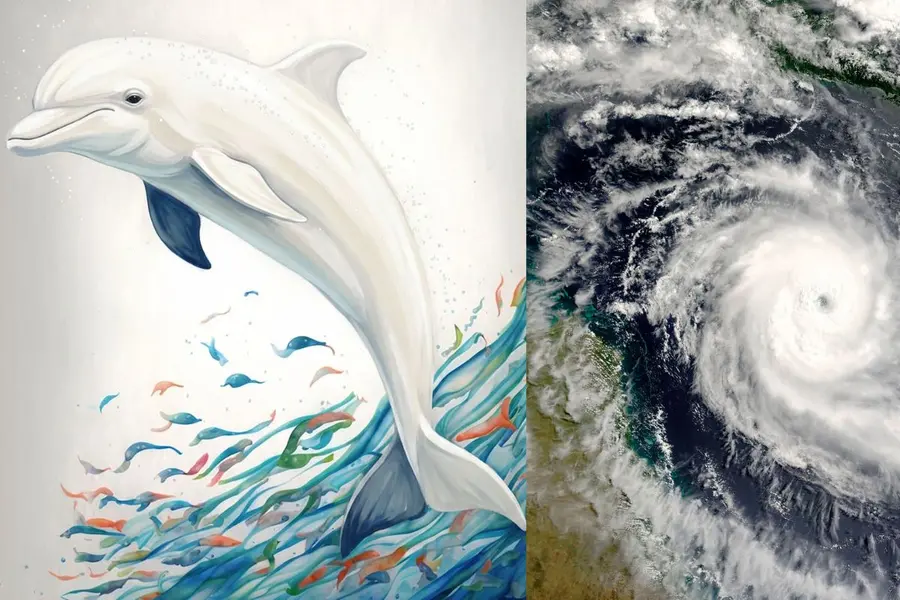
Typhoon Dolphin has struck Japan’s southern Okinawa prefecture, injuring six people and disrupting electricity and transport. The powerful storm moves across the East China Sea toward China. The storm brought winds of up to 216 kilometres per hour to parts of the region.
Five people were injured in Okinawa, with most of those incidents involving elderly residents who fell during the strong winds. Another injury was reported in Kagoshima prefecture.
More than 50,000 buildings experienced power disruptions across affected areas. Meanwhile, major airlines cancelled flights to and from parts of southern Japan. The disruption has left residents and travellers facing difficult conditions. Authorities are preparing for further impacts.
Typhoon Dolphin batters Okinawa
Okinawa bore the first major impact as the storm passed through the island region.
The typhoon’s strong winds damaged infrastructure and disrupted electricity supplies. Emergency services also dealt with injuries linked to falls and other accidents caused by the weather. The storm’s impact extended beyond Okinawa.
Kagoshima prefecture also reported power disruptions affecting nearly 39,000 buildings. The combination of powerful winds, heavy rain and coastal conditions created risks for residents, transport operators and emergency crews.
China prepares for landfall
China is now preparing for the next phase of the storm.
Forecasts indicated that the system could make landfall between Zhoushan in Zhejiang province and Fuding in Fujian province late Sunday or early Monday. Chinese authorities raised their emergency response level to III. They also classified the storm as an orange-category typhoon. Authorities suspended port operations in Zhejiang. They halted ferry services as well.
Construction activity was also suspended in affected areas. Meanwhile, flights at Ningbo Lishe International Airport were grounded. Shanghai’s Yangshan port was cleared of vessels as authorities prepared for worsening conditions.
Several rail services across the Yangtze River Delta were also scheduled for suspension. The preparations reflect concern over the storm’s potential to affect one of China’s most economically important coastal regions.
Heavy rainfall could become another threat
Wind damage is only part of the danger. Eastern Zhejiang could receive more than 600 millimetres of rainfall, according to forecasts cited by Reuters.
Such rainfall can trigger flooding, landslides and dangerous rises in rivers and drainage systems. The threat becomes more serious when intense rainfall combines with already saturated ground. Urban areas can also face rapid flooding when drainage networks struggle to handle large volumes of water.
Authorities therefore face the difficult task of managing both immediate wind damage and the longer-lasting effects of heavy rain.
Japan faces widespread transport disruption
The storm has also disrupted air travel across southern Japan.
All Nippon Airways and Japan Airlines cancelled flights to and from affected areas as conditions deteriorated. Travellers faced delays and cancellations while airports dealt with strong winds and safety restrictions. Transport interruptions can continue even after the strongest winds weaken.
Airports, roads, ports and rail networks must inspect infrastructure before normal operations resume. For island communities such as Okinawa, these disruptions can have a particularly strong effect. This is because air and sea links are essential for movement and supplies.
Taiwan also feels the storm’s effects
Taiwan has also experienced travel disruption as the storm moves through the region.
Authorities reported 78 cancelled flights, while heavy rainfall was expected in parts of the island. No evacuation orders had been issued at the time of the Reuters report.The storm has also created a maritime-security issue.
China imposed restrictions on maritime traffic in the Taiwan Strait, a move Taipei criticised as unjustified. That adds a political dimension to what is primarily a weather emergency.
Why the storm matters beyond Okinawa
Typhoons are a recurring threat across East Asia, but their impact can extend far beyond the communities directly hit by strong winds.
China’s eastern coastline contains major ports, manufacturing centres and transport networks. Any prolonged shutdown can affect shipping schedules, industrial activity and regional supply chains. The Yangtze River Delta is particularly important to China’s economy.
Shanghai and surrounding provinces form one of the country’s largest industrial and commercial hubs. That makes the storm’s expected movement toward the Chinese coast a major concern for both local authorities and businesses.
Emergency preparations intensify
The response has shifted from preparation to damage control in Japan and back to preparation in China. Japanese authorities must assess damaged infrastructure while protecting residents from continuing hazards.
Chinese officials, meanwhile, are closing ports and suspending transport services before the storm reaches the mainland. Such early measures can reduce casualties by keeping people away from exposed areas and limiting movement during dangerous conditions.
The effectiveness of the response will depend on how closely the storm follows forecasts and how quickly it weakens after moving inland.
What happens next
The immediate focus is now on China’s eastern coastline, where authorities are preparing for the storm’s expected landfall. The biggest risks will come from the combination of destructive winds, torrential rainfall, coastal flooding and transport disruption.
Areas around Zhejiang and Fujian will remain under close watch as the system approaches. For Japan, the priority is restoring electricity, reopening transport links and dealing with damage left by the storm. For China, the challenge is to prevent the incoming system from turning into a wider humanitarian and economic disruption.
Typhoon Dolphin has already demonstrated how quickly a powerful storm can affect multiple countries and critical infrastructure. The next 24 to 48 hours will determine the scale of its impact across China’s densely populated eastern coast.

Curated news reports, in-depth analysis, and special features by India’s Opinion editorial team.