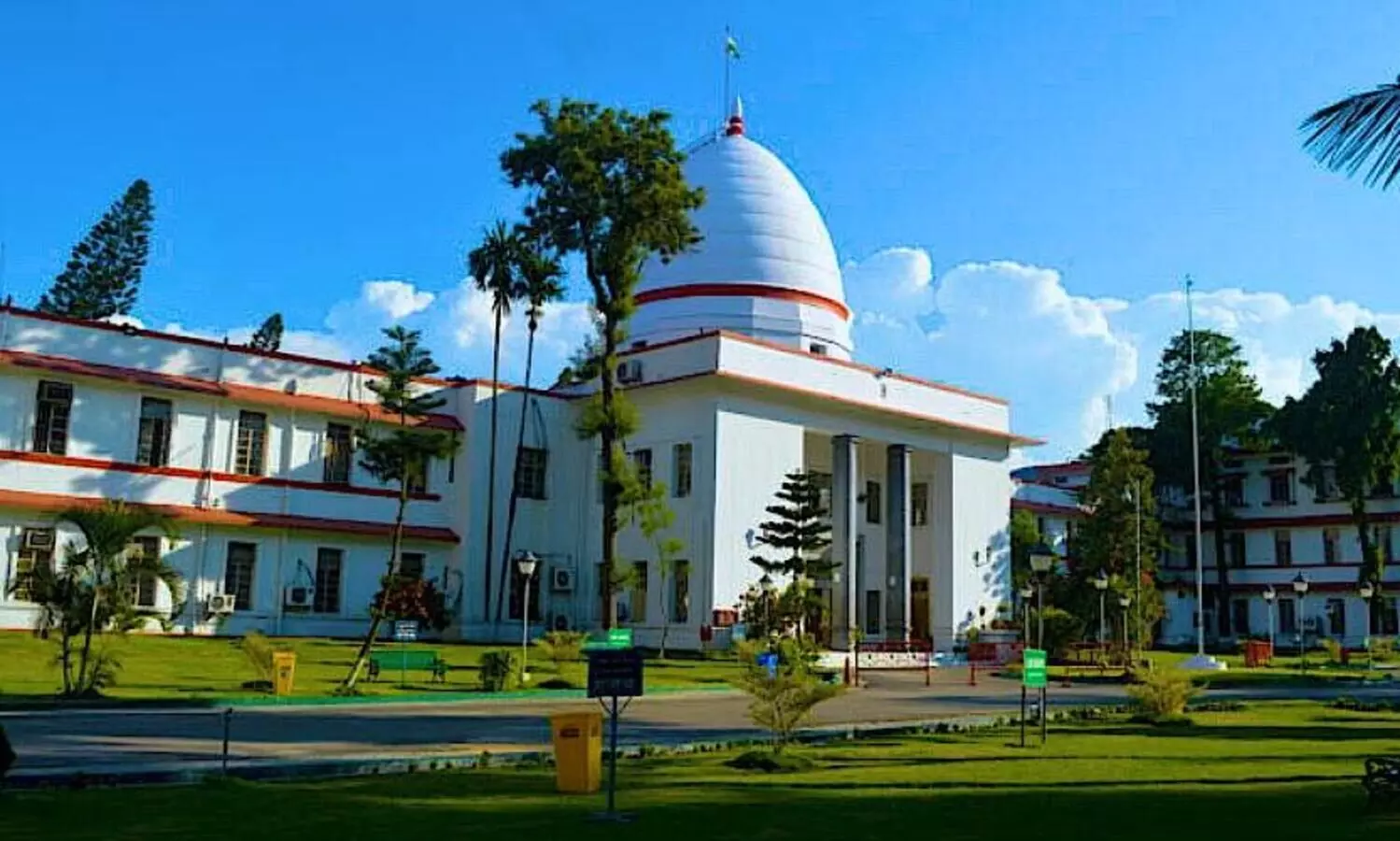
The Gauhati High Court has dismissed a man’s plea against an order declaring him an illegal migrant. But it granted him bail, holding that his entry into India from the then East Pakistan in 1964-65, during a period of communal riots targeting minorities, does not appear illegal.
A bench of Justices Kalyan Rai Surana and Susmita Phukan Khaund heard the plea. The man was challenging a tribunal order that had declared him an illegal migrant of the post-March 25, 1971 stream.
What the Court Said
The court leaned on the petitioner’s own testimony to reach its conclusion. “Based on the statement made by the petitioner in his cross-examination that he was 8 to 9 years old when he entered with his father into the State of Assam from the then East Pakistan. It can be presumed that the petitioner arrived India from the then East Pakistan in 1964-65 when there was communal riots targeting minorities, leading to a refugee exodus of the Hindu minority who were suffering communal persecution. Hence, the entry into the country appears not to be illegal,” the August 4 order said.
The bench also noted that the petitioner appears to hold a document establishing his refugee status. That document, the court observed, contains the name of his projected father along with a record of the petitioner’s entry into Indian territory.
How the Case Began
The man was contesting a December 19, 2016 order from the Foreigners’ Tribunal that had declared him an illegal migrant belonging to the post-March 25, 1971 stream.
To establish his Indian citizenship before the tribunal, he had relied on four documents: a registered sale deed dated November 26, 1966 in his projected father’s name. He also relied on a 1997 electoral roll carrying his own name, a certificate from a Gaonburah (a traditional village headman) certifying he was his father’s son, and a similar certificate from the Simenmukh Gaon Panchayat.
The tribunal accepted the sale deed as admissible, since it was more than 30 years old and attracted the presumption under Section 90 of the Evidence Act. But it found the Gaonburah and Gaon Panchayat certificates hadn’t been formally proved. Since their authors were never examined. The tribunal also held that the petitioner had failed to establish his relationship with his projected father. Additionally, it found that the 1997 electoral roll, being a post-1971 document, couldn’t by itself establish citizenship. On that basis, it declared him an illegal migrant.
Before the High Court, the petitioner asked that the tribunal’s opinion be set aside. He also sought a remand so he could produce additional evidence.
The State’s Argument
Appearing for the state, Additional Senior Government Advocate P Sarmah argued that the petitioner had failed to discharge his burden of proving citizenship. He contended that the Gaonburah and Gaon Panchayat certificates were inadmissible, since they were private documents never proved by examining their authors. He also argued that the 1997 electoral roll, being a post-March 25, 1971 document, could not on its own establish citizenship. Moreover, he argued that the petitioner had failed to legally establish his link to his projected father.
Why the Tribunal’s Finding Was Upheld on Citizenship
The High Court agreed with the state on the citizenship question, even as it ruled in the petitioner’s favour on the legality of his entry. It held that the sale deed only showed land ownership in the projected father’s name, not any relationship between the petitioner and that person. The court noted the petitioner hadn’t produced any inheritance or land revenue records connecting him to the property.
The court reiterated that a post-1971 electoral roll cannot by itself prove Indian citizenship. It also found that the petitioner had neither disclosed his date of entry into India nor pleaded his refugee status before the tribunal. Thus, he failed to establish his link to someone shown to have been present in India before March 25, 1971.
The court did note that tribunal records contained information indicating the petitioner’s father had entered India from East Pakistan in 1964. It also said he was recorded in the Refugee Identity Card Register. However, it held that these documents had never actually been exhibited before the tribunal.

Curated news reports, in-depth analysis, and special features by India’s Opinion editorial team.