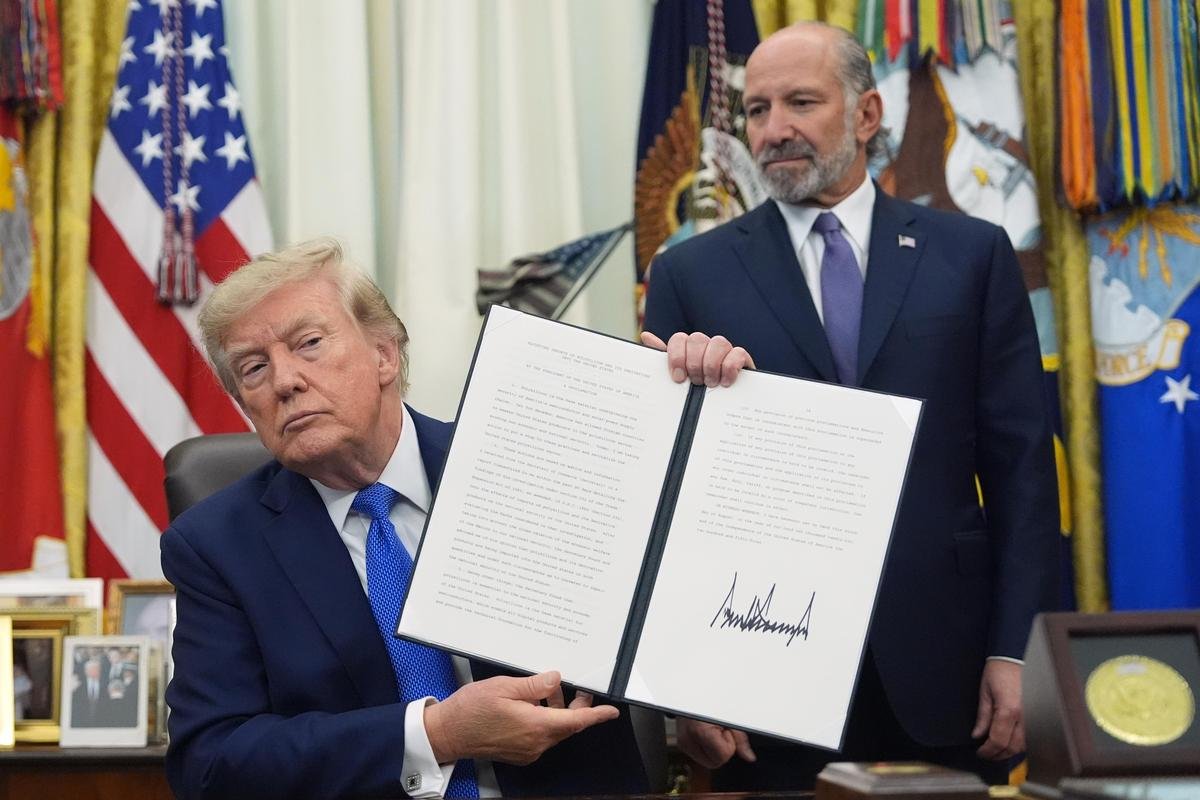
US President Donald Trump signed two new executive orders on Thursday aimed at limiting birthright citizenship and curbing commercial birth tourism. The move comes just five weeks after the US Supreme Court struck down his earlier, broader attempt to end automatic citizenship for children born on US soil. During an Oval Office signing ceremony, Trump stated that the administration was making necessary adjustments following what he called an unfortunate decision by the high court.
The new measures revive the debate over the 14th Amendment’s Citizenship Clause. The White House is now targeting specific categories of noncitizens, directing federal agencies to withhold citizenship documents from children born under certain defined circumstances.
What Do the Two New Executive Orders Direct?
The first executive order, titled Continuing to Protect the Meaning and Value of American Citizenship, instructs federal agencies not to issue citizenship documents to children born to two noncitizen parents in specific cases.
These target scenarios include children of foreign government employees, members of designated terrorist groups, and parents who entered into commercial transactions. Such as surrogacy arrangements or travel services to ensure a birth on US soil. It also covers children born in certain US territories where federal law does not explicitly confer citizenship.
The second executive order, titled Ending Birth Tourism, delegates presidential authority to the Department of State and the Department of Homeland Security. The order directs officials to deny visas, revoke travel authorizations, and bar entry to foreign nationals who travel to the United States primarily to give birth. The administration granted exceptions for humanitarian reasons and cases tied to vital national interests.
Why Is the Trump Administration Pushing This After a Supreme Court Loss?
On June 30, 2026, the US Supreme Court ruled in Trump v. Barbara that the 14th Amendment guarantees automatic citizenship to children born on US soil, even if their parents are in the country unlawfully or on temporary visas. Chief Justice John Roberts wrote for the majority that such children are citizens at birth under long-standing constitutional precedent.
However, the administration is using narrow exceptions noted in legal history to test the limits of executive power. White House officials argued that the 14th Amendment was originally enacted after the Civil War to protect the children of freed slaves, not to support commercial travel businesses.
Senior aides emphasized that foreign visitors should not use tourist visas to secure automatic benefits and citizenship rights for their infants.
How Does This Impact Indian Professionals and Tech Workers?
For the vast majority of Indian professionals residing in the US on legal, temporary work visas—such as H-1B, L-1, or O-1 visas—the immediate impact remains limited. The Supreme Court’s June ruling reaffirmed that children born to parents lawfully present on work or student visas remain protected under the Constitution.
However, immigration attorneys note that the broad wording regarding “commercial transactions” could create administrative friction. Legal experts caution that parents using surrogacy arrangements, commercial maternity care packages, or short-term medical travel options could face heightened scrutiny during passport and documentation applications. Furthermore, Indian nationals traveling on B-1/B-2 visitor visas while pregnant may face stricter questioning at US ports of entry and consular interviews.
Legal Challenges Ahead for the Administration
Prominent civil rights organizations and immigration lawyers quickly criticized the new orders as unconstitutional. Legal experts point out that an executive order cannot overwrite a constitutional guarantee or alter the Supreme Court’s explicit interpretation of the 14th Amendment.
The American Civil Liberties Union and legal advocates confirmed that fresh lawsuits will be filed to block the directives before they take full effect. As a result, federal courts are expected to issue temporary injunctions, setting up another major judicial showdown over US immigration policy.

Curated news reports, in-depth analysis, and special features by India’s Opinion editorial team.