
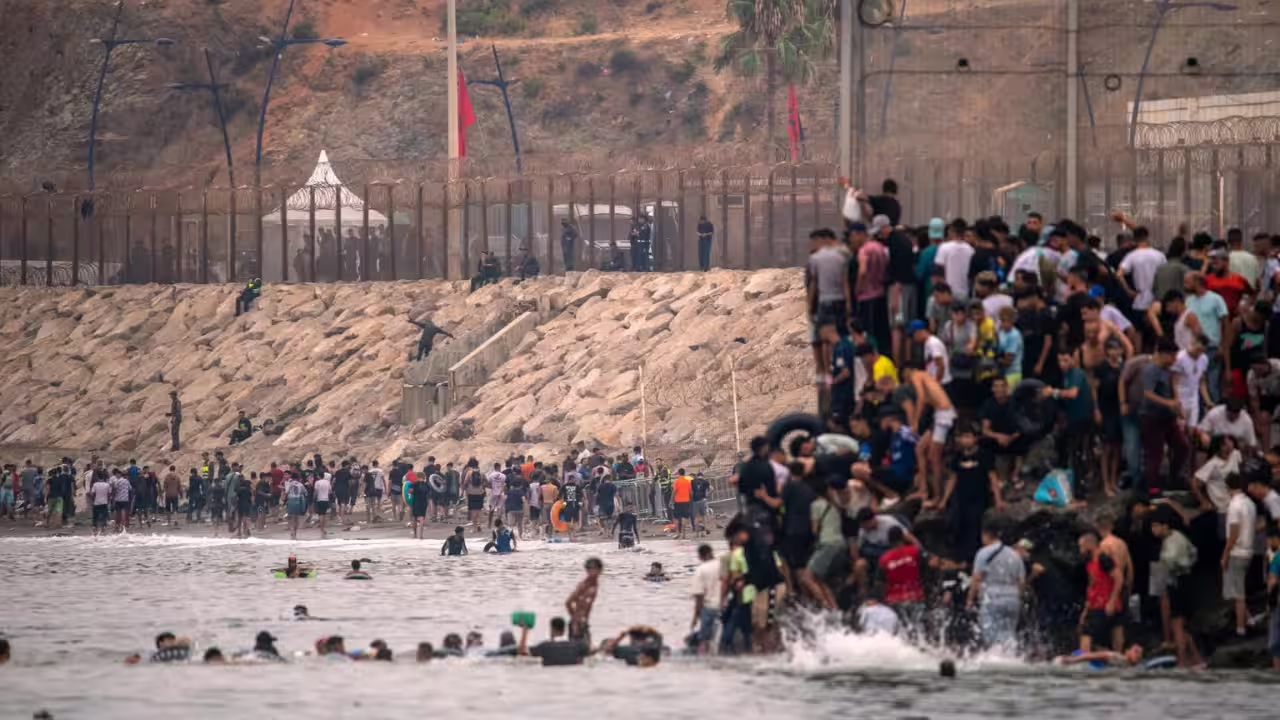
Moroccan authorities immediately took back hundreds of migrants who attempted a mass swim into Spain’s North African enclave of Ceuta over the weekend. As a result of the sudden surge, Spanish border enforcement deployed a new floating ocean barrier. There was a barrier to block maritime access points.
Dozens of young migrants tried to bypass land fences. Swimming around the Tarajal breakwater separating Moroccan territory from the Spanish enclave. Many used small inflatable water toys, makeshift flotation devices, or simple wetsuits to brave the cold waters.
Additionally, dense maritime fog blanketed the coastline throughout the operation. This created perilous swimming conditions and hindered visibility for rescue crews.
Emergency Measures and Floating Barrier at Tarajal Beach
Spanish security forces, including the Civil Guard and National Police, mobilized extra personnel and maritime rescue vessels along the Tarajal beach border. To halt the incoming wave of swimmers, authorities anchored a heavy floating chain-and-net barrier across the water. The barrier was anchored along the outer breakwater perimeter.
Working in tandem on the opposite side of the fence, Moroccan police units intercepted hundreds of individuals on Fnideq beach before they could enter the water. In addition, Moroccan authorities took back migrants who reached the Spanish shoreline under active bilateral readmission agreements. These agreements are between Madrid and Rabat.
In addition, Moroccan authorities took back migrants who reached the Spanish shoreline under active bilateral readmission agreements between Madrid and Rabat.
Spanish Red Cross emergency teams treated numerous migrants for severe hypothermia, physical exhaustion, and minor cuts sustained on the rocky breakwater. Medical personnel evaluated the swimmers before handing them over to border police.
Medical personnel evaluated the swimmers before handing them over to border police.
Ceuta Operating Over Capacity as EU’s Land Gateway
The Spanish enclaves of Ceuta and Melilla sit on the North African coast. They share the only direct land and sea borders between the European Union and the African continent.
As a result, both territories experience recurring migration surges from individuals seeking economic stability or asylum within EU member states.
Local government officials in Ceuta warned that the enclave’s temporary reception centers and facilities for unaccompanied minors are operating well beyond maximum capacity. Therefore, the local administration urgently requested the central Spanish government in Madrid to arrange emergency transfers of migrant youth. Youth would be moved to mainland autonomous communities. This would relieve pressure on local infrastructure.
Therefore, the local administration urgently requested the central Spanish government in Madrid to arrange emergency transfers of migrant youth.
Bilateral Security Cooperation and Humanitarian Concerns
Spanish Interior Ministry officials praised the diplomatic alignment and security coordination with Moroccan law enforcement. They emphasized that joint surveillance operations along the land fences and sea borders prevented thousands more from organizing coordinated crossing attempts over the weekend.
However, human rights groups and migrant advocacy organizations voiced deep concern over the immediate return procedures and the hazardous sea crossings. Therefore, rights activists urged both Spanish and Moroccan authorities to prioritize maritime safety, uphold international asylum standards, and ensure legal protections for vulnerable individuals during border operations.
Therefore, rights activists urged both Spanish and Moroccan authorities to prioritize maritime safety, uphold international asylum standards, and ensure legal protections for vulnerable individuals during border operations.

Curated news reports, in-depth analysis, and special features by India’s Opinion editorial team.