A new diplomatic opening in the Gaza conflict has emerged after U.S. President Donald Trump announced an agreement aimed at disarming Hamas and other armed groups in the territory. The Hamas Gaza disarmament plan is at the centre of this recent development. But the announcement has not produced a clear breakthrough, with Hamas attaching conditions to implementation and Israel yet to fully endorse the proposed arrangement.
Trump said on Thursday that his “Board of Peace” had reached an agreement for the complete disarmament of Hamas and other armed groups in Gaza. The proposal forms part of his wider plan for ending the conflict and establishing a new governing arrangement for the territory.
A senior Hamas official later told Reuters that the group would not implement the agreement until Israel meets its obligations under an earlier agreement reached in Sharm el-Sheikh. The statement highlights the gap between Washington’s description of the deal and Hamas’ position on how it should be implemented.
Hamas Gaza disarmament plan faces major conditions
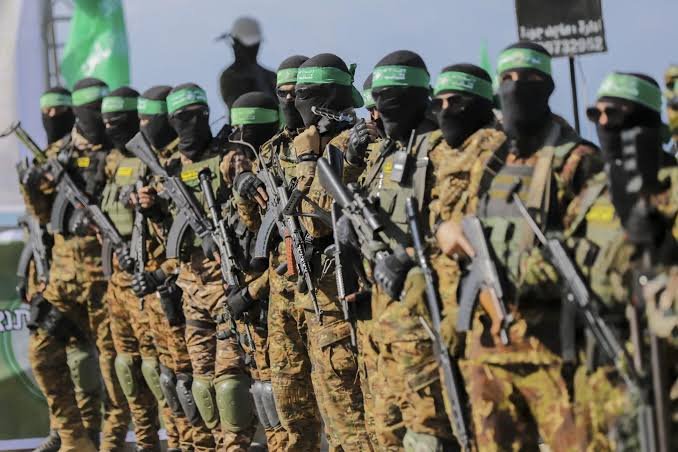
The proposed arrangement would require Hamas to surrender its weapons and dismantle its military infrastructure. Under the plan, the weapons would be placed in the custody of a neutral technocratic body known as the National Committee for the Administration of Gaza.
The proposal also envisages a phased Israeli military withdrawal and the creation of an International Stabilization Force.
A new Palestinian administration would take responsibility for governing Gaza as part of the wider transition.Hamas has not presented the agreement as an unconditional surrender of its weapons.
Senior Hamas representative Ghazi Hamad said implementation depends on Israel ending attacks, withdrawing to positions agreed under the earlier ceasefire arrangement and allowing greater flows of aid and goods into Gaza.
That distinction could prove decisive in the next stage of negotiations.
Trump calls agreement a major step
Trump has presented the agreement as a major development in his effort to end the Gaza conflict.
The U.S.-backed proposal links disarmament with a broader political and security transition. Egypt, Qatar and Turkey have played roles in mediating the negotiations, according to the Trump administration’s account.
The plan would also establish a new Palestinian governing structure and introduce an international security presence.Trump’s announcement came despite continued violence in Gaza.
Reuters reported that Israeli strikes killed several Palestinians, including children, on the same day the agreement was announced. That continuing violence underscores the difficulties facing negotiators.
Israel remains a key obstacle
Israel’s position could determine whether the agreement moves beyond negotiations.Israel has consistently demanded the complete demilitarisation of Hamas. Israeli officials have also insisted that Hamas cannot retain the military capability to threaten Israel.
Reuters reported that an Israeli official expressed reservations about the proposed terms and that Israel’s support for the arrangement remained uncertain.That creates a central problem for the plan.
Hamas wants guarantees over Israeli withdrawal and an end to attacks, while Israel wants Hamas to surrender its military capabilities.
Neither side appears willing to accept the other’s central demand without reciprocal commitments.
What would happen to Hamas’ weapons?
The handling of Hamas’ weapons could become one of the most difficult issues in the negotiations.Under the proposal, weapons would be stored by a neutral technocratic body rather than remaining under Hamas control.
The wider plan calls for the dismantling of Hamas’ military infrastructure.Questions remain over how such a process would operate on the ground.
Disarmament would require verification, security arrangements and agreement over who controls Gaza during the transition.
It would also require cooperation from armed groups and guarantees that weapons do not return to circulation.
The proposed timeline could therefore face practical obstacles even if the political sides reach an agreement.
Gaza’s future government is part of the deal
The disarmament proposal is linked to a broader question: who governs Gaza after Hamas?
The plan envisages a Palestinian technocratic administration taking responsibility for civilian affairs.
An international structure would oversee aspects of the transition, while an international stabilisation force would provide security support.
Trump’s “Board of Peace” would play a central role in the proposed transition.The initiative has attracted international attention but also criticism.
Reuters reported that the structure has faced concerns over its composition, Palestinian representation and the extent of its authority.
For Palestinians, the question of political representation remains particularly sensitive. Any new administration would need enough legitimacy to operate inside Gaza and gain acceptance from the wider Palestinian population.
Humanitarian situation remains fragile
Diplomatic negotiations are taking place against a severe humanitarian backdrop.Gaza has suffered extensive destruction, displacement and shortages during the conflict.
Even if fighting declines, reconstruction will require enormous resources and sustained international assistance.
The Trump-backed proposal includes increased humanitarian aid as part of the transition. Hamas, however, has made the flow of aid and goods into Gaza one of its stated conditions for implementation.
That means humanitarian access is not only a relief issue. It has become part of the political negotiations surrounding the proposed agreement.
What happens next?
The next stage will depend on whether Israel accepts the proposed framework and whether Hamas agrees to the practical mechanisms for disarmament.
The current positions remain far apart. Hamas has linked implementation to Israeli commitments, while Israel has demanded the group’s complete demilitarisation.
For that reason, the latest announcement should be treated as a potential diplomatic opening rather than a completed peace agreement.If negotiators can settle the questions of Israeli withdrawal, Hamas‘ weapons, Gaza’s future government, humanitarian access and international security arrangements, the proposal could become the foundation for a broader settlement.
For now, however, the central test remains whether the parties can turn a conditional political agreement into a mechanism that works on the ground.
The coming negotiations will determine whether Trump’s plan produces a lasting reduction in violence or becomes another attempt stalled by the deep mistrust between Israel and Hamas.

Curated news reports, in-depth analysis, and special features by India’s Opinion editorial team.