
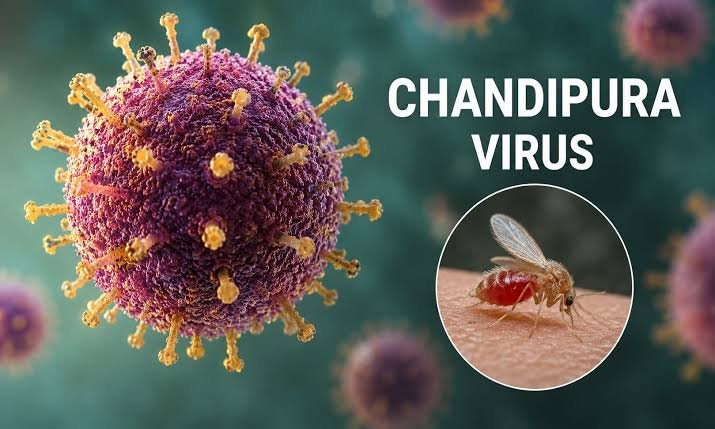
Public health specialists and national research teams are facing a puzzling mystery in Gujarat. The death toll from the Chandipura Vesiculovirus (CHPV) has risen to 25 within five weeks. Yet, experts have found no trace of the virus in any of the suspected insect carriers screened so far.
The state has recorded over 225 suspected cases and 39 laboratory-confirmed infections since late June. The virus predominantly strikes children under 15 years old, causing rapid onset of severe fever and Acute Encephalitis Syndrome (AES).
Negative Tests Across Thousands of Vector Samples
Historically, sandflies found in the crevices of mud houses or near livestock are considered the primary transmission vector for Chandipura virus. However, a massive surveillance drive was led by the National Joint Outbreak Response Team (NJORT) and the ICMR-National Institute of Virology. Notably, it has yielded zero positive results so far.
Researchers screened thousands of sandflies collected from affected households and villages. When sandfly tests returned entirely negative, scientists expanded RT-PCR testing to mosquitoes (Aedes and Culex genera), ticks, and mites. None contained traces of the virus.
Furthermore, blood and milk samples taken from cattle, goats, and buffaloes near patient residences showed no evidence of animal reservoir circulation.
Scattered Cases and Geographical Anomalies
What frustrates researchers most is the lack of geographical clustering. Instead of emerging in concentrated village clusters, cases appear as isolated single infections across 12 districts in Gujarat—including Patan, Sabarkantha, and Panchmahal. Additionally, cases have appeared in three districts in neighboring Rajasthan.
Moreover, sandflies are traditionally endemic to eastern Gujarat. Yet, multiple severe cases were diagnosed in western regions like Saurashtra. This unusual pattern leads scientists to suspect that an unidentified insect species or alternate transmission mechanism may be driving the spread.
Health Ministry Intensifies Surveillance
The Union Ministry of Health and Family Welfare stated that unraveling the transmission cycle remains the top priority for field investigators. Meanwhile, state health authorities have instructed all district hospitals to immediately refer suspected pediatric cases to facilities equipped with ventilators and oxygen support.
As laboratory testing continues for pending samples, medical teams are conducting door-to-door dusting operations and public awareness campaigns. However, until scientists pinpoint the exact carrier, controlling the seasonal outbreak remains a critical challenge.

Curated news reports, in-depth analysis, and special features by India’s Opinion editorial team.