
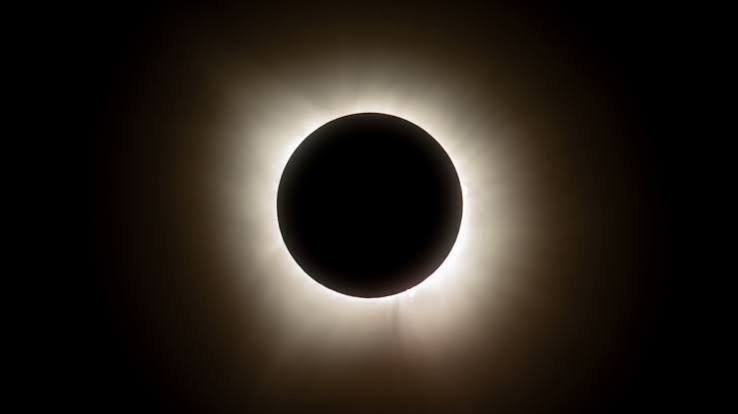
Millions of people across Europe are preparing for one of the decade’s most anticipated astronomical events as the Total Solar Eclipse 2026 approaches. Scheduled for August 12, the eclipse will be the first total solar eclipse visible from mainland Europe since 1999. It will draw astronomers, photographers and tourists to a narrow path stretching across Spain, Greenland, Iceland and parts of Portugal.
Hotels in prime viewing locations are filling up months in advance. Meanwhile, observatories, research teams and space agencies are planning live broadcasts and scientific observations. The event is expected to become one of Europe’s largest astronomy gatherings in decades.
Total Solar Eclipse 2026 will cross Europe
A total solar eclipse occurs when the Moon passes directly between the Earth and the Sun. It completely blocks the Sun’s bright surface for observers located within the narrow path of totality.
For the August 12 event, totality will pass over Greenland, Iceland, northern Spain and a small part of Portugal. Much of Europe, including the United Kingdom, France, Germany and Italy, will witness a deep partial eclipse instead.
In parts of southwest England, more than 90 percent of the Sun will be obscured. Therefore, it will be the most dramatic eclipse visible there since 1999.
Spain expected to attract thousands of visitors
Spain is expected to become the centre of global eclipse tourism. Also, the eclipse will arrive close to sunset, creating a rare opportunity to witness totality against a low western horizon.
Northern Spain, particularly Galicia and other regions along the eclipse path, is preparing for a large influx of domestic and international visitors.
Scientists also view Spain as an ideal observation point because weather conditions are generally more favourable in August than in several northern regions.
The 2026 eclipse will also begin what astronomers have called the “Iberian Eclipse Trio.” Spain will experience another total solar eclipse in 2027, followed by an annular eclipse in January 2028.
Scientists hope to study the Sun’s corona
Beyond its visual appeal, the Total Solar Eclipse 2026 offers valuable scientific opportunities.
During totality, the Sun’s outer atmosphere, known as the corona, becomes visible without specialised instruments. Researchers use these brief moments to study solar magnetic fields, plasma structures and space weather.
Space agencies and research teams are planning coordinated observations using telescopes, high-altitude balloons and aircraft. Their goal is to collect data that are difficult to obtain under normal conditions.
The findings could improve understanding of solar activity, which affects satellite communications, navigation systems and power infrastructure on Earth.
Safe viewing remains essential
Astronomers continue to stress that people should never look directly at the Sun without certified eye protection during the partial phases of the eclipse.
Experts recommend using ISO-certified eclipse glasses or approved solar filters. Ordinary sunglasses, smoked glass or improvised filters do not provide adequate protection.
Only those located within the path of totality may briefly observe the eclipse without eye protection. This can only happen during the short period when the Sun is completely covered by the Moon.
Will the eclipse be visible in India?
The Total Solar Eclipse 2026 will not be visible as a total eclipse from India. Because of time zone differences and the eclipse path, Indian observers will not experience the spectacular totality seen across parts of Europe.
Reports discussing both August 12 and August 13 refer to the same eclipse. The differing dates result from local time zones around the world.
Indian astronomy enthusiasts can instead follow live broadcasts from international observatories and space agencies covering the event.
Why this eclipse is special
The upcoming eclipse stands out because total solar eclipses over populated parts of Europe are relatively uncommon.
The last comparable event occurred in August 1999, when millions witnessed totality across several European countries.
More than a quarter of a century later, another opportunity has arrived, attracting renewed public interest in astronomy and space science.
The eclipse also coincides with the annual Perseid meteor shower, making August 2026 an especially memorable month for skywatchers.
As countdown preparations continue, scientists, travellers and amateur astronomers are watching the weather as closely as the skies.
Clear conditions could provide millions with a once-in-a-generation view of one of nature’s most remarkable celestial events.

Curated news reports, in-depth analysis, and special features by India’s Opinion editorial team.