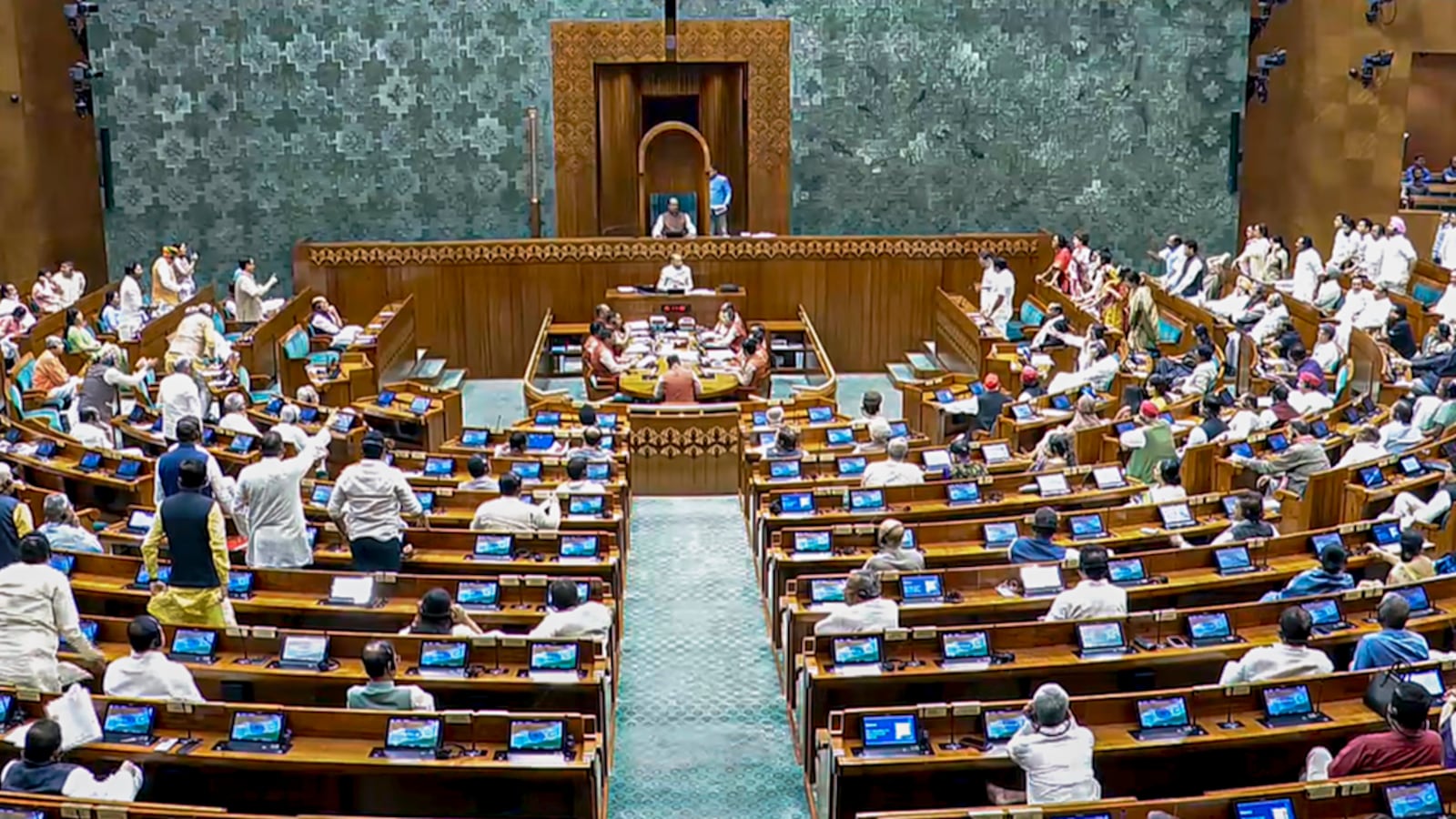
The Union Government stated in Parliament that Indian Institutes of Technology (IIT) graduates choosing to move abroad for higher studies or employment is entirely a matter of individual will and choice.
Responding to questions in the Lok Sabha regarding talent migration, the Centre explained that these decisions stem from personal considerations rather than systemic failures. Key drivers influencing student choices include financial affordability, access to education loans, exposure to international societies, and specific academic aptitudes.
The government emphasized that global mobility is a natural component of today’s interconnected knowledge economy, where skilled professionals move freely across international borders.
Parliamentary Inquiry into IIT Graduate Migration and Placements
The issue was raised in the Lok Sabha by Trinamool Congress Member of Parliament Mala Roy. She sought official details regarding campus placement trends across IITs over the past three years.
Roy requested specific figures on how many graduates secured job offers but later relocated overseas. She also asked the government to clarify the primary reasons behind this ongoing graduate migration.
Minister of State for Education Sukanta Majumdar addressed all parts of the query jointly. However, the ministry did not release specific numerical data regarding the exact count of IIT graduates migrating abroad after placements.
Instead, the response detailed institutional measures designed to prepare students for diverse career pathways.
Parliamentary Inquiry into IIT Graduate Migration and Placements
The Education Ministry highlighted several proactive measures introduced across IIT campuses to enhance student career outcomes. Institutes regularly organize academia-industry conclaves, business summits, leadership talks, internships, and specialized soft-skills workshops.
IITs also actively utilize their vast global alumni networks to secure placements with leading multinational companies. The Centre noted that campus placement results depend on changing market conditions, higher research pursuits, and rising entrepreneurial interests.
Many undergraduate students now deliberately skip traditional campus placements. They instead prefer off-campus opportunities, civil service preparation, or launching technology start-ups through campus incubators.
Addressing long-term migration concerns, the ministry pointed out that many graduates travel abroad only for temporary periods. These individuals frequently return to India after completing advanced degrees or gaining valuable short-term international work experience. T
The government reiterated its commitment to expanding higher education under the National Education Policy (NEP) 2020. NEP 2020 focuses on improving educational access, equity, inclusivity, and overall academic quality. Additionally, the policy emphasizes internationalizing Indian education to establish the country as a premier global learning destination.

Curated news reports, in-depth analysis, and special features by India’s Opinion editorial team.