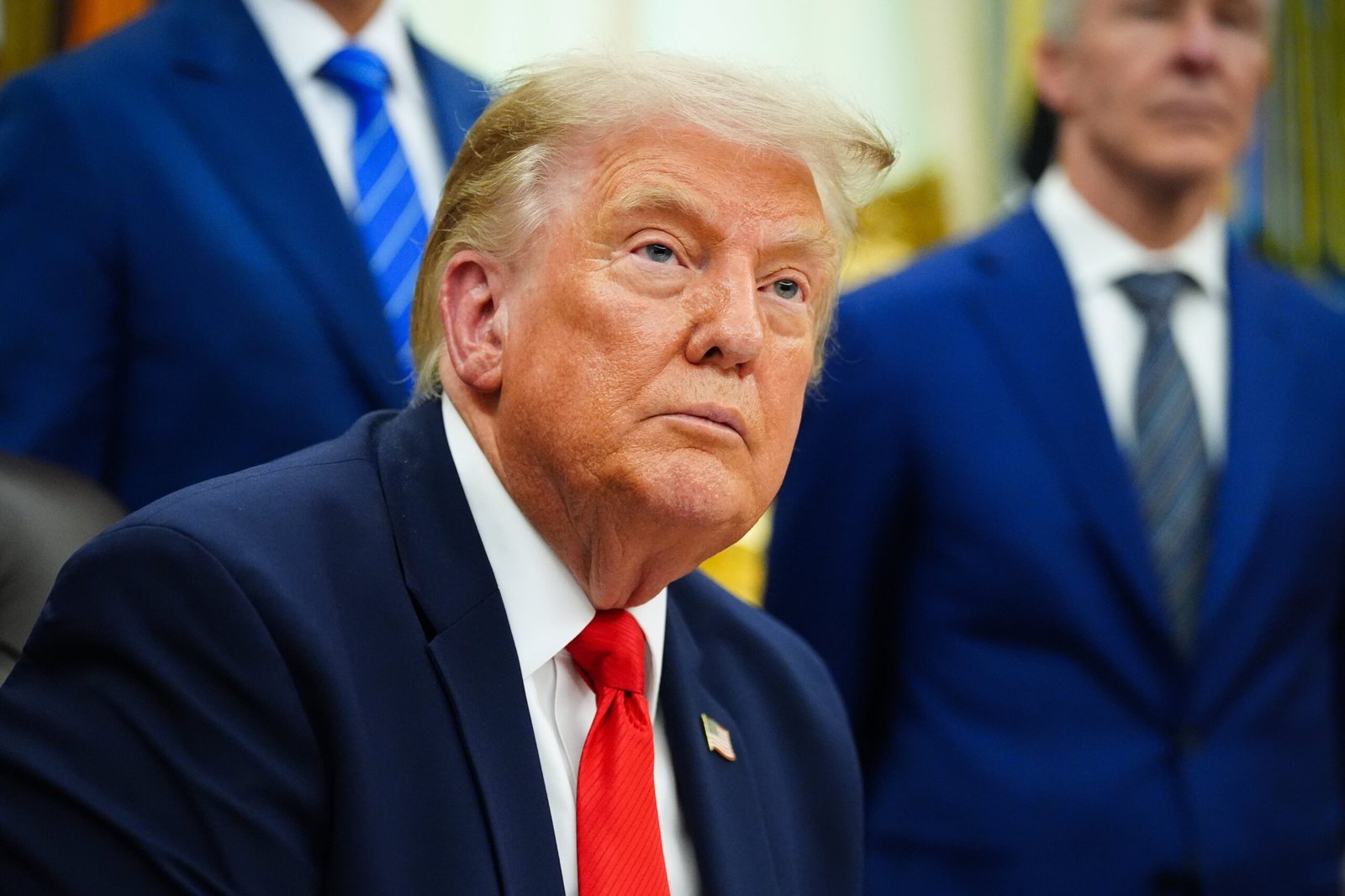
Security officials executed a highly classified operation to move US President Donald Trump between aircraft in Turkey. The high-risk maneuver responded directly to a credible, active assassination threat from Iranian intelligence networks.
An extensive investigative report published by The Washington Post revealed the details of the secret operation at Esenboğa International Airport in Ankara. The covert strategy kept the president’s true location hidden for hours from the public, international tracking networks, press corps members, and even senior White House staff.
The Tarmac Swap: Catering Truck Used as a Covert Bridge
President Trump had traveled to Ankara to attend an emergency NATO summit with regional allies. The visit occurred shortly after US military forces resumed targeted airstrikes against Iranian-backed militia sites in the Middle East. As intelligence reports indicated heightened threats against the president, US security agencies developed an immediate extraction plan.
Under the glare of television cameras, President Trump walked up the primary staircase of the iconic blue-and-white Air Force One Boeing 747. He turned, waved to onlookers, and entered the main presidential cabin.
However, once inside, the president did not remain on the aircraft. A commercial airport catering truck quietly pulled up to the opposite side of the Boeing 747, out of view from tarmac observers and camera crews.
Operators raised the catering box using hydraulic lifts to match an unexposed service door on the starboard side of the presidential plane. President Trump, along with a small team of Secret Service agents and top aides, stepped directly into the dark interior of the catering vehicle.
The truck lowered its platform and drove slowly across the active airfield. It stopped alongside a smaller, gray US Air Force C-32A transport jet waiting nearby. Defense Secretary Pete Hegseth boarded the same C-32A through a separate ground entry point.
Decoy Flight Deceives Trackers and Traveling Press Corps
The primary Boeing 747 functioned entirely as a decoy aircraft for the return journey across Europe. The plane carried the official White House press pool, administrative support staff, and several cabinet officials who believed the president was resting in his private quarters onboard.
Before takeoff from Ankara, White House communications personnel instructed all journalists onboard to keep their window shades completely closed throughout the flight. Flight crews cited heightened regional airspace security protocols as the reason for the strict blackout order.
Both aircraft took off in close succession and maintained coordinated flight paths toward RAF Mildenhall in the United Kingdom. Air traffic controllers and civilian flight tracking services monitored the primary 747 under its standard presidential callsign.
Upon arrival in the United Kingdom, both planes landed and taxied to a secure military apron. Secret Service agents safely escorted President Trump back onto the main Boeing 747 before ground crews opened the main passenger doors. The president then walked down the primary steps in front of gathered media, preserving the public appearance of a standard flight.
Escalating Intelligence Warnings from Tehran
Intelligence officials confirmed that threat levels against senior US leaders reached critical thresholds in recent weeks. Federal agencies intercepted communications indicating that Iranian operatives actively sought opportunities to target presidential transport routes in international airspace.
Threat assessments grew more urgent following recent regional military actions. Iranian state media and military commanders repeatedly pledged retaliation against US leadership.
Security experts noted that operating in foreign air hubs presented unique risks. Tarmac movements at commercial airports are difficult to shield completely from surveillance. The use of a catering truck provided a simple solution to shield physical movements from long-range optics and drone surveillance.
Equipment Capabilities and Vulnerability Concerns
The covert operation also renewed intense internal debate regarding presidential aircraft capabilities and fleet readiness. The mission involved a newly retrofitted Boeing 747-8 aircraft previously transferred from Qatar.
Reports indicated that the newly introduced aircraft lacked full integration of advanced missile defense systems and hardened military communications suites present on older, fully modified presidential planes.
Military advisors raised concerns about operating the newer jet near high-risk conflict zones. The smaller C-32A transport jet offered superior tactical maneuverability and specialized defensive countermeasures suited for rapid evasive action.
White House Defends Multi-Layered Security Protocols
The White House refrained from commenting on specific tactical procedures but defended the flexible security measures implemented during international travel. Officials emphasized that presidential protection protocols adapt constantly to evolving intelligence reports.
White House Communications Director Steven Cheung addressed the investigative findings in a public statement. He stressed that security agencies maintain absolute authority to adjust operational plans to guarantee safety.
“As the president has stated, various hostile foreign entities continually attempt to target American leadership,” Cheung said. “The Secret Service and Department of Defense utilize every tactical tool and operational strategy required to neutralize these threats and ensure complete security.”
Federal intelligence agencies continue to monitor foreign threat levels as presidential travel schedules undergo further security reviews for upcoming international summits.

Curated news reports, in-depth analysis, and special features by India’s Opinion editorial team.