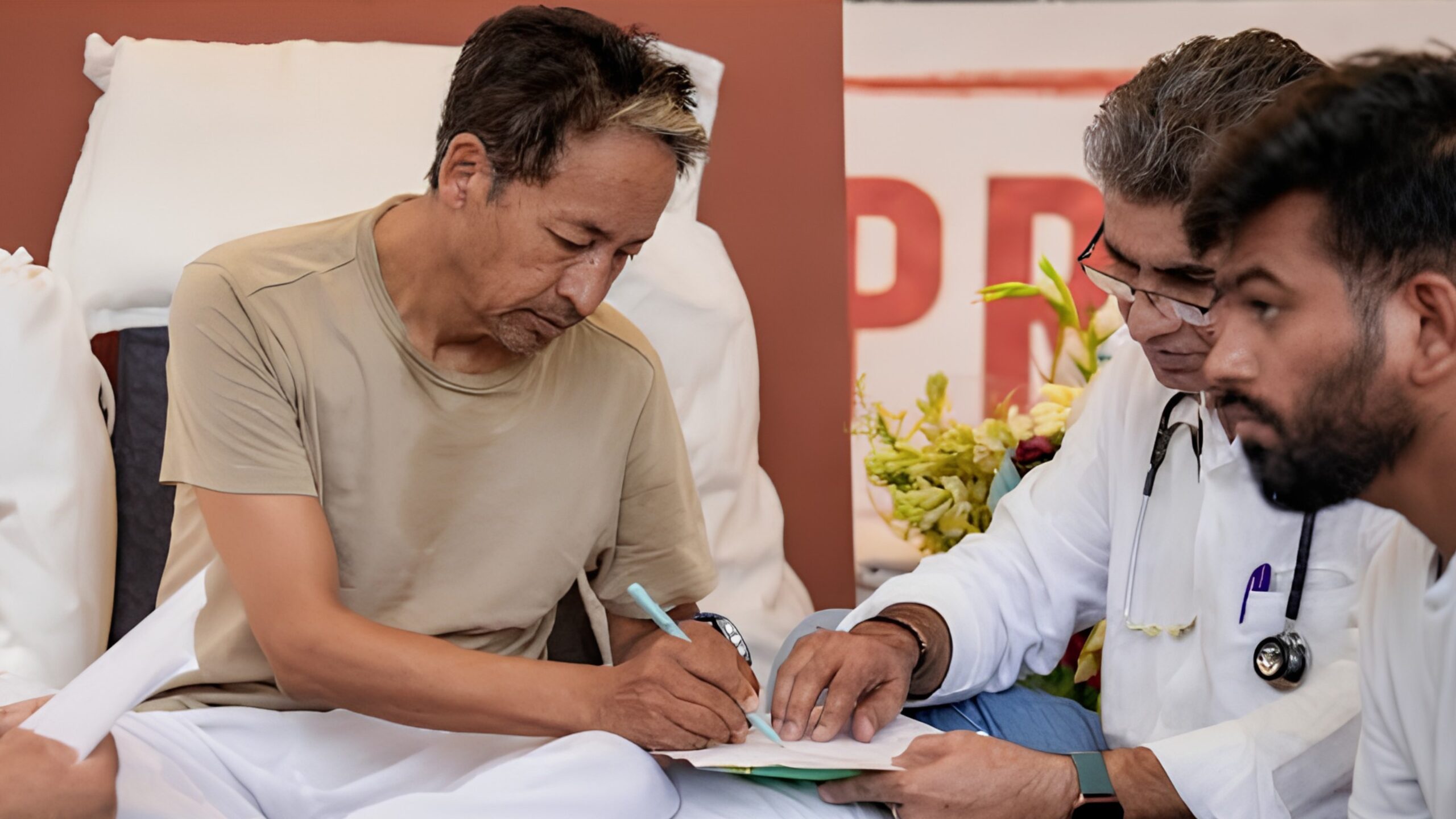
Social activist and education reformer Sonam Wangchuk has entered the 19th day of his indefinite hunger strike at Delhi’s Jantar Mantar, with concerns over his deteriorating health continuing to grow. Despite repeated appeals from supporters and political leaders to end his fast, Wangchuk has remained firm, saying the movement is about systemic reforms rather than an individual protest.
Speaking briefly from the protest site on Thursday, Wangchuk admitted that he was “not in good shape” but said he would continue the fast until meaningful action is taken on the issues being raised.
Wangchuk Calls for Peaceful Parliament March
Addressing supporters, Sonam Wangchuk urged citizens from across the country to participate in a peaceful march to Parliament on July 20, which coincides with the beginning of the Monsoon Session.
He appealed to participants to maintain discipline and ensure the demonstration remains peaceful, stressing that the objective is to draw attention to concerns surrounding India’s examination system and demand accountability from the government.
Protest Focuses on Examination Reforms
The hunger strike began on June 28 in support of a wider movement demanding reforms in India’s competitive examination system.
Protesters have raised concerns over alleged irregularities in national entrance examinations, including the NEET paper leak controversy, and are seeking greater transparency and accountability in the conduct of public examinations. The movement has also demanded the resignation of Union Education Minister Dharmendra Pradhan.
Health Concerns Continue to Rise
Medical concerns surrounding Wangchuk’s prolonged fast have intensified with each passing day.
While acknowledging that his physical condition has weakened, Sonam Wangchuk maintained that the protest is larger than himself and urged supporters not to ask him to end the fast but instead focus on the issues that prompted the movement.
Meanwhile, a Public Interest Litigation (PIL) seeking medical intervention has reached the Delhi High Court, reflecting growing concern over his health. The court has agreed to examine the matter.
Growing Political and Public Attention
The protest has attracted support from several opposition leaders, civil society groups, students and education activists.
Organisers have also announced nationwide solidarity programmes alongside preparations for the July 20 Parliament march, hoping to broaden public participation while ensuring the demonstration remains peaceful.
What Happens Next?
With the Monsoon Session of Parliament set to begin on July 20, attention will now turn to whether the government responds to the protesters’ demands or initiates dialogue.
For now, Sonam Wangchuk has made it clear that he intends to continue his hunger strike, even as doctors and supporters remain concerned about the impact of the prolonged fast on his health.

Curated news reports, in-depth analysis, and special features by India’s Opinion editorial team.