
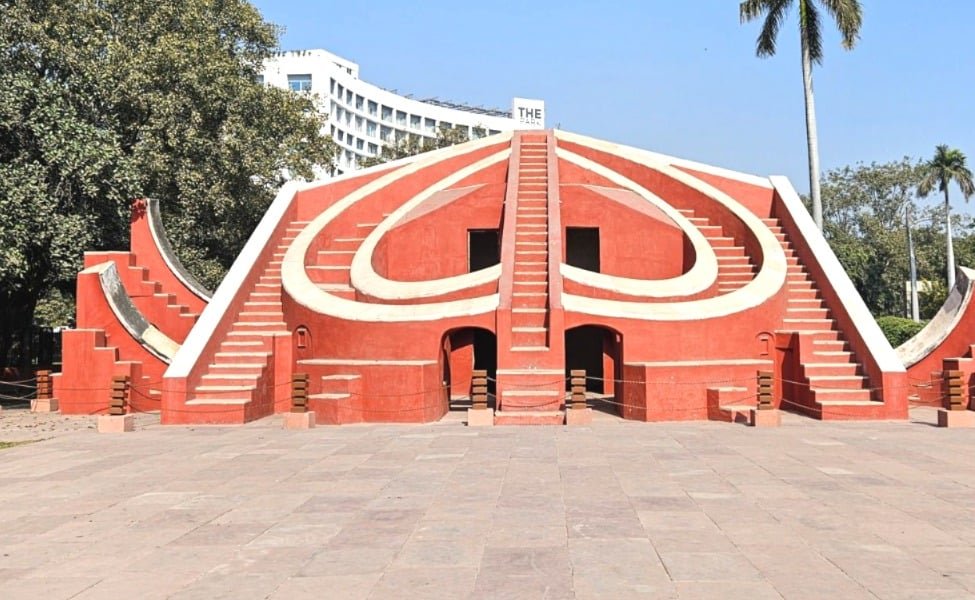
Authorities have stripped Jantar Mantar of its status as a designated protest venue in New Delhi. The historic observatory complex in central Delhi served as the primary stage for civic demonstrations for decades. However, a high-level committee under the Union Home Ministry recommended a permanent ban on mass gatherings at the site.
The decision took effect on Monday following extensive inter-agency security reviews. According to administrative notifications reported by NDTV, law enforcement will no longer permit dharnas along the central street. Officials stated that ongoing demonstrations frequently paralyzed traffic and commercial activity around Connaught Place and Parliament House. Therefore, the administration decided to relocate all political demonstrations outside the high-security VIP zone.
Three Alternative Grounds Selected for Public Demonstrations
The government designated three alternative grounds to host future public meetings and rallies. The new notification approved Ramlila Maidan, Burari Ground, and the Central Business District (CBD) Ground in East Delhi. Each venue offers larger capacities and dedicated parking infrastructure compared to the narrow lanes of Jantar Mantar.
Ramlila Maidan will accommodate central political rallies and major citizen gatherings. Meanwhile, authorities earmarked the spacious Burari Ground in north Delhi for massive public conventions. Furthermore, coverage by The Indian Express noted that the CBD Ground in Karkardooma will serve eastern districts. Consequently, organizing committees must redirect all pending demonstration applications to these three permitted areas.
Weekend Protests Trigger High-Security Policy Shift
The policy shift followed massive street protests against the Election Commission over the weekend. Tens of thousands of young demonstrators attempted to reach Jantar Mantar on Saturday. Authorities deployed over 40,000 security personnel and closed 45 metro stations to manage the crowds.
The widespread gridlock highlighted operational vulnerabilities in protecting government ministries and foreign embassies. Detailed reporting by The Federal indicated that intelligence agencies red-flagged persistent blockades around Parliament Street. Security analysts noted that emergency vehicle routes faced continuous disruptions during recurring agitations. As a result, the Union government acted quickly to clear central avenues of long-term encampments.
Opposition Alleges Move Pushes Dissent to Periphery
Civil liberties activists and opposition parties strongly criticized the relocation order. Leaders argued that shifting protests to distant venues like Burari pushes democratic dissent out of public view. Opposition spokespersons claimed that citizens hold a fundamental right to air grievances near power centers.
They maintained that isolating demonstrators diminishes the visibility of genuine public protests. On the other hand, police commanders argued that the move protects ordinary office commuters and residential neighborhoods. In addition, officials pointed out that earlier Supreme Court directives supported balancing protest rights with civic mobility. Moreover, authorities reiterated that citizens can assemble freely within the three sanctioned locations.
Fresh Guidelines Mandate Strict Advance Permissions
Delhi Police issued revised standard operating procedures alongside the venue change. Event organizers must now submit detailed applications at least ten days in advance. Organizers must specify expected crowd sizes, sound equipment details, and dispersal plans.
Police will not grant permissions for unverified marches outside the three designated grounds. Similarly, local municipal bodies will oversee sanitation and medical tents at the new venues. These comprehensive regulations aim to prevent sudden flash crowds across the heart of the national capital.

Curated news reports, in-depth analysis, and special features by India’s Opinion editorial team.