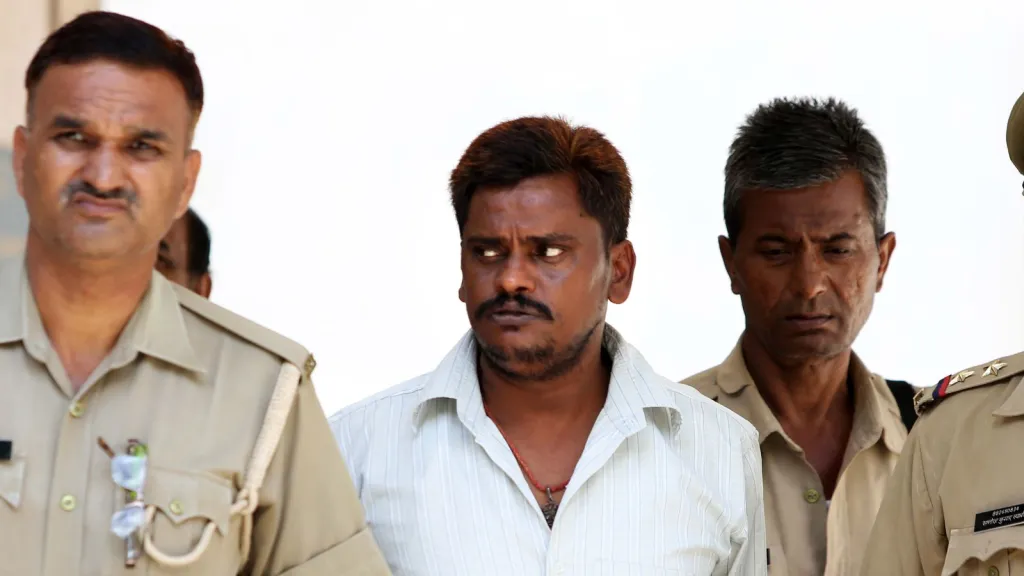
Surendra Koli, the central figure in the gruesome 2006 Nithari serial murders, was found dead on Friday. Local police discovered his body hanging inside a tea stall establishment in Uttarakhand’s pilgrimage city of Haridwar. Furthermore, preliminary forensic findings suggest that the fifty-six-year-old died by suspected suicide during the early morning hours. His unexpected demise comes months after the Supreme Court ordered his formal prison release, according to The Indian Express.
The dramatic death closes a grim chapter in one of India’s most notorious criminal investigations. Koli had spent nearly two decades behind bars following his sensational arrest in late December 2006. However, superior judicial benches overturned his multiple capital convictions due to deeply flawed investigative procedures. Consequently, local law enforcement teams have launched statutory inquest proceedings to determine the precise circumstances of his death.
Discovery of the Body at Haridwar Tea Stall
Local residents spotted the body hanging inside a roadside kiosk and immediately alerted municipal police officers. Emergency medical teams arrived quickly at the scene and officially confirmed that Koli had expired. In addition, forensic specialists collected fingerprint impressions and personal belongings from the vicinity for scientific analysis. Senior district police officers cordoned off the entire commercial precinct to prevent crowd congestion, reports Hindustan Times.
Investigators promptly transported the mortal remains to the district hospital for a mandatory post-mortem examination. Police officials confirmed that Koli had been living quietly in Haridwar since his release from incarceration. Furthermore, detectives questioned local neighborhood shopkeepers to reconstruct his daily routines and recent social interactions. Therefore, authorities are examining whether severe social isolation or financial distress contributed to the tragic event.
The Chilling 2006 Nithari Serial Killings
The horrific crimes first surfaced when municipal workers discovered skeletal remains in a Noida drainage ditch. The gruesome findings triggered massive public protests outside bungalow D-5 in Noida’s Sector thirty-one. Businessman Moninder Singh Pandher owned the property, while Koli worked inside the premises as domestic cook. Police subsequently unearthed human skulls, severed bones, and children’s clothing buried along the residential perimeter.
Central investigators initially accused Koli of luring underprivileged village children into the bungalow under false pretenses. Charge sheets alleged horrifying acts of sexual assault, cannibalism, and cold-blooded decapitation against innocent victims. Furthermore, trial court magistrates awarded capital punishment across numerous individual homicide indictments over successive years. The shocking revelations stunned the collective national conscience and exposed systemic policing failures protecting underprivileged families.
Botched Investigations and Judicial Acquittals
The extensive legal prosecution against Koli gradually crumbled under rigorous appellate scrutiny before superior courts. In October 2023, the Allahabad High Court dramatically acquitted Koli across twelve separate capital murder charges. The high court bench severely criticized federal investigative agencies for mishandling critical evidence and fabricating involuntary confessions. Judges observed that investigators completely ignored established constitutional norms during their preliminary inquiries, notes The Indian Express Explained.
The legal exoneration culminated in November 2025 when the Supreme Court rejected government appeals. The apex court upheld the high court’s acquittals and ordered his unconditional liberation from prison custody. In addition, the supreme bench noted that defective policing cannot substitute for credible judicial proof. Consequently, after nineteen years of continuous imprisonment, Koli walked out of jail a legally cleared man.
A Tragic and Quiet End to a Notorious Saga
Despite winning legal exoneration, Koli struggled to rebuild a normal livelihood in mainstream civilian society. Deep societal stigma and permanent ostracization shadowed his post-release existence across regional neighborhoods. Furthermore, the trauma of long-term solitary confinement left lasting psychological scars on the aging former prisoner. He spent his final months living in obscurity near the sacred ghats of Uttarakhand.
His sudden death brings a sorrowful conclusion to an unresolved tragedy that tormented grieving Nithari families. Many bereaved parents continue lamenting that botched investigative procedures allowed the real murderers to escape punishment. Meanwhile, Haridwar police await the final forensic autopsy report to conclude their unnatural death inquiry. Koli’s passing marks the quiet extinction of a man central to India’s darkest criminal mystery.

Curated news reports, in-depth analysis, and special features by India’s Opinion editorial team.