
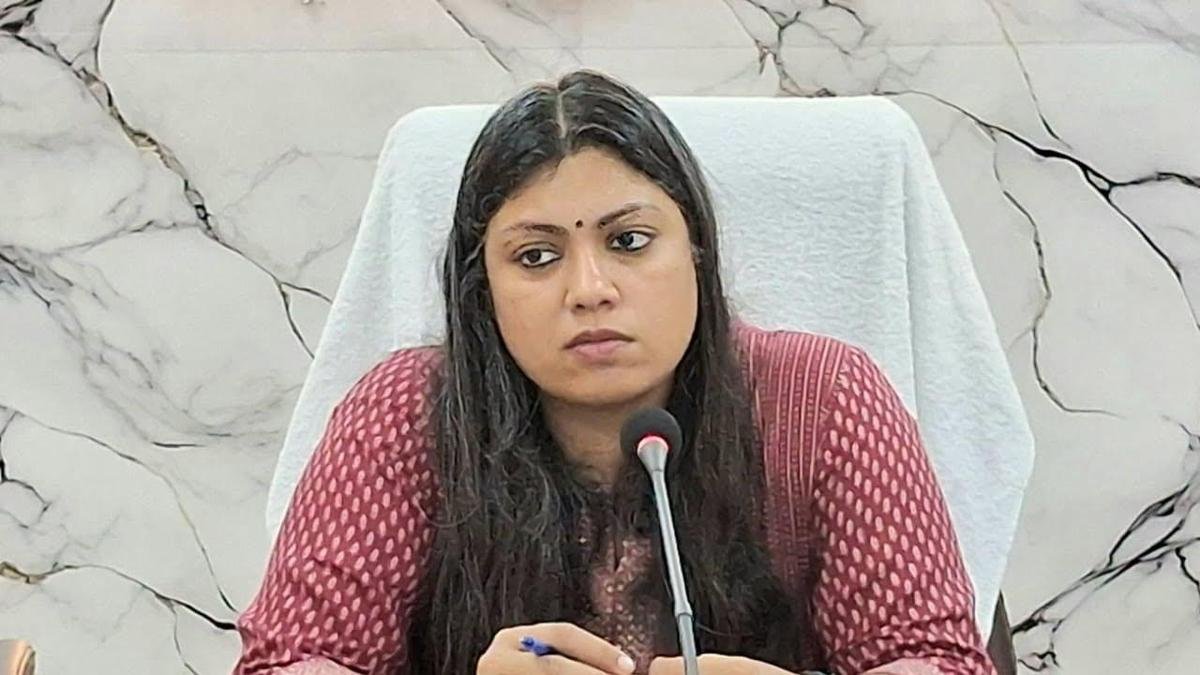
Gautam Budh Nagar District Magistrate Medha Roopam has approached the Supreme Court of India. She filed a petition challenging an Allahabad High Court ruling that quashed the preventive detention of a student activist. The High Court had set aside the detention order issued under the stringent National Security Act (NSA). Furthermore, the judges passed severe strictures against the senior administrator, as reported by The Indian Express.
The special leave petition challenges both the substantive verdict and the adverse judicial commentary. Earlier, the High Court bench pulled up the district magistrate for showing complete non-application of mind. The court also ordered the Uttar Pradesh government to pay ₹5 lakh as compensation to the detained student. Consequently, the senior IAS officer moved the apex court to defend executive discretion and seek judicial relief.
High Court Struck Down Invocation of Draconian Law
The legal dispute centers on the preventive detention of 24-year-old student activist Akriti Chaudhary. Noida police arrested Chaudhary following a localized factory workers’ demonstration earlier this year. Authorities subsequently invoked the extraordinary provisions of the National Security Act against her in May. The district magistrate signed the detention warrant based on intelligence reports supplied by local police officers.
However, the Allahabad High Court found no lawful justification for invoking such emergency preventive powers. A division bench observed that the police dossier contained vague allegations without credible supporting evidence. The judges ruled that routine student participation in labor demonstrations cannot threaten national security. Therefore, the court declared the prolonged detention unconstitutional and ordered Chaudhary’s immediate release, according to LiveLaw.
Stern Warning Against Bureaucratic Overreach
The High Court delivered exceptionally sharp observations regarding administrative overreach by executive magistrates. The bench cautioned that civil servants must uphold their primary oath to the Indian Constitution. When administrators act mechanically on police recommendations, they endanger fundamental democratic liberties. The court observed that unchecked executive arbitrariness risks converting democratic governance into an oppressive administrative system.
Furthermore, the judges remarked that unchecked bureaucratic excesses could reduce the state to an Orwellian dystopia. The bench held the district magistrate personally responsible for failing to scrutinize the police dossiers threadbare. Consequently, the court awarded punitive monetary compensation to the student for wrongful imprisonment. These scathing remarks triggered widespread discussion across national legal and administrative circles, as detailed by The Times of India.
District Magistrate Seeks Relief and Expunction of Remarks
In her plea before the Supreme Court, District Magistrate Medha Roopam challenged the High Court’s findings. She argued that district authorities acted in good faith to preserve public tranquility in industrial Noida. The petition stated that preventive detention requires subjective administrative satisfaction based on confidential inputs. Therefore, the officer maintained that she did not act with arbitrary or malicious intent.
In addition, the petition specifically requests the expunction of the severe personal strictures. The plea argues that damaging remarks harm the career reputation of dedicated civil servants. The officer also challenged the High Court’s decision to award financial compensation from state funds. Senior advocates representing the state administration are expected to mention the petition for urgent listing, according to The Hindu.
Workers’ Wage Protest Formed Backdrop of Detention
The controversy originated from an industrial wage agitation in Noida’s industrial sector during April. Factory laborers staged public demonstrations demanding higher minimum wages and better safety conditions. Akriti Chaudhary, a history graduate and student activist, joined the workers in solidarity. Police registered multiple criminal cases against protesting leaders, alleging breach of public peace.
Shortly after granting bail in regular offenses, the administration slapped the preventive detention order. Civil liberty collectives criticized the move as an attempt to bypass regular court bail. Family members and legal teams challenged the detention through a habeas corpus petition before the High Court. The subsequent judicial quashing highlighted growing resistance against applying national security laws to civic protests.
Broader Scrutiny on Preventive Detention Powers
Legal analysts view this appeal as an important test of constitutional limits on executive power. The Supreme Court has repeatedly emphasized that preventive detention remains an exceptional measure. Authorities must never deploy extraordinary security statutes to manage ordinary law and order situations. However, state administrations frequently argue that local magistrates need swift preventive tools to avert violence.
The apex court bench will soon determine whether the High Court’s strictures overstepped judicial boundaries. The upcoming hearing will also evaluate the standards required before magistrates invoke national security statutes. Meanwhile, student groups and human rights organizations continue to demand strict accountability for unlawful preventive detentions. The case promises to establish crucial legal precedents for executive governance across Uttar Pradesh.

Curated news reports, in-depth analysis, and special features by India’s Opinion editorial team.