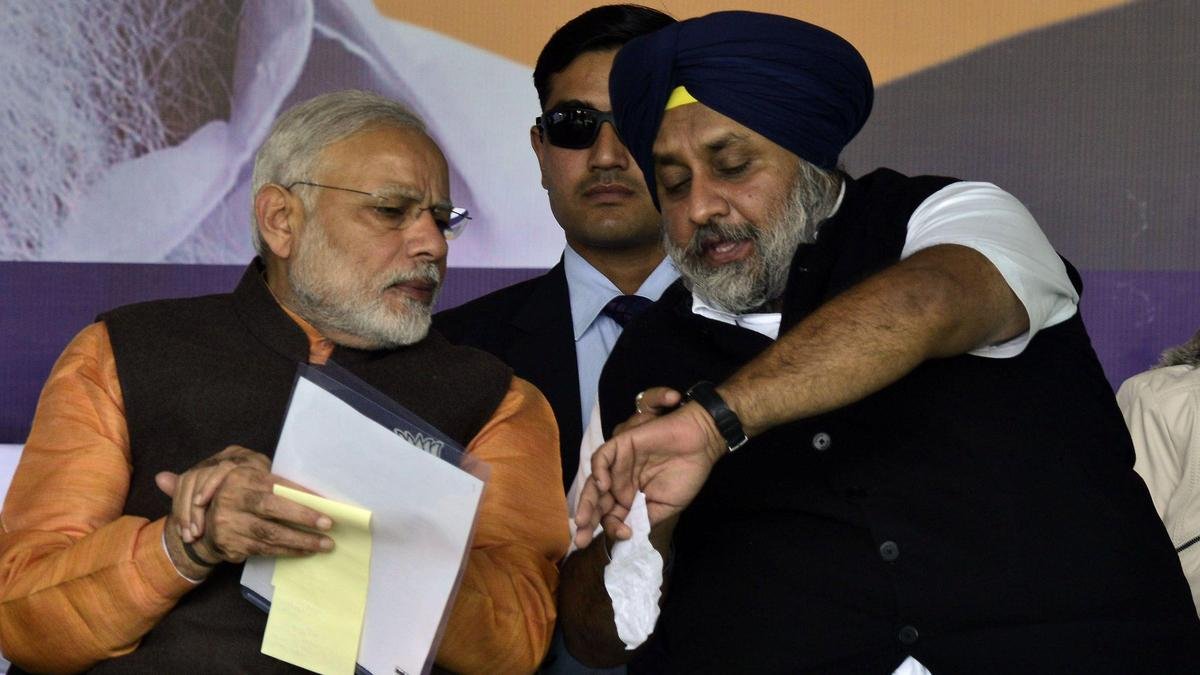
Persistent political buzz surrounds a potential reunion between the BJP and Shiromani Akali Dal (SAD). Recent meetings between top leaders in New Delhi have fueled fresh speculation. However, rebuilding their historic coalition ahead of the 2027 Punjab Assembly elections faces complex hurdles. Shifting vote banks, conflicting seat claims, and deep ideological trust deficits complicate the road ahead.
The Breakdown of the Old 1997 Social Compact
For decades, the SAD-BJP alliance represented a balanced social compact in Punjab. Conceived by Parkash Singh Badal and Atal Bihari Vajpayee, it united rural Sikh and urban Hindu voters.
The Akali Dal operated as the dominant senior partner, contesting 94 assembly seats.
The BJP remained content as a junior partner with 23 urban seats. However, their formal split in 2020 over agricultural laws destroyed this mutual political chemistry.
The BJP’s Growing Ambitions and Seat-Sharing Deadlock
The ground reality in Punjab has transformed dramatically in recent years. The BJP expanded aggressively across rural areas by inducting prominent Sikh leaders.
In the recent Lok Sabha elections, the BJP secured over 18 percent of the vote. The party led across 23 assembly segments independently. Consequently, state leaders refuse to accept junior partner status again.
The BJP now demands at least half of the 117 assembly seats. The Akali Dal cannot concede this demand without hurting its core regional identity.
Agrarian Unrest and Panthic Voter Pressures
The Akali Dal faces severe resistance from its traditional rural and Panthic vote bank. Farming unions across the state continue demanding a legal guarantee on Minimum Support Prices (MSP). Aligning with the central ruling party risks alienating rural Jat Sikh farmers further.
In addition, rebel Akali factions are fiercely attacking Sukhbir Singh Badal’s leadership. The party fears losing core Panthic voters to hardline regional groups if it rushes into an alliance.
The Strategic Dilemma Ahead of 2027 Assembly Polls
Both parties currently face a major strategic dilemma in Punjab politics. Going solo splits anti-incumbency votes, helping the ruling Aam Aadmi Party and Congress.
However, a hasty alliance lacks genuine voter chemistry on the ground.
State BJP leaders prefer building independent booth-level strength across all 117 seats. Meanwhile, the Akali Dal must reclaim its grassroots trust before committing to any coalition.

Curated news reports, in-depth analysis, and special features by India’s Opinion editorial team.