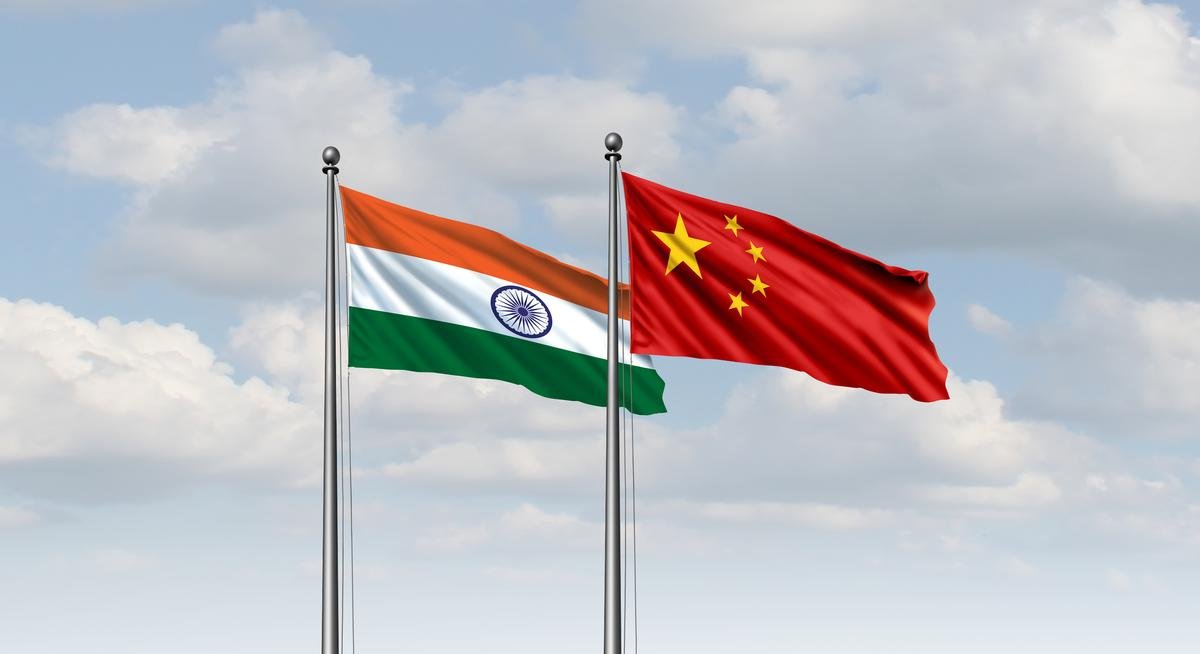
India and China have renewed efforts to manage their disputed Himalayan frontier, with the latest round of talks placing peace along the Line of Actual Control at the centre of the relationship. The development comes as New Delhi and Beijing attempt to stabilise ties after years of military tension and a deep political trust deficit.
The 36th meeting of the Working Mechanism for Consultation and Coordination on India-China Border Affairs was held in New Delhi on August 6. Officials discussed the wider situation along the LAC, boundary delimitation, border management, coordination mechanisms and trans-border cooperation.For both governments, the message was carefully framed.
India stressed that peace and stability at the border remain necessary for the broader development of bilateral relations. The two sides also agreed to keep using diplomatic and military channels to prevent misunderstandings and miscalculations along the frontier.
Why India-China border talks matter now
The latest discussions do not represent a final settlement of the boundary dispute. Instead, they show that both countries continue to rely on established mechanisms to manage a difficult relationship.
That distinction matters because the Himalayan boundary remains unresolved. India and China claim overlapping areas along their frontier, while the LAC serves as the practical line separating their forces in disputed sectors.
The relationship suffered its deepest crisis in decades after the deadly Galwan Valley clash in June 2020. The confrontation triggered a prolonged military standoff in eastern Ladakh and sharply damaged political and economic ties.
India subsequently pushed for disengagement, de-escalation and restoration of peace along the border. New Delhi has repeatedly argued that the condition of the frontier cannot be separated from the wider relationship.
From military confrontation to diplomatic management
The latest India-China border talks are part of a much longer process involving military commanders, diplomats and senior political officials.In October 2024, India and China reached an understanding on patrolling arrangements in parts of the LAC.
The agreement helped create conditions for disengagement in areas including Depsang and Demchok.The development opened a path toward rebuilding high-level communication.
Yet disengagement should not be confused with a settlement of the boundary dispute.India still faces the larger question of how the two countries will manage competing territorial claims and prevent another military confrontation.The Working Mechanism therefore serves a practical purpose.
It provides officials with a regular channel to discuss incidents, border management and confidence-building measures before disagreements escalate.
What the latest talks actually achieved
The August meeting produced no public announcement of a final boundary agreement. That makes the language used by both sides especially important.
The two countries focused on maintaining peace and tranquillity, improving coordination and addressing outstanding border issues through existing channels. Reuters reported that the discussions included boundary delimitation and border management.India and China also agreed to continue diplomatic and military communication.
Such channels can reduce the risk of local incidents turning into larger confrontations, particularly along remote and heavily militarised sections of the frontier.
For New Delhi, the immediate objective appears to be stability rather than a dramatic diplomatic breakthrough.That approach reflects the complexity of the dispute and the risks involved in attempting rapid changes on the ground.
Trade and ties add another layer
The border dispute has affected more than military relations. It has also influenced investment, technology, trade and people-to-people links.
Relations have shown signs of gradual improvement since the 2024 disengagement understanding. India and China have restored some high-level diplomatic engagement, while discussions on economic and cross-border cooperation have continued.
The two countries also resumed border trade through routes in the Himalayan region after years of disruption. Such steps can provide economic benefits to border communities, although they do not resolve the underlying territorial dispute.
The wider economic relationship remains difficult to separate from security concerns. India wants stronger safeguards around strategic sectors, while Chinese companies remain important participants in several parts of the Indian market.
The trust deficit remains the hardest problem
The biggest obstacle is not simply the absence of meetings. It is the lack of trust created by the 2020 crisis.
India has consistently linked broader improvements in bilateral relations to peace along the border. China, meanwhile, has also signalled interest in stabilising relations and expanding cooperation.
The two positions overlap on the need to avoid another confrontation. They differ, however, on the underlying boundary question and the wider strategic balance in Asia.That is why officials are likely to proceed cautiously.
Even when communication improves, military deployments, infrastructure development and patrol arrangements can remain sensitive.
What happens next?
The next stage will depend on whether diplomatic commitments translate into sustained stability on the ground.India-China border talks can reduce tensions, but dialogue alone cannot settle decades of competing territorial claims.
The harder task will be maintaining predictable patrolling arrangements, strengthening communication between forces and gradually addressing unresolved boundary questions.
The latest meeting therefore represents continuity rather than a breakthrough. New Delhi and Beijing appear to have accepted that managing the border is essential to rebuilding the wider relationship.
For India, the test will be whether improved diplomatic engagement produces a more stable frontier without weakening its position on sovereignty and territorial claims.
For China, the challenge will be demonstrating that calls for better relations can coexist with meaningful steps to reduce border tensions.
The coming months will show whether the latest diplomatic push can turn cautious communication into durable stability along the LAC.

Curated news reports, in-depth analysis, and special features by India’s Opinion editorial team.