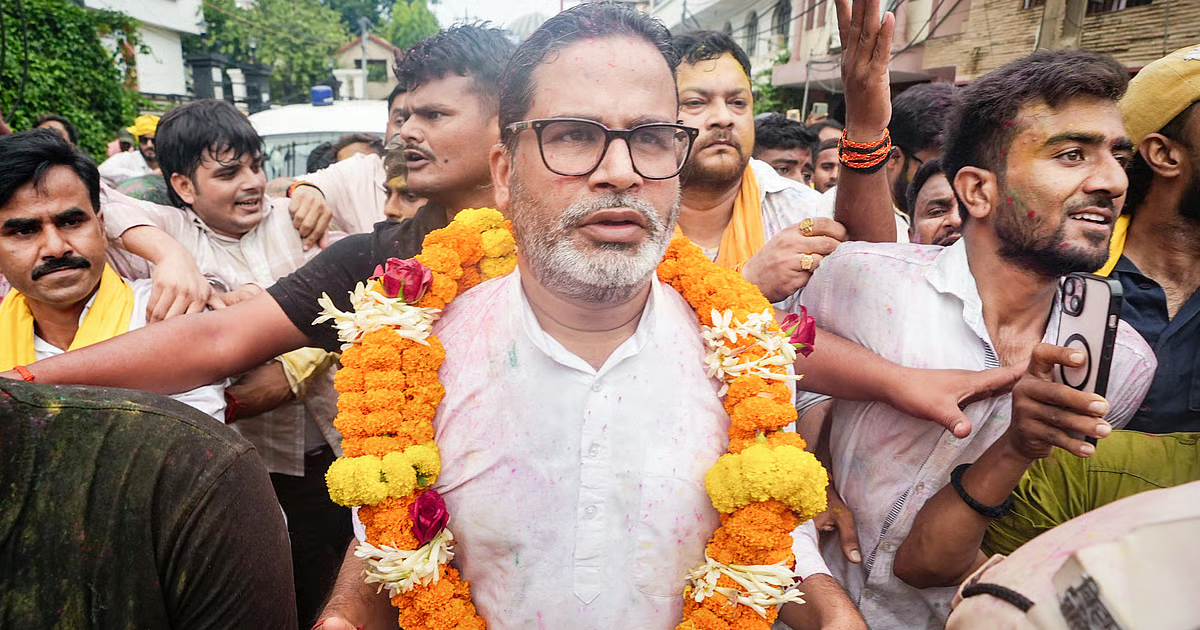
In a major political upset in Bihar, Jan Suraaj Party founder Prashant Kishor won the Bankipur Assembly by-election on Monday. He defeated Bharatiya Janata Party (BJP) candidate Neeraj Kumar Sinha by a margin of 18,953 votes.
The victory marks Kishor’s successful electoral debut and secures the first legislative seat for the Jan Suraaj Party in the Bihar Legislative Assembly. The defeat breaches a major BJP stronghold that the party had held continuously since 1995.
Following 31 rounds of counting at Patna’s A.N. College, Kishor polled 63,203 votes. Neeraj Kumar Sinha secured 44,250 votes for the BJP. Rashtriya Janata Dal (RJD) nominee Rekha Kumari finished third with 14,085 votes.
The by-election took place after sitting BJP MLA Nitin Nabin vacated the seat following his election to the Rajya Sabha. Bankipur had long remained an unassailable bastion for the BJP. However, Kishor established an early lead in the counting rounds and expanded his margin steadily throughout the day.
Following the announcement of the official results, Jan Suraaj workers and supporters celebrated across Patna. BJP leaders accepted the public mandate, while analysts called the result a significant shift in urban Bihar politics.
The Bankipur constituency, formerly known as Patna West prior to delimitation, has historically served as a bedrock of BJP support in urban Bihar. The party maintained an uninterrupted winning streak in the segment since 1995.
Senior leader Nitin Nabin had won the seat for a fifth consecutive term in November 2025 by a margin of over 50,000 votes. He later resigned to move to the Rajya Sabha.
Prashant Kishor, a prominent political strategist who previously advised major political parties across India, launched the Jan Suraaj campaign to build a grassroots alternative in Bihar.
Although Jan Suraaj fielded candidates across 238 seats in the November 2025 general assembly elections, it failed to win any seats in its initial outing. However, Kishor’s decision to personally contest the Bankipur by-election was widely seen as a high-stakes test of his party’s organizational viability and appeal in urban centers.

Curated news reports, in-depth analysis, and special features by India’s Opinion editorial team.