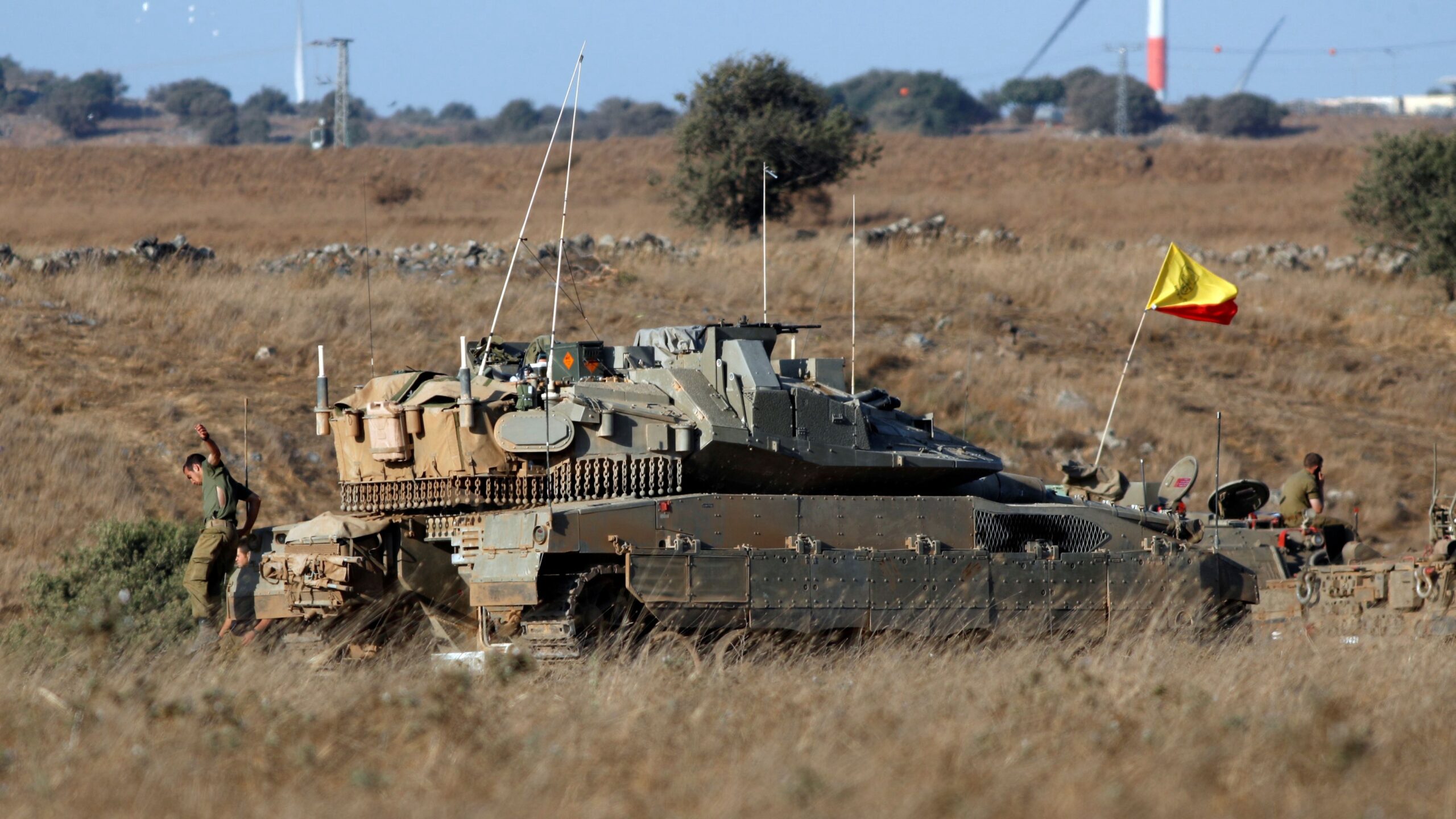
Israeli forces carried out a new incursion into Syria’s Quneitra province, according to reports on Monday, adding to a pattern of ground operations and raids that has deepened tensions along the frontier. The latest Israeli forces Quneitra incursion comes as Damascus seeks a security arrangement with Israel while continuing to demand respect for Syria’s territorial integrity.
Reports said Israeli troops entered areas of southern Syria and detained at least one person during a separate operation in Quneitra. Israeli forces also carried out raids and searches in neighbouring Daraa province, according to Syrian and regional reports. The full details of the latest operation remain difficult to independently verify.
The new Israeli forces Quneitra incursion has renewed questions over the future of the 1974 Disengagement Agreement. The agreement created a UN-monitored buffer zone between Israeli and Syrian forces after the 1973 Arab-Israeli war.
Israeli forces Quneitra incursion raises border tensions
Quneitra lies beside the Israeli-occupied Golan Heights. The area has remained one of the most sensitive points along the Israel-Syria frontier for decades.
Following the fall of Bashar al-Assad’s government in December 2024, Israel moved into parts of the UN-monitored buffer zone. Israel said the security situation had changed and that its military actions aimed to prevent threats from armed groups near the border.Syria’s new authorities have rejected the expansion of Israeli military positions.
Damascus has also repeatedly called for respect for the 1974 agreement and the withdrawal of Israeli forces from Syrian territory beyond the areas Israel has held since the 1967 war.Recent reports indicate that Israeli forces have continued operations in Quneitra and Daraa.
These operations have included patrols, temporary checkpoints, house searches and detentions, according to regional reporting.
Why Quneitra remains a flashpoint
The latest Israeli forces Quneitra incursion comes amid a wider dispute over security arrangements in southern Syria.
Israeli officials have argued that instability in Syria could create risks along the border. Israel has also cited concerns about armed groups and the movement of weapons in the region.Syria, however, says Israeli military operations violate its sovereignty.
Damascus has also opposed Israeli control over areas beyond the internationally recognised lines separating the two sides.The dispute has become more complicated because Syria is trying to rebuild state institutions after years of war.
The country’s new leadership faces pressure to prevent armed groups from operating near the border. It also faces domestic demands to oppose any Israeli expansion.
That balance has made southern Syria a particularly fragile zone. A local raid can quickly become part of a wider diplomatic dispute.
Damascus seeks security talks with Israel
Syrian President Ahmed al-Sharaa said in a recent interview that Syria was seeking a security agreement with Israel.
He said Damascus wanted to pursue diplomacy while maintaining its claim over the Golan Heights.The position reflects Syria’s attempt to reduce the risk of a wider confrontation.
At the same time, the government has continued to oppose Israeli military activity inside Syrian territory.
The Israeli government has not agreed to a complete withdrawal from all areas occupied after the fall of Assad’s government.
Israeli Prime Minister Benjamin Netanyahu has also rejected pressure for a full retreat from positions that Israel considers important for its security.That gap remains at the centre of the dispute.
Israel and Syria face a disputed 1974 agreement
The 1974 agreement established a separation zone monitored by the United Nations Disengagement Observer Force, known as UNDOF.
For decades, the arrangement helped prevent direct military confrontation between Israeli and Syrian forces. The collapse of Assad’s government changed the security environment around the frontier.
Israel argued that the previous security arrangement could no longer operate in the same way after the Syrian government lost control of parts of the country.
Syria has rejected that argument and says the agreement remains the basis for stability.The United Nations has also raised concerns about military activity in and around the separation area.
UN Secretary-General António Guterres recently criticised Israel’s continued control of the Golan Heights during a visit to Syria.The dispute over the agreement now extends beyond legal arguments.
It has become a question of who controls the ground around one of the Middle East’s most sensitive borders.
Local communities report growing pressure
The impact of repeated operations has also been felt by residents of Quneitra.
Families of Syrians detained by Israel recently protested outside a UN base in Quneitra. Demonstrators called for the release of relatives and accused Israeli forces of continuing border violations.
Local residents and farmers have also reported difficulties linked to military activity in the countryside. Reports have described restrictions on movement, military fortifications and damage to agricultural land.
These accounts come from local and regional sources, and the extent of individual allegations can vary. Independent verification remains difficult because access to the border area is limited.
The growing tension has also affected communities living close to the ceasefire line. For residents, the dispute is not limited to diplomatic statements. Military patrols and temporary checkpoints can directly affect access to homes, roads and farmland.
What happens after the latest incursion?
The latest Israeli forces Quneitra incursion is unlikely to resolve the larger dispute between Israel and Syria.The two sides remain divided over the 1974 agreement, Israeli military positions and the status of the Golan Heights.
Syria is seeking a security arrangement that could reduce military tensions without surrendering its territorial claims. Israel, meanwhile, continues to prioritise control over areas it views as necessary for border security.
The United Nations and regional governments face a difficult task. They must prevent repeated military operations from turning into a broader confrontation.
For now, Quneitra remains a test of whether diplomacy can keep pace with events on the ground. Each new incursion adds pressure to an already fragile border and makes a durable security arrangement harder to achieve.

Curated news reports, in-depth analysis, and special features by India’s Opinion editorial team.