Ship traffic through one of the world’s most vital oil corridors has nearly stopped. Seven straight nights of US airstrikes on Iran, and Tehran’s retaliatory strikes on American allies, have made the Strait of Hormuz too dangerous for most crews to risk. Throughout these tense days, the US strikes Iran for a seventh night. This situation is fueling fears regionally and globally.
US Central Command confirmed on Saturday that its forces had completed a seventh consecutive night of strikes on Iran. In a statement on X, Centcom said it hit “surveillance sites, military logistics infrastructure, underground weapons storage, and maritime capabilities.” The bombing ran for several hours. It ended at 21:30 ET and highlighted the ongoing US strikes in Iran for the seventh night in a row.
The targets spanned Iran’s southern coastline: Jask, Sirik, Bushehr, Bandar Abbas, Qeshm Island, Ahvaz and Yazd. Centcom said the operation used fighter aircraft, aerial drones and warships. These ongoing hostilities, including seven nights of US strikes in Iran, come a week after President Donald Trump declared the ceasefire agreement with Iran “over.”
Iran strikes back at US allies
Iran claimed to have responded by targeting American allies across the region. Kuwait’s army said its air defences had been “confronting hostile missile and drone attacks” that it blamed on “Iranian aggression.” Kuwaiti officials said the attacks wounded a number of soldiers and damaged a power plant and water desalination stations. This has intensified the regional fallout from the US strikes against Iran over a seventh night.
Jordan’s armed forces said they intercepted 10 Iranian missiles fired into Jordanian airspace overnight. No damage was reported. Sources have told CBS News that several American service members were injured during Iranian attacks on two Jordanian bases over the past week. These actions occurred while US strikes on Iran continued for the seventh night.
On Friday, Iran’s armed forces claimed to have struck multiple US military facilities across the Gulf. These included locations in Kuwait, Bahrain, Jordan and, for the first time, Syria. This happened while US was conducting its strikes against Iran for the seventh night in a row.
Washington denied this. Centcom specifically rejected an Iranian claim that its forces had attacked al Tanf Garrison in Syria and captured or killed American troops there. They called the claim false and stated that no US troops in the region had recently been killed or captured during the seven consecutive nights of US strikes on Iran.
Competing claims over the Strait
Iran’s state-run Fars news agency said two oil tankers exploded and caught fire while passing through a mined route south of the Strait of Hormuz. Centcom dismissed this on X and said most claims from Iran’s Revolutionary Guard Corps, including this one, were false during a tense week of US strikes on Iran lasting seven consecutive nights.
Verifying events inside the strait has grown harder as the conflict drags on. What is clear is the toll on shipping. Traffic through the strait fell to eight transits on Thursday, down from roughly 30 a day the previous week, according to reporting cited by CBS News. The International Maritime Organization has put the number of commercial sailors killed since the war began at 17. This is as the region faces continued US strikes and Iran’s responses week after week, now marking the seventh night.
The strait normally carries about a fifth of the world’s oil and liquefied natural gas supplies. A Greek maritime risk management executive told CBS News that shipping firms had reverted to their worst-case planning. Crews were unwilling to make the crossing at all, especially after the US-Iran conflict escalated with seven straight nights of strikes.
Civilian damage disputed
Iranian state media reported explosions in the central city of Yazd and near Qeshm Island and the port of Bandar Abbas. Provincial authorities in Hormozgan province, which borders the strait, said seven people were killed in the strikes. However, other Iranian reports put the toll at three dead and eight wounded in the same region, as tensions remain high after the US strikes Iran for a seventh straight night.
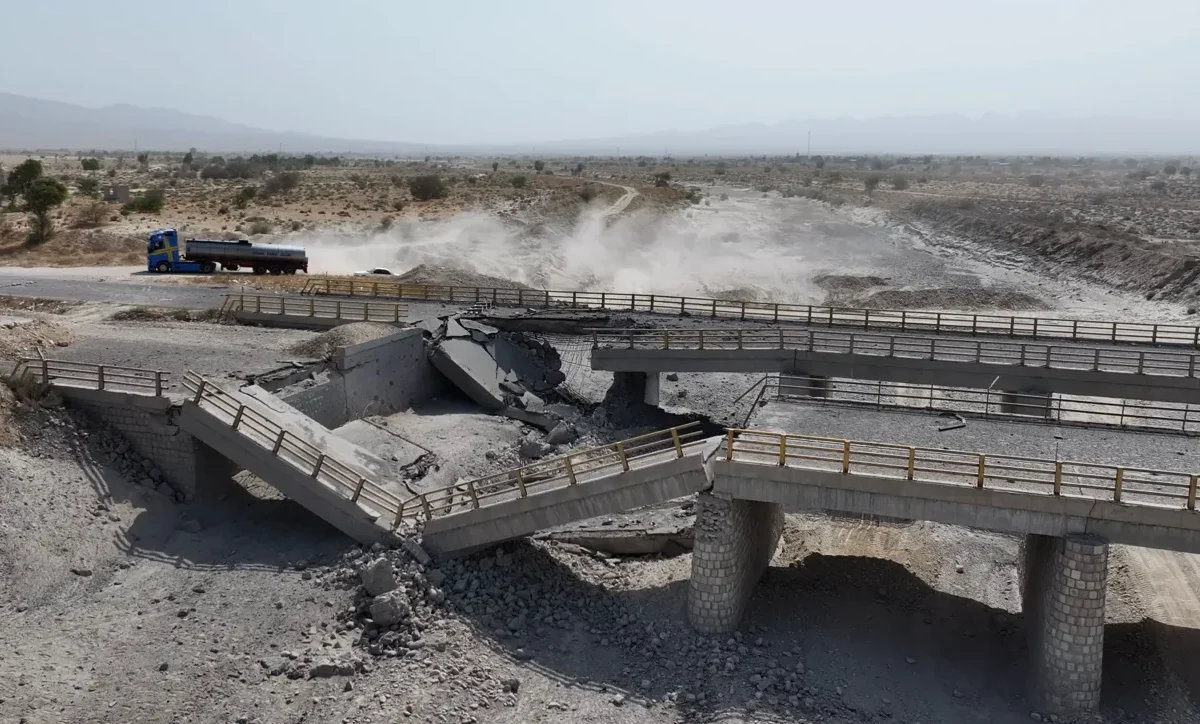
Washington has denied Iranian claims that it hit civilian infrastructure, including bridges, a train station and an airport. A White House spokesperson said US forces had “carried out strikes exclusively on military targets, including military logistics infrastructure.” These were operations that peaked with seven consecutive nights of US strikes on Iran.
BBC Verify and BBC Persian have independently confirmed footage showing damage to the Gariveh Bridge. Night videos captured a fireball atop the structure. Daylight images later showed a collapsed stretch of road surrounded by rubble. This evidence surfaced as US strikes against Iran entered their seventh night.
A separate video verified by CBS News showed similar damage to the Kahurestan Bridge in Iran’s southern Kahurestan province. The US confirmed striking this bridge as part of operations against surveillance and air defence sites. This marked the seventh straight night of US strikes on Iran.

Curated news reports, in-depth analysis, and special features by India’s Opinion editorial team.