
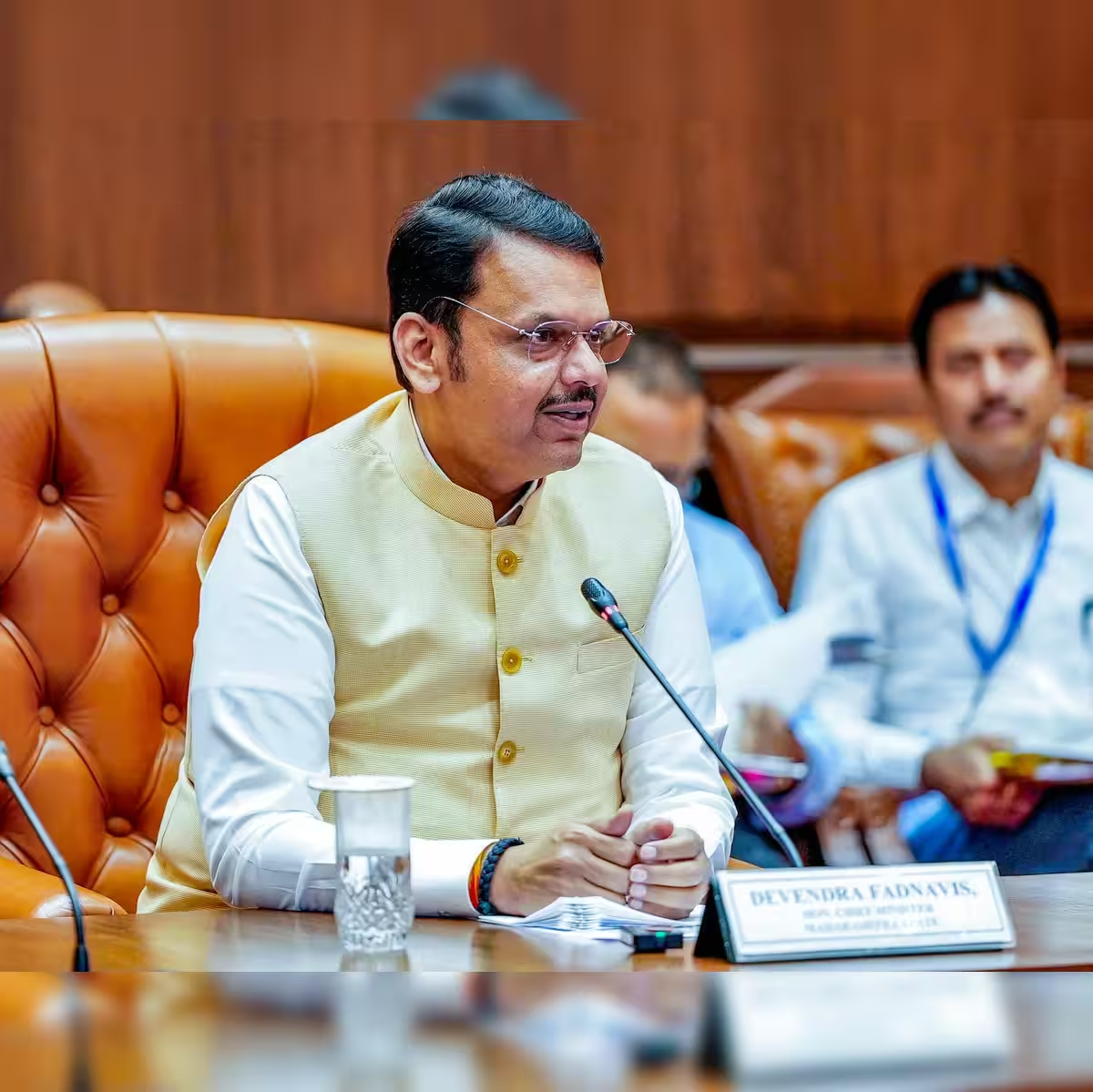
The Maharashtra government has officially enacted the ‘Maharashtra Government Rules of Business, 2026’. In doing so, it formally empowers Chief Minister Devendra Fadnavis to override decisions made by any state cabinet minister.
Notified by the General Administration Department on August 14 under Articles 166(2) and 166(3) of the Constitution of India, the new framework replaces the state’s five-decade-old 1975 administrative guidelines. Thus, the government updated its procedures after almost fifty years.
The overhaul consolidates executive authority directly within the Chief Minister’s Office. As a result, it has sparked intense debate across political circles over cabinet autonomy and coalition dynamics.
Key Clauses and Enhanced Executive Oversight
Under the newly inserted Rule 13(5), the Chief Minister holds overriding authority to review, alter, or cancel decisions made by any department minister in the public interest. This authority applies provided the reasons are recorded in writing on the official file.
This override power applies across administrative matters while strictly exempting quasi-judicial cases. In addition, the 2026 rules grant both the Chief Minister and the Chief Secretary the statutory power to call for files, notes, and documents from any government department.
Both the minister-in-charge and the department secretary are legally obligated to comply with these file requests without delay.
Statutory Fiscal Safeguards and Cabinet Rules
The new framework introduces strict administrative procedures for financial transactions and inter-departmental policies. No department can issue orders involving expenditure, revenue concessions, land allotments, or the creation of government posts without prior concurrence from the Finance Department.
Furthermore, matters affecting peace and order, Centre-state relations, ordinances, and welfare policies for Scheduled Castes, Scheduled Tribes, and Other Backward Classes must be placed before the Governor. This must happen prior to formal notification.
The rules also empower the Chief Minister to pull special interest matters directly to the cabinet table under the Second and Third Schedules.
Addressing the 2023 Bombay High Court Ruling
The state administration formulated these specific amendments to resolve a significant legal barrier created by the Bombay High Court in 2023. In its March 3, 2023 verdict involving the Chandrapur District Central Cooperative Bank, the court’s Nagpur Bench quashed an order by then Chief Minister Eknath Shinde. That order had halted recruitment approved by the Cooperation Minister.
The court ruled that under the 1975 rules, the Chief Minister lacked statutory supervisory powers to modify decisions made by individual portfolio ministers. Consequently, the 2026 rules formally close this legal loophole by giving the Chief Minister statutory veto authority.
Opposition Cries ‘Super CM’ Amid Coalition Dynamics
The expansion of executive authority has drawn sharp criticism from opposition parties, who argue that the rules erode collective cabinet responsibility and reduce ministers to figureheads. Moreover, political analysts have pointed out that the central veto could create friction within the multi-party Mahayuti alliance. This alliance includes Deputy Chief Ministers Eknath Shinde and Ajit Pawar.
In response, government officials maintain that the updated rules create much-needed administrative speed and enhance transparency. They also claim the rules ensure unified governance across all state departments.

Curated news reports, in-depth analysis, and special features by India’s Opinion editorial team.