
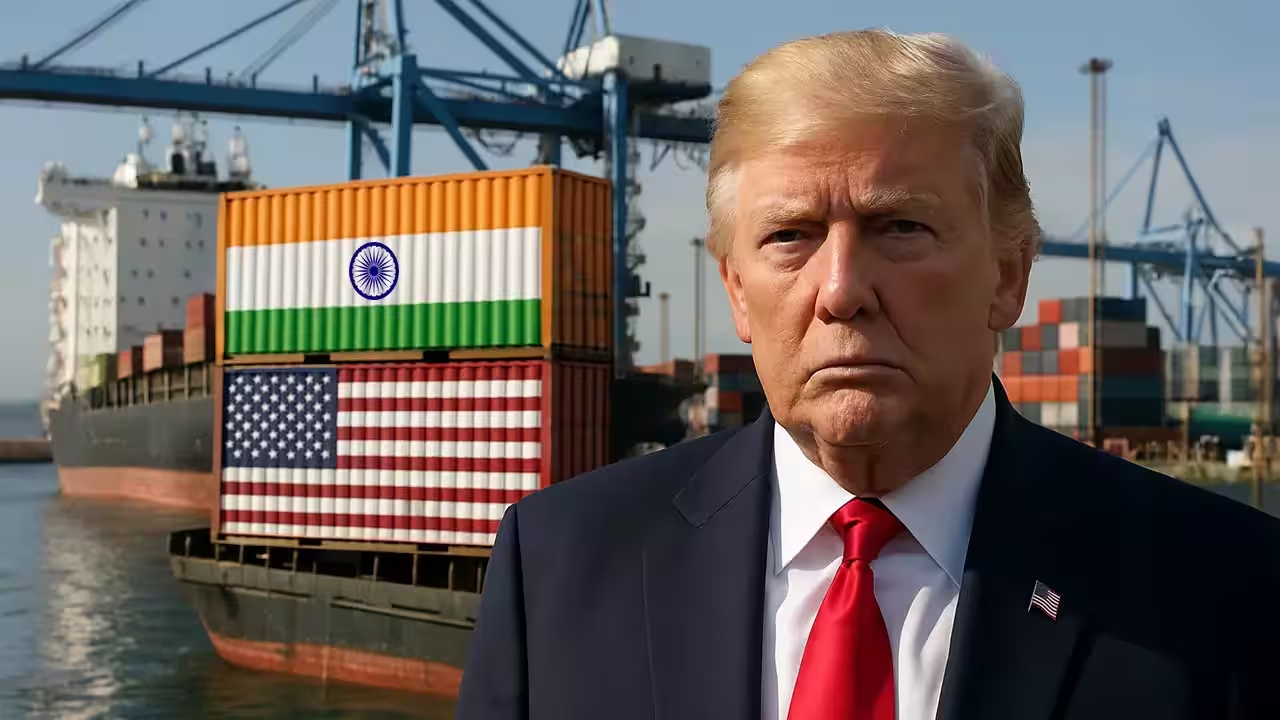
Despite a full year of aggressive tariff measures imposed by US President Donald Trump, Indian exports to the United States have demonstrated remarkable resilience, holding nearly flat compared to pre-tariff levels. Trade data released by the Ministry of Commerce shows that supply chain adjustments, strong demand for core Indian commodities, and strategic diversification helped Indian exporters absorb the tariff shock without losing significant market share in the American economy.
Key Goods Buffer Overall Trade Volumes Against Heavy Tariffs
The overall stability in trade numbers was driven by high performance in sectors that either escaped higher duties or proved difficult for American buyers to substitute quickly.
Indian exports of pharmaceuticals, electronics, and agricultural products maintained positive growth trajectories over the past 12 months.
American importers largely chose to absorb the added duty costs rather than shift procurement to alternative global suppliers, protecting Indian manufacturers from sudden order cancellations.
Tariff Impact Across Key Export Categories
| Export Sector | Tariff Status | Year-on-Year Growth / Shift | Key Factors |
| Pharmaceuticals | Exempt / Low Duty | +4.2% | Critical demand for Indian generic medicines in the US market. |
| Electronics & Smart Devices | Targeted Duties | +6.8% | Continued expansion of smartphone manufacturing assembly lines. |
| Textiles & Apparel | Subject to Tariffs | -2.1% | Marginal drop offset by higher-value garment exports. |
| Steel & Aluminum | Heavy Tariffs | -5.4% | Domestic demand absorbed surplus production diverted from the US. |
Exporters Adapt Through Currency Adjustments and Supply Chains
Industry representatives credit proactive adjustments by Indian exporters for preventing a sharp decline in trade volumes. A modest depreciation of the Indian Rupee against the US Dollar helped offset the cost burden created by duty increases.
Additionally, Indian firms increasingly leveraged free trade agreements with intermediate trading hubs to process goods before final delivery to North American destinations, helping maintain competitiveness against regional rivals.
Government Strategic Response and Future Bilateral Outlook
The Union Commerce Ministry welcomed the trade figures, stating that the resilience of Indian exporters underlines the fundamental quality and cost-competitiveness of the country’s manufacturing output.
Officials noted that bilateral trade talks between New Delhi and Washington remain ongoing to address lingering tariff friction and secure long-term market access.
Exporters remain cautiously optimistic, calling for continued policy support and logistics subsidies to safeguard market share as global trade conditions evolve.

Curated news reports, in-depth analysis, and special features by India’s Opinion editorial team.