
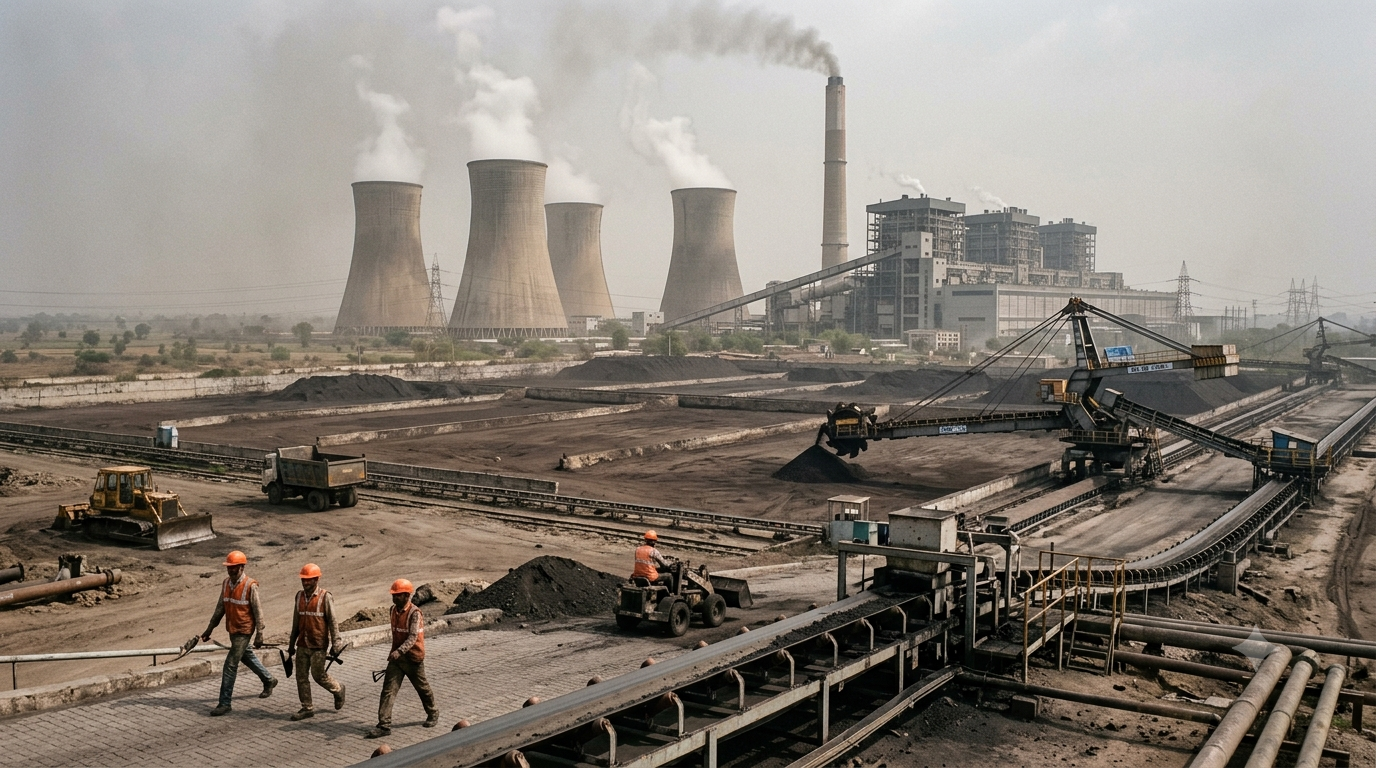
Nearly 40% of India’s coal-fired power plants are operating with critically low fuel stocks as electricity demand remains high and hotter-than-usual weather puts additional pressure on the power system.
Government data reviewed by Reuters showed that 74 coal-fired power plants had critically low stocks as of September 19, up from around 60 a week earlier. The Central Electricity Authority updates the data daily.
Plants are classified as critical when they have less than 25% of their required coal inventory or enough fuel to generate electricity for fewer than three days.
The development comes at a sensitive point for India’s electricity system. Peak power demand has remained between 230 gigawatts and 250 gigawatts over the past week, while the country’s all-time peak reached 270.70 GW in May.
Why India’s Coal Stocks Are Falling
The immediate pressure is coming from a combination of high electricity demand and disruptions affecting coal movement.
Hotter-than-usual weather has increased demand for electricity, particularly for cooling. At the same time, erratic monsoon rainfall has affected coal shipments to some power plants.
India’s coal and railway ministries said earlier in September that they were increasing supplies to power plants after weather-related disruptions affected transportation.
The problem is therefore not simply about how much coal India produces. Moving sufficient quantities of coal from mines to power stations is also crucial.
Power plants need regular deliveries because coal is continuously consumed during electricity generation.
If arrivals fall below consumption for an extended period, stocks at individual plants can decline even when the country’s overall coal production remains substantial.
Is India Facing a Power Crisis?
The latest data does not necessarily indicate a nationwide structural shortage of coal.
Crisil analysts told Reuters that the decline in plant-level coal inventories appeared to be a temporary logistical issue rather than evidence of structural supply constraints.
That distinction is important.India has been expanding electricity generation from renewable sources, but coal remains central to meeting demand throughout the day.
Solar and wind generation can vary depending on weather and time of day, while coal plants can provide generation when renewable output is unavailable or insufficient.
According to Crisil, renewable electricity generation increased by about 21% between April and August. Despite that growth, coal-fired generation continued to play an important role in meeting round-the-clock electricity demand.
Coal Imports Are Also Rising
India’s power producers have increasingly turned to imported coal when domestic supplies and other sources of generation face pressure.
Coal imports by Indian power producers reached a 15-month high in August, according to Reuters.
Higher electricity demand during hot weather and subdued hydroelectric generation contributed to the increased use of imported fuel.
Imported coal can help utilities maintain generation when domestic supplies are tight.
However, it is generally more expensive than domestic coal and can expose power producers to international commodity prices and shipping costs.
That makes logistics and domestic coal availability important not only for electricity security but also for the cost of generation.
What Happens If Stocks Remain Low?
Low coal stocks do not automatically mean electricity cuts.
Power companies and government agencies can respond by increasing coal deliveries, adjusting generation schedules, using alternative sources and purchasing electricity from other parts of the grid.
The Ministry of Power has previously outlined several measures to maintain reliable electricity supplies during periods of high demand.
These include ensuring steady coal supplies, maintaining generation availability, scheduling hydroelectric generation strategically and using other available generation sources.
The effectiveness of these measures depends partly on how quickly coal supplies recover at plants facing the greatest shortages.
If deliveries improve, inventories can stabilise without creating a prolonged disruption to electricity generation.
A Warning for India’s Power System
The latest figures highlight the delicate balance between electricity demand, fuel supply and infrastructure.
India’s electricity consumption is expected to continue rising as households acquire more appliances, industries expand and cooling demand increases.
At the same time, the country is adding renewable generation at a rapid pace. This means India’s future power system will need both more clean generation and enough flexible, reliable capacity to meet demand when renewable output is lower.
For coal-fired plants, that means reliable fuel logistics will remain important during the transition.
The immediate concern is whether the 74 plants with critically low stocks can rebuild their inventories quickly.
Government data and industry assessments suggest that the present problem is largely linked to logistics and unusually high demand rather than an underlying shortage of coal.
But the episode also demonstrates why India’s energy transition cannot be measured only by how much renewable capacity is added.
For the electricity system to remain reliable, generation capacity, fuel supply, railway infrastructure, hydroelectric resources, renewable power and grid capacity all have to work together.
As India heads into another period of strong electricity demand, the ability to keep coal moving to power plants will remain an important test for the country’s energy infrastructure.

Curated news reports, in-depth analysis, and special features by India’s Opinion editorial team.