The CBI’s investigation into the NEET-UG paper leak has laid out, in granular detail, exactly how three subject experts smuggled exam questions out of the National Testing Agency’s own headquarters. One scrawled questions onto paper chits and hid them. Meanwhile, the other two simply memorised what they saw. Then they wrote it all down once they were back in their hotel rooms. Some did so by marking the relevant paragraphs in NCERT textbooks.
According to the CBI, they could pull this off for one simple reason: nobody frisked them on the way out.
Who’s Named in the Chargesheet
The three subject experts are among 13 people named in a chargesheet the CBI filed before a Delhi fast-track court on July 28. The agency has identified them as NTA Chemistry expert Pralhad Vithalrao Kulkarni, Botany expert Manisha Gurunath Mandhare, and Physics expert Manisha Sanjay Havaldar. In fact, Kulkarni had served on the NTA’s Chemistry expert panel since 2019.
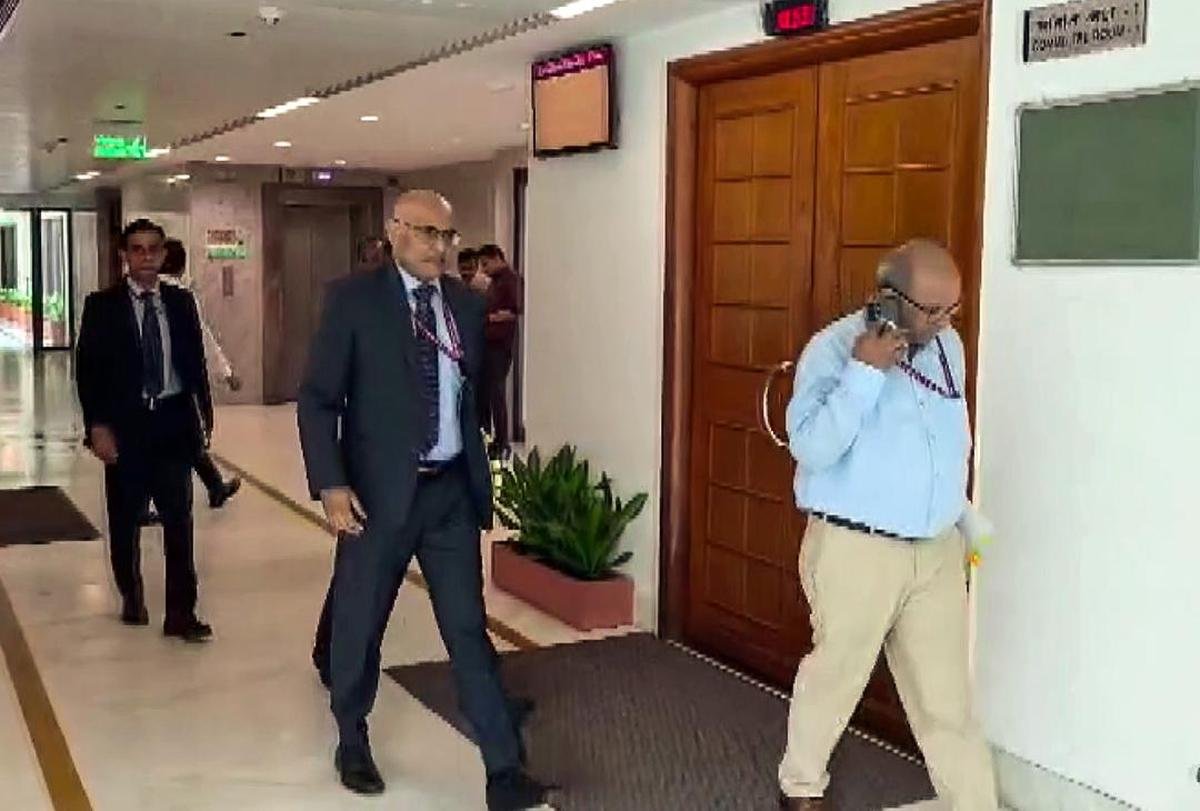
All three were working inside the NTA’s “confidential section,” a wing on the first floor of the agency’s Delhi office. They had been assigned translation and back-translation work for the NEET-UG question paper.
How the Leak Actually Happened
Inside the confidential section, the experts were handed plain paper sheets meant for translation rough work. That’s the exact material Kulkarni used to build his leak.
According to the CBI, Kulkarni turned those sheets into small chits. He scrawled out all 135 Chemistry questions in brief, along with the answer options. He did this while carrying out back-translation work across three question sets between March 31 and April 2 this year. Then, he organised special coaching classes, arranged with the help of co-accused Manisha Waghmare. He dictated the questions, the options and the correct answers directly to students. The students copied them into their notebooks. Investigators say the handwritten questions students ended up with matched the actual NEET paper almost word for word.
Mandhare worked differently. She had been appointed to translate Botany questions from English to Marathi and to handle back-translation for Zoology. Rather than writing chits inside the office, she’d return to her hotel room each evening. Then she would mark the relevant paragraphs in NCERT textbooks. Thus, she effectively encoded the leaked content into a study reference. She too ran special coaching classes, at her residence in Pune.
Havaldar, assigned to translate one Physics question set and proofread three others, took the simplest route. She noted the questions down in brief once she got back to her hotel in Delhi at the end of each working day.
A Security Gap the CBI Says Was There All Along
The CBI’s chargesheet doesn’t just document what the three experts did, it documents how the NTA’s own security let them do it. Investigators found that none of the subject experts were frisked while entering or leaving the confidential section. In addition, the wing also had no dedicated control room monitoring a live CCTV feed in real time.
That gap mattered later in the investigation too. The CBI, which registered its case on May 12, found that CCTV footage from the office was only available for a window of 20 to 25 days. That was well short of what investigators would have needed to reconstruct the full timeline of the leak.
The Money and the Reach
The CBI’s probe hasn’t stopped at how the questions got out. Investigators say Kulkarni alone earned at least Rs 21 lakh from leaking the paper to the students he coached.
The agency has since frozen several bank accounts, bank lockers and a demat account tied to the accused as part of its money-trail analysis.
The leaked material also travelled far beyond the coaching sessions themselves. Forensic examination of seized mobile phones and pen drives turned up PDFs and image files containing the leaked questions. These were allegedly circulated through Telegram, WhatsApp and other messaging platforms in the days before the exam. That points to a leak that moved through brokers and coaching operators across multiple states. Rather than staying contained to a single classroom, it spread further.
With the chargesheet already filed and the CBI continuing to build its money-trail and digital-forensics case, the coming weeks are likely to bring supplementary chargesheets. These may name additional players in the broader network of brokers and coaching operators the agency has flagged.
For the NTA, the more immediate reckoning is procedural. A confidential section with no frisking policy and gaps in CCTV coverage is now a matter of public record. Fixing that is likely to be central to whatever security overhaul follows this case.

Curated news reports, in-depth analysis, and special features by India’s Opinion editorial team.