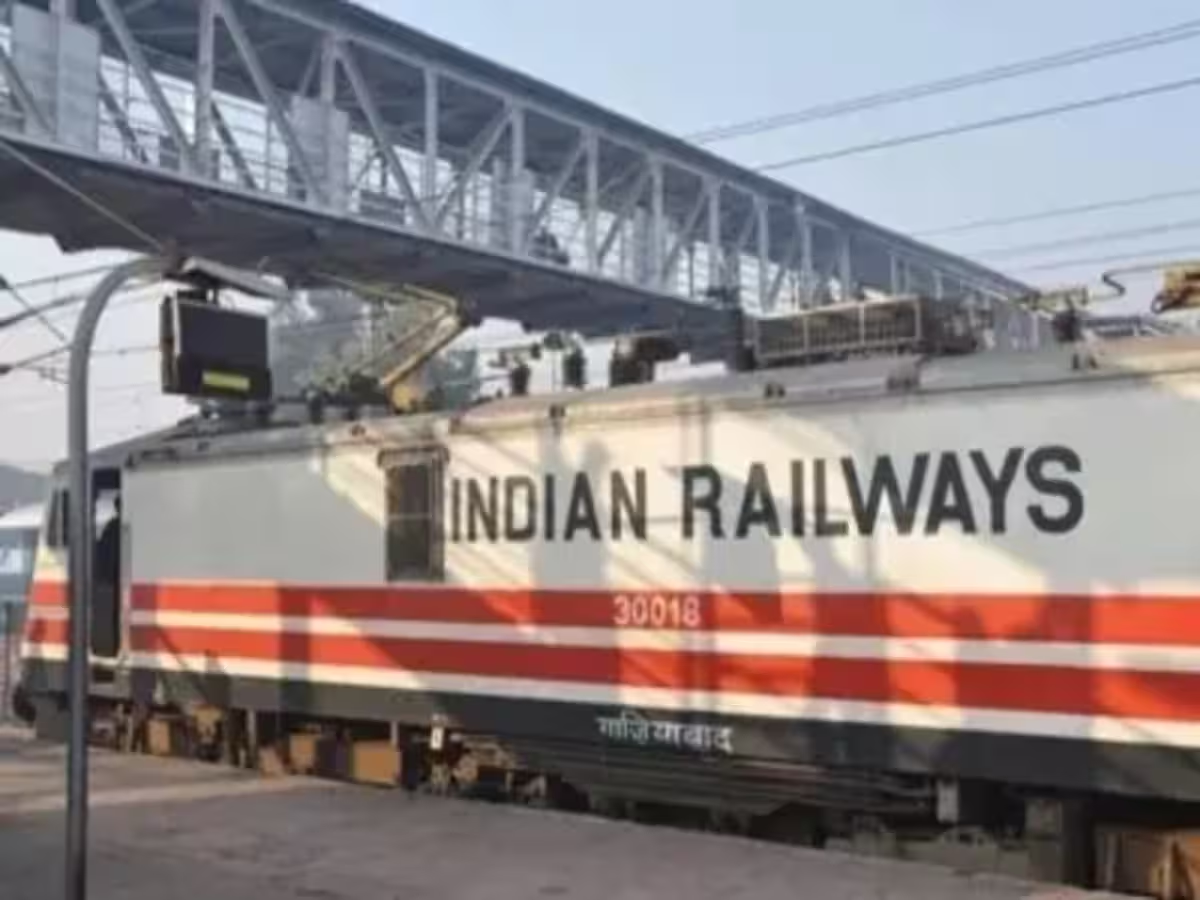
A comprehensive audit by the Comptroller and Auditor General of India (CAG) has exposed severe safety and sanitation violations across the national rail network. The audit revealed the presence of disease-causing E. coli bacteria in drinking water supplied to passengers at major railway stations. The report, titled Passenger Amenities and Sanitation at Non-Suburban Railway Stations in Indian Railways, was tabled in Parliament. Furthermore, it highlighted widespread non-compliance with statutory safety protocols established by the Railway Board.
Contaminated Water Coolers and Platform Taps
The national auditor carried out detailed testing of drinking water samples across hundreds of non-suburban stations. This testing unveiled alarming biological contamination in public drinking units.
Water cooler samples tested positive for E. coli at eight prominent stations, including Chhatrapati Shivaji Maharaj Terminus (CSMT), Kalyan, Lonavala, and Bhiwandi Road in Central Railway. Additionally, contamination was detected at Coimbatore Junction and Palakkad Junction in Southern Railway. It was also found at Hyderabad in South Central Railway and Madhupur in Eastern Railway.
Beyond water coolers, platform tap water checks showed the presence of total coliform bacteria, including E. coli, at 49 stations across eight zones during 2022-23. Similarly, contamination was found at 56 stations across nine zones during 2023-24.
The auditor noted that bacteriological testing was completely skipped at 59 stations spread across six railway zones. Moreover, chemical testing by Health Inspectors was omitted at 179 stations across 11 zones.
Widespread Shortfalls in Basic Amenities
The audit examined 512 non-suburban grade stations between 2019-20 and 2023-24. It revealed that 458 stations—accounting for more than 89 percent of the sample—failed to meet Minimum Essential Amenities (MEA) standards.
Even premier Category NSG-1 stations such as CSMT, New Delhi, Howrah, Sealdah, and Mumbai Central exhibited notable deficiencies in basic facilities like drinking water taps, seating arrangements, clean latrines, and dustbins.
Analysis of the Passenger Amenities Management System revealed net shortfalls. These included 2,035 stations lacking adequate water taps, 403 stations short of urinals, and 201 stations lacking required latrines.
The report further highlighted that residual chlorine levels—crucial for neutralizing pathogens—fell outside the prescribed range of 0.2 to 0.5 parts per million in over half the tested samples at 63 stations.
Despite these glaring structural deficits, the CAG revealed that the Railways left between 36 percent and 44 percent of allocated budget grants for passenger amenities unspent annually. Moreover, this concerning trend persisted throughout the audit period.
Auditor Recommendations and Railway Response
In response to the audit findings, the Ministry of Railways stated that corrective measures had been initiated regarding testing frequency and unsatisfactory sample outcomes.
However, the CAG emphasized that recurring contamination across multiple locations indicates a systemic failure. Therefore, the CAG urged the Railway Board to enforce strict compliance with inspection schedules and perform comprehensive quality checks under the Uniform Drinking Water Quality Protocol.

Curated news reports, in-depth analysis, and special features by India’s Opinion editorial team.