
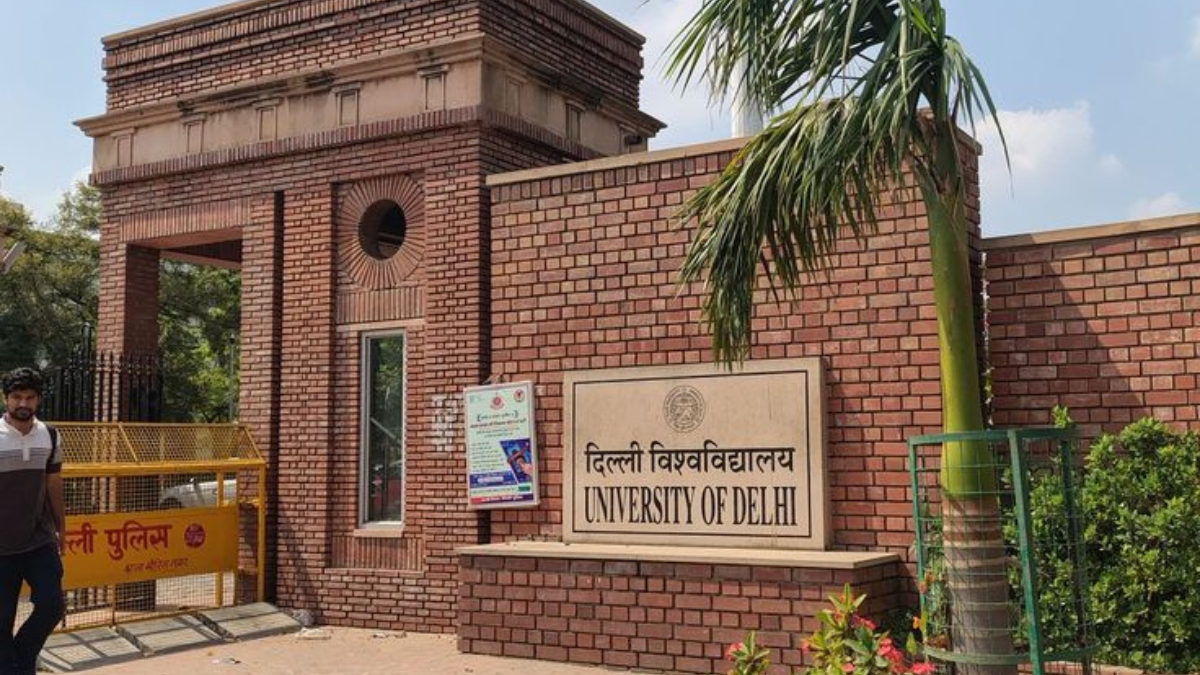
In a major curriculum restructuring under the National Education Policy (NEP) 2020 framework, Delhi University (DU) has notified its revised Master of Arts (MA) History syllabus for Semester III. The notification excludes a long-standing core paper on the Delhi Sultanate alongside several key courses on ancient and medieval India.
Out of the 38 Discipline Specific Elective (DSE) papers proposed by the History Department, the university’s August 7 notification approved 16 papers. However, multiple foundational electives that have been taught for decades were left out.
Key Electives Omitted in the Revised Syllabus
The papers dropped from the notified Semester III list span medieval, ancient, and socio-religious history:
- Medieval History:
- The Delhi Sultanate: Structures of Authority in Medieval North India (13th–14th Centuries)
- History of North India, c. 1400–1550
- Ancient & Gender History:
- Gender and Women in Early India: 1500 BCE to 1000 CE
- Political Processes and Structure of Polities in Ancient India
- Religion and Society in Ancient Indian Literature
While university records note that some similarities exist between these PG papers and undergraduate survey modules, faculty members emphasized an important distinction. The postgraduate courses offer specialized, thematic research and historiographical analysis rather than introductory summaries.
Department Concerns vs. Administration Stance
Department Council’s Position
In a formal resolution addressed to Vice-Chancellor Yogesh Singh, the Department Council expressed concern over the delayed notification and non-inclusion of foundational courses. In addition, faculty members highlighted that papers such as the Delhi Sultanate and Gender and Women in Early India are crucial for students specializing in medieval statecraft, social structures, and gender studies.
University Administration Response
Rejecting claims of arbitrary removal, DU Dean of Academic Affairs K. Ratnabali clarified that the syllabus had to be revisited due to a “trust deficit.” The deficit was created when unauthorized edits, added units, and altered readings were introduced after initial Standing Committee clearance.
A special expert panel—comprising external experts, the Head of Department, and Academic Council members is currently reviewing the remaining papers. This review aims to ensure balance across historical periods and alignment with NEP objectives. Officials indicated that additional papers may be notified once the review concludes.

Curated news reports, in-depth analysis, and special features by India’s Opinion editorial team.