
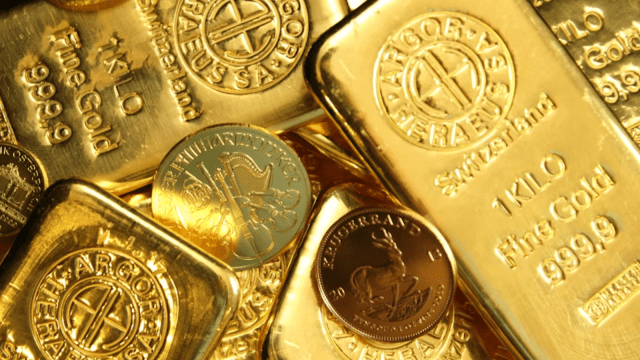
Gold prices remain near a seven-week high
Gold prices remained close to a seven-week high on Monday as investors waited for fresh US inflation data that could influence expectations for Federal Reserve interest-rate cuts.Spot gold slipped slightly during Asian trading after reaching its highest level in almost two months.
Investors have increasingly focused on whether inflation will give the Federal Reserve enough room to ease monetary policy.The US inflation report, due later this week, could therefore become the next major catalyst for bullion markets.
A softer reading could strengthen expectations for lower interest rates, while a hotter reading could reduce the likelihood of near-term easing.Gold does not pay interest. Lower interest rates can therefore make the metal more attractive relative to interest-bearing assets.
Why US inflation matters for gold
The relationship between inflation, interest rates and gold is central to the current market.When inflation remains high, the Federal Reserve may keep interest rates elevated for longer.
Higher yields can increase the opportunity cost of holding gold.When inflation cools, markets may expect the central bank to cut rates.
That can weaken the dollar and lower bond yields, creating more favourable conditions for bullion.This explains why traders are watching the upcoming US consumer-price data closely.
The latest move in gold prices reflects a market that is balancing expectations for monetary easing against continuing economic uncertainty.
Dollar movements add another variable
The US dollar also plays a major role in determining the international price of gold.Gold is generally priced in dollars.
When the dollar strengthens, bullion becomes more expensive for buyers using other currencies. That can reduce demand.A weaker dollar has the opposite effect.
Investors are therefore watching both US inflation and currency markets as they assess where gold prices could move next.Recent fluctuations in the dollar have added another layer of uncertainty for precious-metals traders.
Why investors continue to buy gold
Gold has traditionally attracted investors during periods of economic and financial uncertainty.Central banks have also increased their gold holdings in recent years, helping support long-term demand.
The metal is viewed by many investors as a store of value and a portfolio diversifier.However, gold does not always rise simply because markets face uncertainty.
Interest rates, currency movements, investor positioning and physical demand can all influence its price.The current strength in gold prices therefore reflects several factors rather than a single market concern.
What could push gold higher?
A weaker-than-expected US inflation reading could provide another boost to bullion.If inflation cools faster than markets expect, traders could increase bets on Federal Reserve rate cuts.
That could push US Treasury yields lower and weaken the dollar.Both developments could support gold.Geopolitical and economic uncertainty could also maintain demand for safe-haven assets.
However, investors will need to distinguish between short-term market movements and longer-term trends.
What could cause gold to fall?
A stronger inflation report could produce the opposite reaction.If US consumer prices rise more quickly than expected, markets may reduce expectations for immediate rate cuts.
That could push Treasury yields higher and strengthen the dollar.
Under those conditions, gold prices could come under pressure.Profit-taking could also affect the market after the recent rally. Traders who bought gold earlier may decide to lock in gains if momentum weakens.
Indian buyers face another factor
For Indian consumers, the international gold price is only part of the story.
Domestic prices also depend on the rupee-dollar exchange rate, import costs, taxes and local demand.A weaker rupee can increase the cost of imported gold even if international bullion prices remain unchanged.
This means Indian jewellery buyers may see different price movements from those observed in international markets.The exchange rate will therefore remain an important factor for gold prices in India.
Jewellery demand remains important
Investment demand often receives most of the attention during a price rally, but jewellery remains a major part of the global gold market.
Higher prices can discourage some consumers from making large purchases.Others may continue buying because gold has cultural and financial importance, particularly in countries such as India.Indian demand can also vary around major festivals and the wedding season.
The interaction between investment demand and physical consumption will influence how sustainable the current rally becomes.
What investors should watch next
The upcoming US inflation data will be the immediate focus for financial markets.Investors will examine both headline inflation and underlying price pressures.
The details could influence expectations for the Federal Reserve’s next policy decisions.Bond yields and the dollar will provide additional signals.Central-bank purchases, geopolitical developments and broader financial-market sentiment will also remain relevant.
For gold prices, the next major move may depend less on today’s small fluctuations and more on whether incoming economic data changes expectations about US monetary policy.
If inflation cools and rate-cut expectations strengthen, bullion could receive another tailwind. If inflation proves stubborn, the market may reassess the rally.
For Indian buyers and investors, currency movements will add another layer to that calculation.Gold’s rise toward a seven-week high shows that demand remains strong, but the next phase of the rally will depend on evidence.
The US inflation report could provide the clearest signal yet about whether bullion can extend its gains or faces a period of consolidation.

Curated news reports, in-depth analysis, and special features by India’s Opinion editorial team.